


Food manufacturing calibration: the equipment you know needs checking, and the equipment that’s easy to overlook
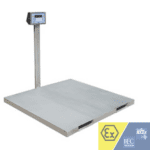
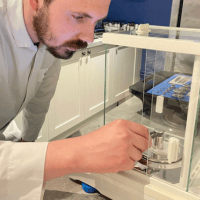
Ask someone working in food manufacturing what equipment needs calibrating, and chances are they’ll mention the obvious ones: thermometers, temperature probes and weighing scales.
And they wouldn’t be wrong. These are some of the most important checks carried out across a production environment.
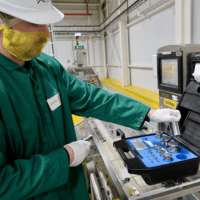
But walk through a food production facility and you’ll quickly see calibration plays a much bigger role than many people realise. From ingredients arriving on site to finished products leaving the factory, there are sensors, instruments and machines working behind the scenes to keep processes running safely and consistently.
The challenge is that most of this equipment does its job quietly. It is only when something starts to drift that people notice how much they rely on it.
Different types of equipment have different calibration needs, and the risks of getting it wrong vary depending on where they sit in the process. Here’s a practical look at some of the key areas where calibration matters.
Temperature control: the foundation of food safety
Temperature is one of the biggest factors in food safety, which is why so much calibration work in food and beverage manufacturing focuses on temperature measurement and control.
Take ovens and cookers, for example. They need to maintain accurate temperatures to make sure products are cooked properly and consistently. A small temperature error might seem insignificant, but across thousands of units it can affect product quality, food safety and energy costs.
The same applies to incubators used for microbiological testing. These rely on maintaining very specific conditions to produce reliable results. If the temperature reading is wrong, the test results may be misleading, making it difficult to know whether a product meets the required standards.
Cold storage is another area where calibration is easy to overlook. Refrigerators, chillers and freezers are often seen as simple pieces of equipment because they’re familiar, but they play a crucial role in maintaining product quality and shelf life. Regular checks confirm that the temperatures being displayed are accurate and that stored products are kept within safe limits.
Retorts are a good example of where accurate calibration is essential. Used for sterilising packaged foods using heat and pressure, they rely on precise control of temperature and processing time. If those conditions are not achieved, the result is a food safety risk rather than just a quality issue.
Pasteurisers work in a similar way. Whether used for products such as milk or juice, the process depends on achieving the right temperature for the right amount of time. Accurate measurement is what gives manufacturers confidence that the process is working as intended.
Even processes that seem less critical, such as proofing dough before baking, depend on reliable measurements. Proofers control temperature and humidity to create consistent results, and small changes can affect the finished product.
Keeping unwanted contaminants out
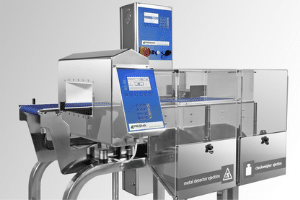
Magnets are commonly used to remove metal fragments from products before they reach the customer. Over time, magnets can lose strength through damage or wear, reducing their effectiveness. Regular checks help confirm they are still performing as expected.
Sieves are another example. Used to separate products by particle size, they need to maintain their accuracy throughout their working life. A damaged or worn sieve could allow larger particles through, affecting product consistency and, in some cases, safety.
Pressure systems: where accuracy protects people too
Pressure vessels and pressure gauge systems often operate under demanding conditions, and inaccurate readings can create risks for both equipment and operators.
Calibrating the gauges and instruments that monitor these systems ensures teams have a reliable picture of what is happening inside the equipment. It gives them the information they need to operate safely and identify potential issues before they become bigger problems.
Filling, packing and specialist equipment
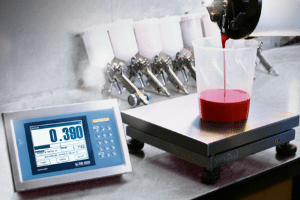
Filling and bottling equipment needs to dispense the correct amount every time. If the settings or measurements drift, manufacturers can end up giving away product unnecessarily or, just as importantly, failing to meet customer expectations and legal requirements around pack quantities.
Some calibration requirements are more specialised. In chocolate production, for example, tempermeters are used to measure the crystallisation process that gives chocolate its smooth finish, shine and characteristic snap. If the measurements are inaccurate, the final product may not have the appearance or texture customers expect.
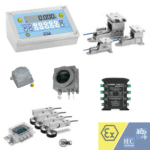
Temperature probes and transmitters are another area that is easy to miss because they are often hidden within larger systems. These sensors provide the information used to control equipment such as ovens, chillers and processing systems. If the sensor reading is wrong, the equipment may be working perfectly, but it is responding to incorrect information.
A well-maintained oven with a poorly calibrated temperature probe can still produce inconsistent results.
Calibration is about confidence, not paperwork
It is easy to see calibration as another task on the maintenance schedule, something to complete before an audit and file away until next time.
In reality, calibration gives manufacturers confidence that their equipment is doing what it should be doing. Without accurate measurements, decisions around food safety, quality and production efficiency are based on assumptions rather than reliable data.
Regular calibration helps identify problems before they affect production, reduces the risk of rejected batches, supports compliance requirements and helps equipment operate within its intended limits.
Most importantly, it gives production teams confidence that the numbers they rely on every day can be trusted. Because when equipment starts drifting, the cost of finding out is usually much higher than the cost of checking.
If you’d like to discuss calibration requirements for your own production equipment, get in touch with the MWS team.
