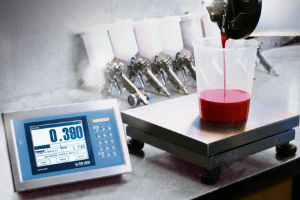


Load Cell Calibration
Regular calibration of your vessels and silos ensures optimum performance of your processes.
At MWS, we provide fully traceable equipment required to carry out the calibration of your silos and vessels. There are two main methods of load cell calibration: signal injection using a process calibrator or force compensation using hydraulic jacks with reference load cells.
Process Weighing Calibration
Load cells used in Process Weighing applications can be calibrated easily using one of our traceable methods below, additional steps to verify weight readings back to your PLC is an important check commonly missed, we have seen instances where the 4/20ma or 0-10v outputs are not verified between the HMI and the Load Cell Amplifier, this can cause major issues in production or stock management.
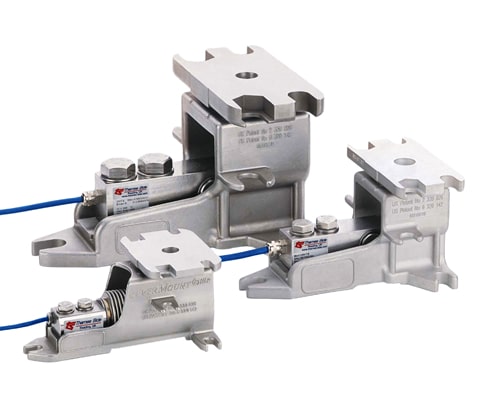
Load Cell Calibration Methods
There are several methods and approaches to calibration of vessels.
These are commonly known as:
Empty / Full Calibration
A zero reading and calibration is entered when the tank is emptied of product, load cell readings are taken, the tank is then filled with a known weight from a weigh bridge or another holding tank, this weight added is then used to calibrate the load cells.
Flow Meter Calibration
Once a zero has been established product is pumped through our flow meter, this allows for multiple point checks as well as checking the dispensing process and multiple intervals.
Signal Injection Method
Readings are taken from the load cells using a multimeter or process calibrator, a small weight is added to the vessel and new readings taken, in theory the readings can be extrapolated into a larger weight by multiplication, this method does not allow for mechanical checkng of the load cell performance, it is recommended for good installations and sites where moving of product is difficult.
Force Calibration
We have a force calibration rig that allows us to transfer weights between our calibrated load cells (the reference standar) and the load cells we are testing, on new installations we recommend that you install force calibration plates that allow our force calibration rig to be used correctly, this allows for a pull down and lift up process giving far better results.
ATEX Process Weighing Calibration
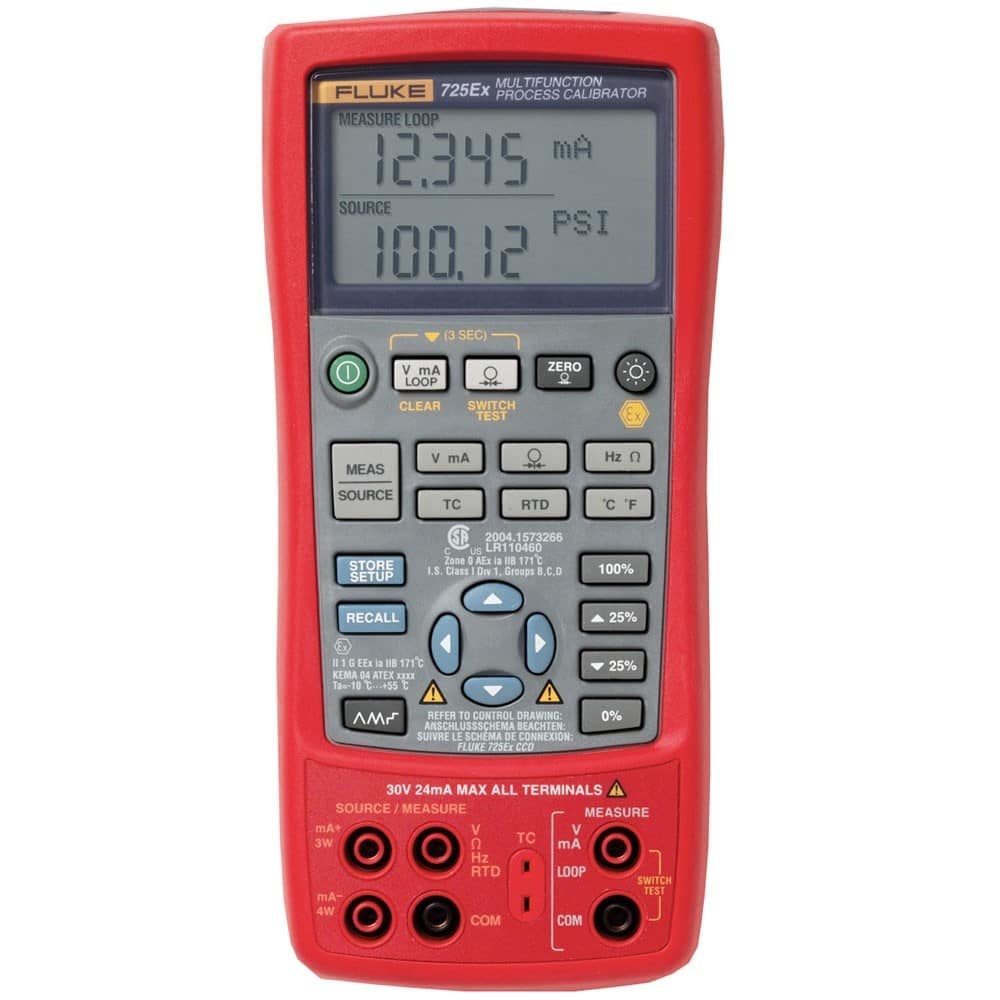
The Fluke 725ex is a Multi-function Process Calibrator designed for calibrating load cell amplifiers via signal injection.
It is a safe alternative to applying mass to loads required when calibrating vessels and silos.
New Load Cell Supply & Calibrations
We have a range of load cells for use in silo or vessel weighing, and there are a number of mounts for differing applications of load. It is important to get the correct advice when choosing load cells for process weighing applications.
We also supply ATEX approved load cells and amplifiers for Zone 1 and Zone 2 hazardous areas.
Call or chat to us today about your process weighing calibration or equipment requirements.
FAQs
What is load cell calibration?
Load cell calibration is the process of verifying and adjusting (if applicable) the relationship between applied load (force/weight) and the load cell’s output signal so it produces accurate readings across its operating range.
Why do load cells need calibration?
Calibration confirms accuracy and detects drift caused by:
-
Mechanical fatigue, overload events, shock loading, or creep
-
Temperature cycling and environmental exposure (moisture, corrosion)
-
Changes in mounting/fixtures, load introduction hardware, or cable damage
-
Electronics changes (instrument replacement, re-ranging, firmware updates)
How often should a load cell be calibrated?
It depends on risk and use, but common intervals are:
-
Every 6–12 months for most industrial applications
-
More frequently for safety-critical, trade/regulated, high-cycle, or harsh environments
-
After specific events (overload, impact, repair, relocation, cable replacement, or major mechanical changes)
A good rule: calibrate as often as you need to confidently meet your measurement uncertainty and compliance requirements.
What’s the difference between “calibration” and “verification”?
-
Verification: you check performance against known standards and record results—no adjustments.
-
Calibration: you verify performance and may adjust the system (or apply correction factors) to bring it into tolerance.
In practice, customers may use the word “calibration” to mean either—your paperwork should specify what was actually done.
Can you calibrate a load cell without removing it from the machine?
Often, yes—depending on access, loading method, and required uncertainty. Options include:
-
In-situ (on-site) calibration using traceable test weights, hydraulic loaders, or transfer standards
-
Off-site (laboratory) calibration when best uncertainty, full range access, or controlled conditions are needed
In-situ is convenient but may have higher uncertainty because the mechanical system influences results.
What does “traceable calibration” mean?
It means the calibration results can be linked through an unbroken chain of comparisons to national/international standards (typically via calibrated reference equipment), with documented uncertainty.
Do I need an accredited calibration?
You may need accredited calibration if you operate under quality systems or regulated environments (e.g., ISO 9001 supplier requirements, aerospace, medical, legal-for-trade). If you simply need confidence in performance for internal process control, traceable (non-accredited) may be sufficient. The key is matching the certificate type to your compliance obligations.
What information do you need from me to quote a calibration?
Typical quote inputs:
-
Load cell make/model and capacity (e.g., 5 t, 50 kN), not always required
-
Accuracy class or tolerance requirements (if known)
-
Environment and usage (temperature range, outdoor, washdown, hazardous area)
-
Whether it’s load cell only or load cell + indicator/amplifier as a process system
-
On-site vs off-site preference and location/access constraints
Do you calibrate the load cell alone, or the whole weighing system?
Both are possible:
-
Load cell-only calibration assesses the transducer’s output vs applied load.
-
System calibration (load cell(s) + junction box + indicator/amplifier + mechanics) validates what your process actually reads.
If your concern is “what the operator sees,” system calibration is usually the better fit.
What is “as found” and “definitive” data on a certificate?
-
As found: performance before any adjustments/repairs—shows drift and current condition.
-
Definitive: performance after adjustment/repair (if performed)—shows final condition.
Customers often request both for audit trails.
What’s typically included on a calibration certificate?
Common inclusions:
-
Identification: serial number, model, capacity
-
Calibration method, range, and test points
-
Reference standards used and traceability statement
-
Results table (output vs applied load), error, repeatability
-
Measurement uncertainty (where provided)
-
Environmental conditions (temperature/humidity)
-
Pass/fail decision against stated tolerances (if requested)
What accuracy can you achieve?
Accuracy depends on:
-
Reference standard quality and loading method
-
Capacity and design of the load cell
-
Test setup (alignment, load introduction, mounting)
-
Temperature stability and electrical noise
-
Whether calibration is in-lab or on-site
A good provider will specify measurement uncertainty and help you decide if it meets your needs.
What is creep and does calibration include it?
Creep is the slow change in output under a constant load over time. Some calibrations include a creep test (e.g., hold at a stated load for a defined period) if it’s relevant to your application, such as batching, tank weighing, or long-duration holds.
Do you test the load cell at multiple points across the range?
Yes—multi-point calibration is standard. Typical sequences include:
-
0%, 20%, 40%, 60%, 80%, 100% (varies by requirement)
-
Increasing and sometimes decreasing runs (hysteresis check)
-
Repeatability checks at one or more points
What is hysteresis and why does it matter?
Hysteresis is the difference in output at the same load when approached from increasing vs decreasing direction. It can be influenced by mechanics, mounting, and the load cell’s internal structure. It matters when loads are cycled up and down and you expect the same reading at the same load.
What happens if a load cell fails calibration?
Options typically include:
-
Confirm the test setup and mounting conditions
-
Inspect for overload evidence, mechanical damage, moisture ingress, or cable faults
-
Recalibrate the system (if mechanics are influencing results)
-
Repair (if possible) or replace the load cell
-
Apply correction factors (where acceptable) and document limitations
Will temperature affect calibration results?
Yes. Load cells have temperature effects on zero and span. If your process experiences wide temperature swings, consider:
-
Calibrating near typical operating temperature
-
Specifying a temperature range requirement
-
Using temperature-compensated cells and appropriate cable practices
-
Environmental sealing and proper strain relief
Can you calibrate tension and compression load cells?
Yes we can, provided the test rig can apply the correct direction of force and proper fixturing is used.
Tension requires appropriate pulling fixtures and alignment control; compression requires stable platens and centered load introduction.
How long does calibration take?
Typical ranges:
- Standard lab calibration: often 3–10 working days depending on queue, capacity, and test scope
- On-site calibration: commonly half-day to multi-day depending on number of channels, access, and rigging
Time is mostly driven by setup complexity and whether additional testing (creep, repeatability, temperature characterization) is requested.
Contact Us
"*" indicates required fields