



The Three Most Common Types of Temperature Calibration
Regular temperature calibration keeps readings reliable. It protects product quality, supports compliance, and ensures the numbers you see reflect what’s really happening. Even a small drift of a few degrees can introduce safety risks, compromise batches, or undermine customer confidence.
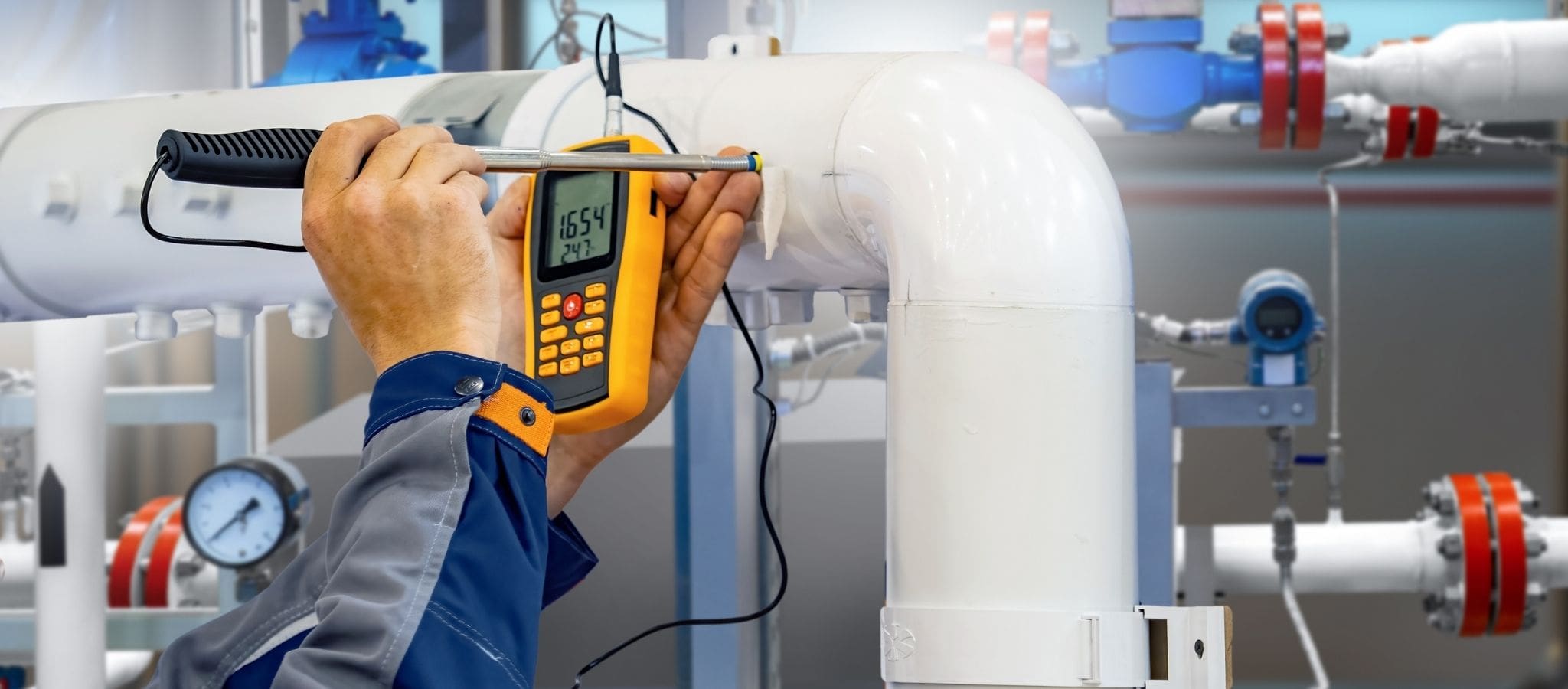
Here’s a look at the three most common types of temperature calibration for probes, controllers and transmitters.
1. Temperature Probe Calibration
Temperature probes are the sensors in direct contact with the environment or process. Whether thermocouples, RTDs or thermistors, they all serve the same purpose: sensing temperature at the source. If the probe is wrong, everything downstream inherits the error. For example, your cold room might appear to sit at 4°C when it’s actually 7°C.
Probe calibration typically uses temperature wells (dry-block calibrators), generating stable reference temperatures from around –55°C to +660°C. The probe is inserted, allowed to stabilise and then compared against the known value. It’s straightforward, but attention to detail matters: Insert the probe with uncontrolled axial or radial movement, or check it before stabilisation, and the comparison becomes unreliable.
2. Temperature Controller Calibration
Controllers don’t measure temperature directly; they interpret the electrical signal from the sensor and adjust heating or cooling to maintain the setpoint. If the controller drifts, even an accurate sensor can appear wrong, leading to overheating, underheating or long-term process drift.
Controller calibration often uses a multifunction calibrator to simulate the electrical signals a sensor would produce at specific temperatures. By feeding these simulated signals into the controller, engineers can verify whether the displayed temperature matches expectation. For RTD-based systems, a resistance box performs the same job: dial in the resistance equivalent to 100°C and confirm the controller reads correctly. It’s an effective way to spot drift or configuration issues without running the full heating system.
3. Temperature Transmitter Calibration
Transmitters sit between the sensor and the control system, converting the raw sensor signal into a stable 4–20 mA output suitable for PLCs, SCADA systems and long cable runs. If a transmitter drifts, the entire control system receives inaccurate data. As a result, issues may only reveal themselves long after the root cause has been identified.
Many transmitters can be calibrated using loop power, even when the plant is shut down. A calibrator powers the transmitter, simulates the sensor input and checks the mA output across the full range. Physical reference temperatures can also be used via a temperature well. The goal is always the same: confirm that 4 mA represents the low end of the range, 20 mA the high end, and the response in between is linear and accurate.
Final Thoughts
Regular temperature calibration catches problems before they escalate. It improves reliability, provides audit-ready traceability and builds confidence in the numbers driving your decisions. Whether you’re meeting compliance requirements or simply ensuring your process runs as intended, calibration keeps your measurements trustworthy.
If you’re looking for a reliable temperature calibration partner, speak to MWS today for a no-obligation quote.