





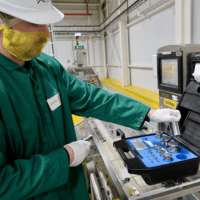
AutoTom: £3m Government-Backed Push to Rebuild Britain’s Tomato Industry
Britain’s tomato shelves might look reliably full, but behind the glossy punnets the UK’s homegrown production has been quietly slipping into reverse.
Over the past six years, domestic output has taken a sharp tumble – almost halving as growers have been squeezed by rising energy and labour costs, alongside persistent workforce shortages.
The result is a stark dependency: roughly 80% of the tomatoes eaten in the United Kingdom are now imported, a situation that is both carbon-inefficient and increasingly exposed to supply chain disruption.
That backdrop is exactly why a new government-funded effort is turning heads across horticulture, engineering and plant science. A coalition of industry stakeholders and research partners – led by CambridgeHOK – has secured around £3 million to rethink how tomatoes are grown in Britain from the plant upwards and the greenhouse around it.
The initiative is called The AutoTom Project, and its ambition is straightforward to say but harder to do: make UK tomatoes competitive again by designing a growing system that produces more with far less manual labour.
At the heart of AutoTom is a move away from the sprawling, labour-intensive tomato plants most people picture – those tall vines that demand constant tending up and down long greenhouse rows. Instead, the consortium of plant scientists, commercial growers and engineers plans to develop miniature tomato varieties using precision breeding techniques.
The idea is that smaller, more uniform plants can be grown at higher density, with early estimates suggesting yields could potentially double while still maintaining quality. In a market where margins have been hammered by costs, that kind of productivity jump is the difference between survival and further retreat.
But AutoTom isn’t just a plant-breeding story – it’s a systems redesign. These compact varieties are being developed with a very modern requirement in mind: compatibility with automated handling and harvesting.
By producing plants that behave predictably in size, shape and growth habit, the project aims to reduce the need for human hands throughout the growing cycle. In other words, the tomato is being bred not only for taste and yield, but for the reality of a sector that can no longer rely on plentiful, affordable labour.
To make that shift practical, CambridgeHOK will adapt its automated cultivation technology to move plants through the greenhouse on conveyor belts. It’s a deceptively simple change with big implications.
Instead of workers walking long rows to prune, monitor and pick, the crop comes to the workstations – streamlining tasks, improving consistency, and shrinking the amount of time spent on sheer physical logistics. The project expects this approach could cut labour costs by more than 70%, tackling one of the biggest pain points that has driven UK growers to scale back.
The chair of the project has described AutoTom as highly ambitious and innovative – and the “if it works” is doing a lot of work here. Yet the potential upside is clear. A successful system could support a meaningful shift towards more localised tomato production in the UK, strengthening domestic food supply resilience by reducing reliance on imports.
Furthermore, it could also lower transport-related emissions by shortening supply chains, making “grown in Britain” not just a nice-to-have label, but a measurable environmental improvement.
There’s also a strong economic argument for getting this right. Tomatoes represent a £1.8 billion market in the UK, and the project team hopes AutoTom can restore competitiveness to British growers who have watched costs surge while imported supply has filled the gap.
If yields can be increased without sacrificing quality – and if automation can genuinely reduce labour pressure – the UK industry has a credible route back from the cliff edge of decline.
Crucially, AutoTom arrives at a moment when policy is shifting to support exactly this kind of innovation. Investment is being provided by the Farming Innovation Programme, funded by the Department for Environment, Food and Rural Affairs (Defra) and delivered in conjunction with Innovate UK.
The project is also among the first in the UK to receive Defra-linked funding following a 2025 legal change enabling a more streamlined regulatory process for gene-edited crops in England, via the Genetic Technology (Precision Breeding) Act 2023 framework for plants.
Conclusion
AutoTom is, in essence, a bid to give British tomatoes a new operating model: smaller plants, denser growing, automated movement and harvesting, and far less dependence on scarce labour – all backed by around £3 million in government innovation funding.
With UK production having nearly halved in six years and imports now dominating the supply, the project is positioning itself as a practical route to rebuild competitiveness, cut emissions tied to long-distance transport, and make domestic supply chains more resilient.
If the promises around yield and labour savings translate from early estimates into greenhouse reality, AutoTom could mark the start of a long-needed reset for how tomatoes are grown in the UK.
News Credits: £3M awarded to precision breeding project to save waning UK tomato sector
Things you may also like:
- Twinings Adds a Peach Twist to Its Sparkling Tea Push
- ENA Respiratory Begins Dosing in Phase 2 Community Study of INNA-051 Nasal Spray
- CERo Flags Early Safety Signals for CER-1236 in First-in-Human AML Study