





Pharmaceutical Industry 13 – 19 Apr: Ft Kainova Therapeutics, CatalYm, Oxford BioTherapeutics and Bristol Myers Squibb
- Kainova Therapeutics has dosed the first patient in Europe in its DOMISOL phase 1/2 trial of DT 7012, expanding its anti-CCR8 immuno-oncology programme into major French cancer centres.
- CatalYm has launched its global GDFATHER-HCC-01 phase 2b study, dosing the first patient in a trial of visugromab for advanced liver cancer after progression on prior immunotherapy.
- Oxford BioTherapeutics has entered a new multi-year collaboration with Bristol Myers Squibb to discover and develop novel T-cell engager therapies for solid tumours.
The pharmaceutical industry continues to show that oncology remains one of its most dynamic and fiercely innovative frontiers, with companies pushing forward on multiple fronts at once: first-in-patient milestones, new international trial expansions and high-value strategic partnerships.
Fresh developments from Kainova Therapeutics, CatalYm and Oxford BioTherapeutics underline that point clearly, each highlighting a different route through which cancer innovation is being pursued in 2026.
Taken together, these announcements paint a broader picture of an industry that is not merely searching for incremental progress, but actively trying to unlock entirely new treatment mechanisms, smarter trial design and more precise ways of tackling difficult-to-treat tumours.
Kainova Therapeutics expands DT 7012 into Europe
Kainova Therapeutics has reached an important clinical milestone with the dosing of the first patient in the European expansion of its DOMISOL phase 1/2 trial of DT 7012, a Treg-depleting anti-CCR8 antibody.
The move marks another step in the company’s global development strategy and strengthens the profile of DT 7012 as Kainova’s flagship programme.
The study first began in Australia in October 2025, and its expansion into Europe now brings leading oncology centres in France into the fold, including Hôpitaux Universitaires de Strasbourg, Institut Gustave Roussy in Paris and Institut Bergonié Bordeaux.
The programme is being led by respected early-phase investigators Dr Lauriane Eberst, Professor Antoine Italiano and Dr Maxime Brunet, giving the trial both clinical weight and strong translational depth.
At the heart of the programme is DT 7012’s attempt to tackle CCR8 biology with precision. The aim is to deplete regulatory T cells, or Tregs, within the tumour microenvironment, potentially improving anti-tumour immune activity in patients with advanced solid tumours.
That mechanism is drawing interest because of the persistent need for more effective and more targeted immuno-oncology therapies, especially in cancers where immune suppression remains a major obstacle to durable benefit.
The Head of Precision Medicine at Institut Gustave Roussy said the study combines strong clinical expertise with advanced translational capabilities, creating an important opportunity to explore whether targeted Treg depletion can translate into meaningful patient benefit.
The company’s Chief Medical Officer added that the first European dosing marks an important step in the clinical maturation of DT 7012 and noted that the DOMISOL study has been designed to build a comprehensive clinical and biological profile for the therapy across both monotherapy and combination settings.
DOMISOL’s design points to a data-rich development strategy
The structure of the DOMISOL trial shows that Kainova is aiming to do more than simply establish early safety.
The multicentre, open-label study is assessing DT 7012 as a monotherapy in a phase 1 dose-escalation, as well as in combination with pembrolizumab in a phase 1b dose-escalation. It also includes a phase 2 component focused on clinical efficacy in selected tumour types.
Primary objectives include determining the maximum tolerated dose or maximum administered dose and evaluating safety in the combination setting. Crucially, the study also includes a translational research component analysing paired tumour biopsies to directly measure intratumoral Treg depletion and demonstrate DT 7012’s mechanism of action.
That kind of integrated design matters. In today’s oncology environment, investors, regulators and clinical investigators increasingly want therapies to show not only that they are safe enough to advance, but that they are genuinely doing what they are designed to do at a biological level.
Kainova’s use of paired biopsies suggests a serious intent to link dose, biology and clinical outcome more tightly from the earliest stages.
The company’s Chief Executive Officer has described 2026 as a pivotal year for Kainova Therapeutics, with multiple high-value milestones ahead.
On the evidence so far, the European expansion of DOMISOL is not just a geographical step forward. It is also a sign that the company is trying to position DT 7012 as a differentiated asset in the increasingly competitive immuno-oncology field.
CatalYm targets a difficult liver cancer setting with visugromab
CatalYm, meanwhile, has also reached a major clinical milestone after dosing the first patient in its global GDFATHER-HCC-01 study.
The phase 2b trial is evaluating visugromab in combination with chemoimmunotherapy for patients with unresectable or metastatic hepatocellular carcinoma who have progressed after first-line anti-PD-(L)1 therapy.
This is a challenging treatment setting by any measure. Hepatocellular carcinoma remains one of the deadliest cancers worldwide, and CatalYm has emphasised that it is the third leading cause of cancer-related deaths globally.
Once patients progress following immunotherapy, treatment options can become increasingly limited, making the need for fresh therapeutic strategies especially urgent.
Visugromab is designed to neutralise GDF-15, an immunosuppressive cytokine that tumour cells can use to evade immune attack. The theory is that restoring immune sensitivity in this setting could open up new clinical benefits, particularly for patients whose disease has already shown resistance to prior immunotherapy-based approaches.
The trial will test visugromab alongside nivolumab and the tyrosine kinase inhibitor lenvatinib.
It begins with an open-label safety run-in to confirm the recommended dose for expansion, before moving into a randomised, double-blind phase comparing the triple combination against double placebo plus lenvatinib.
Around 104 participants are expected to be enrolled across 40 sites spanning North America, Europe and Asia-Pacific.
A broader ambition beyond tumour control alone
CatalYm’s development strategy is notable not only for the cancer setting it has chosen, but also for the breadth of outcomes it is attempting to influence.
The primary endpoint in GDFATHER-HCC-01 is progression-free survival, while secondary measures include overall survival, objective response rate and assessment of visugromab’s potential to mitigate cancer cachexia.
That final point is particularly interesting. Cancer cachexia remains one of the most debilitating complications in advanced cancer, affecting strength, weight, quality of life and sometimes even the ability to continue treatment. Including it as part of the programme signals a more rounded view of what meaningful cancer care can look like.
Earlier data from the exploratory phase 1/2a GDFATHER trial showed what CatalYm described as encouraging anti-tumour activity when visugromab was combined with an anti-PD-1 antibody.
The company now appears to be building on those signals with a more rigorous trial design and a sharper focus on a high-need tumour type.
CatalYm’s Chief Medical Officer said the aim is to combine the immune-restoring properties of visugromab with a checkpoint inhibitor and a standard-of-care tyrosine kinase inhibitor in order to improve outcomes for HCC patients with limited options. The company’s Chief Executive Officer described the move into HCC as a pivotal strategic step, saying the goal is to bring visugromab into additional high-need tumour types and ultimately improve both survival and quality of life.
Oxford BioTherapeutics deepens big pharma ties with Bristol Myers Squibb
While Kainova and CatalYm are making clinical progress in the trial setting, Oxford BioTherapeutics is strengthening its position through partnership-led innovation.
The company has entered a multi-year collaboration with Bristol Myers Squibb to discover and develop novel T-cell engager therapies for solid tumours, marking OBT’s third major pharmaceutical partnership in just 12 months.
Under the agreement, Oxford BioTherapeutics will deploy its OGAP-Verify discovery and validation platform to identify tumour-selective targets and generate next-generation T-cell engager molecules.
The company will also design and deliver development candidates, reflecting how it has evolved beyond platform discovery into a more fully integrated discovery and preclinical development organisation.
Bristol Myers Squibb will then lead subsequent research, development and commercialisation. OBT will receive an upfront payment inclusive of research funding, along with potential milestone payments and royalties on any commercialised products, although financial terms have not been disclosed.
The timing is significant. The new Bristol Myers Squibb deal follows partnerships agreed with GSK and Roche in 2025, further reinforcing the idea that OBT’s platform is gaining serious external validation from major industry players.
In a sector where partnering decisions are heavily scrutinised, three large agreements in a 12-month span sends a very clear signal about perceived scientific credibility.
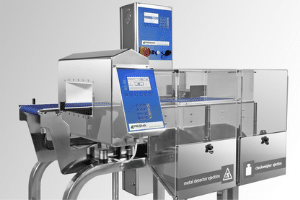
Why this matters for pharmaceutical manufacturing and production
These developments matter not only at the clinical and strategic level, but also for pharmaceutical manufacturing and production more broadly.
As oncology pipelines become more specialised, manufacturers are under increasing pressure to support complex biologics, adaptive trial supply demands and tightly controlled production processes that can keep pace with faster development timelines.
For companies such as Kainova and CatalYm, advancing novel antibody-based therapies means manufacturing systems must be robust enough to support dose escalation, combination studies and global multicentre trials without compromising quality or consistency.
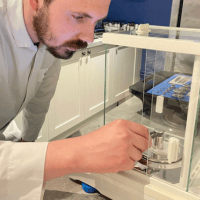
Translationally rich programmes, such as DOMISOL, also raise the bar for analytical precision, because biological mechanism, tissue-based evidence and clinical dosing strategy are all becoming more interconnected.
For Oxford BioTherapeutics and Bristol Myers Squibb, the pursuit of next-generation T-cell engagers adds another layer of manufacturing significance. These are sophisticated therapeutic formats that demand careful design, scalable development and a high standard of preclinical and future clinical production readiness.
In practical terms, this means the pharmaceutical production landscape must continue evolving alongside the science, with greater emphasis on flexibility, biologics expertise and the ability to support targeted therapies from discovery through to late-stage development and commercial supply.
A sector moving with urgency and intent
There is a shared thread running through all three stories: precision.
Kainova is seeking to precisely modulate the tumour microenvironment through CCR8-targeted Treg depletion. CatalYm is aiming to restore immune sensitivity by neutralising GDF-15 in a hard-to-treat liver cancer population. Oxford BioTherapeutics is working to identify highly differentiated tumour-selective targets for T-cell engager development.
Each company is approaching oncology from a different angle, but all are chasing therapies that are smarter, more selective and more clinically meaningful.
That reflects a wider industry reality. The next generation of cancer innovation is unlikely to come from blunt-force approaches alone. It will come from therapies designed with sharper biological insight, stronger translational evidence and more deliberate pairing with existing standards of care.
Conclusion
From first-patient dosing in Europe to a new global phase 2b liver cancer study and a major discovery alliance with Bristol Myers Squibb, Kainova Therapeutics, CatalYm and Oxford BioTherapeutics have each added fresh momentum to the pharmaceutical industry’s oncology agenda.
Their announcements differ in form, but not in significance. Each points to an industry working hard to turn deeper biological understanding into more effective cancer therapies.
What stands out most is the sense of direction. Kainova is building a clinically and biologically rich case for DT 7012. CatalYm is taking visugromab into a setting where better options are urgently needed. Oxford BioTherapeutics is showing that platform science, when executed well, can continue attracting serious pharmaceutical backing.
For the wider sector, that is encouraging news. It suggests that even in a crowded oncology market, there is still room for genuinely differentiated science to move the needle.
News Credits:
Kainova expands DT 7012 trial into Europe
CatalYm begins phase 2b trial of visugromab in second-line liver cancer treatment
Oxford BioTherapeutics signs collaboration with Bristol Myers Squibb
Things you may also like: