






Microbalances vs Analytical Balances in Laboratory Weighing
The two commonly used instruments found in labs are microbalances and analytical balances. While they might seem similar at first glance, understanding their differences and applications is crucial for selecting the right tool for specific laboratory needs. Here we will take a look at the differences between the two, and the type of application each are better suited to.
Microbalances
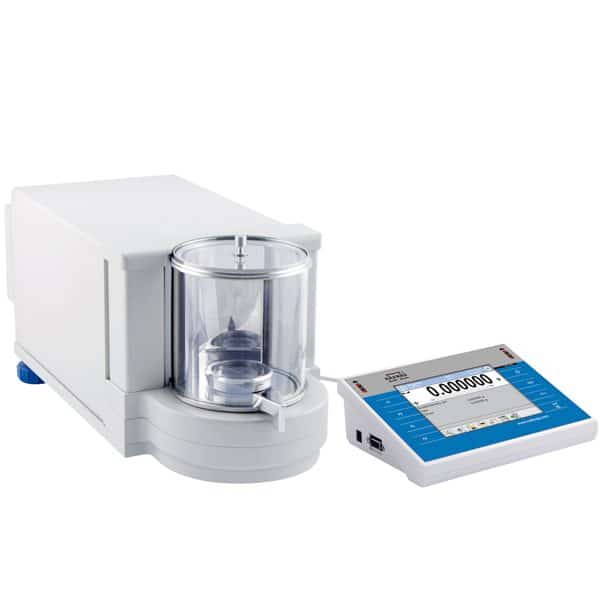
What are microbalances?
Microbalances are designed for ultra-precise weighing, typically handling smaller sample sizes than analytical balances. They are designed to provide readings at the microgram level, making them ideal for applications where minute quantities make a significant difference.
Applications
Microbalances are often used in industries such as pharmaceuticals, where the precise measurement of small quantities of substances is important. They are also essential in research involving nanotechnology, which requires accuracy at the molecular level.
Key features of microbalances
- High sensitivity: microbalances are highly sensitive, detecting even the slightest changes in weight
- Enclosed draft shield: to shield the sample from external influences such as air currents and humidity
- Advanced calibration: calibration processes are intricate to ensure accurate readings
Analytical balances
 What are analytical balances?
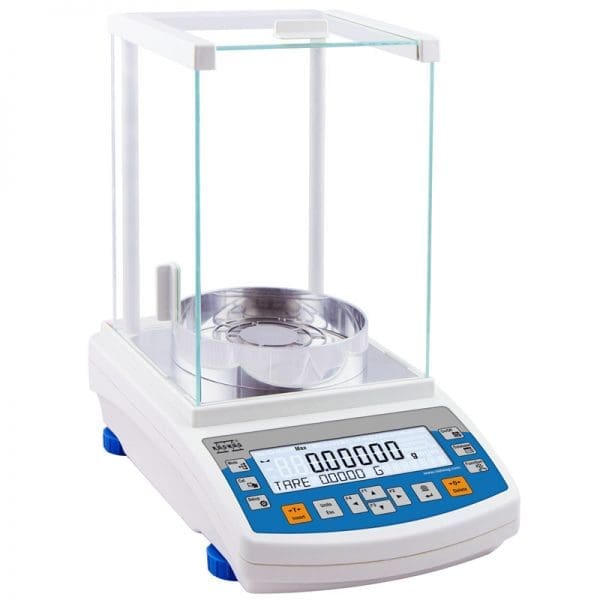
Analytical balances are versatile machines suitable for a wide range of laboratory applications. While they offer precision, they are generally used for larger sample sizes compared to microbalances.
Applications
Analytical balances are used in a number of industries, including chemistry, biology, and food testing. Their versatility makes them perfect for tasks like preparing solutions, measuring chemicals, and conducting quality control in manufacturing processes.
Key features of analytical balances
- Precision: although not as sensitive as microbalances, analytical balances still provide highly accurate measurements
- Ease of use: analytical balances are user-friendly, making them great for routine laboratory tasks
- Sample size: they are designed to handle larger sample sizes compared to microbalances
How to choose the right balance for your laboratory
- Precision: if working with minute quantities requiring ultra-precision, a microbalance is your go-to option. For applications where a high level of precision is sufficient, an analytical balance may be more practical
- Sample size: microbalances excel with smaller quantities, while analytical balances work with larger samples
- Industry application: for pharmaceuticals, nanotechnology, or other highly specialised fields, a microbalance might be the better option for you
- Budget: analytical balances are typically more cost-effective, making them a suitable option for laboratories with budget constraints
The choice between a microbalance and an analytical balance requires you to look at the specific needs and applications of your lab, so you can get precise and reliable results time and time again.
Where to buy balances in the UK
At Micro Weighing Solutions, our team of experts is dedicated to assisting you in this decision-making process. With a wealth of experience in manufacturing weighing equipment for various industries, including pharmaceuticals, chemicals, and logistics, we understand the diverse needs of laboratories. Contact us today, and let our specialists guide you in choosing the right tool for your application. With MWS, precision is not just a commitment; it’s our expertise.