





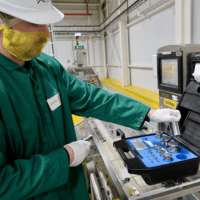
Food and Drink Industry 8 – 14 June: Ft Domino’s Pizza Group, Radnor Hills and Peak Rock Capital
- Domino’s Pizza Group has opened a new £25 million supply chain centre near Bristol.
- Radnor Hills has entered the snacking market through the launch of Canny Snacks and a partnership involving Burts Snacks.
- Peak Rock Capital has acquired Scotland-based ingredients manufacturer Dalziel Ingredients.
The UK food industry is witnessing a fresh wave of strategic investment as Domino’s Pizza Group, Radnor Hills and Peak Rock Capital pursue three distinct routes towards growth.
Domino’s is strengthening the infrastructure behind its expanding store network through a new £25 million supply chain centre near Bristol. Welsh soft drinks manufacturer Radnor Hills is moving beyond beverages and into savoury snacks through a new venture involving the Burts Snacks brand.
Meanwhile, US private investment firm Peak Rock Capital has acquired one of Britain’s leading manufacturers and distributors of savoury flavours, seasonings and meat solutions.
Although the announcements involve different parts of the food and drink market, each reflects a wider industry focus on operational resilience, scalable capacity, innovation and access to new customers.
Domino’s Opens £25 Million Avonmouth Supply Chain Centre
Domino’s Pizza Group has officially opened the doors of its fifth UK supply chain centre as part of a major investment in future capacity and long-term growth.
Located in Avonmouth, on the edge of Bristol, the new facility is referred to internally as “SCC5”. It has been designed to increase Domino’s delivery capacity across the South West of England and Wales while adding greater flexibility to the company’s wider supply chain network.
The centre will support an additional 1,000 store deliveries every week and, once fully optimised, is expected to serve as many as 600 Domino’s locations.
The timing of the investment is significant. Without the additional capacity created by SCC5, Domino’s said its existing supply chain operations would have reached their limits within the next two years.
The new centre therefore provides the company with valuable headroom as it works to grow its core pizza business across the United Kingdom and Ireland.
Automation to Support Accuracy and Efficiency
Backed by a £25 million investment, SCC5 is set to be fully equipped with next-generation automation by early 2027.
This will include advanced handling systems intended to improve the accuracy, consistency and efficiency of loading and unloading boxes. The technology should help Domino’s process higher volumes while maintaining the service standards expected by its franchise partners.
Domino’s chief supply chain officer described SCC5 as an important investment in the company’s infrastructure, providing the capacity, resilience and efficiency required to support a growing business.
The facility is expected to give Domino’s greater operational flexibility as the store estate expands. Its planned automation will also help the group work more efficiently while preserving the consistently high levels of service on which franchisees depend.
By strengthening the flexibility of the overall network, the company believes SCC5 will leave it well positioned to support sustainable growth and continue serving customers throughout the UK and Ireland.
Four Decades of Supply Chain Investment
The supply chain is an essential part of the Domino’s operating model.
While customers may primarily associate the brand with its stores and delivery service, the infrastructure behind those locations helps ensure franchisees receive the ingredients, products and materials they require.
Domino’s has invested in its supply chain for more than 40 years and claims to achieve order accuracy of 99.5%, alongside ingredient availability of 99.99%.
These performance levels play an important role in helping franchise partners remain competitive and deliver a consistent experience across the network.
SCC5 represents the latest stage of that long-term investment. Rather than simply responding to current demand, Domino’s is increasing capacity before its existing network reaches its operational limit.
Radnor Hills Moves Beyond Drinks With Canny Snacks
Elsewhere in the market, Welsh mineral water and soft drinks producer Radnor Hills is making its first major move outside the drinks industry.
The company has secured the sales, marketing and distribution rights for Burts Snacks through a newly formed venture called Canny Snacks.
Burts is a well-established crisp brand with products available across the UK. The deal gives Radnor Hills an immediate presence within the adjacent snacking category without requiring it to build a new consumer brand from the ground up.
Radnor Hills said Canny Snacks would use the company’s existing expertise, infrastructure and customer relationships to unlock growth in the complementary savoury-snacks market.
The venture will operate as a standalone business and will be led by grocery business development manager Tom Carne. He will be supported by Radnor Hills’ wider commercial and operational teams.
Canny Snacks will also receive strategic guidance from Radnor Hills founder and chief executive William Watkins and Adrian Carne, the former chief executive of organic dairy business Yeo Valley.
Drinks and Snacks Form a Natural Partnership
According to Watkins, Canny Snacks gives Radnor Hills the opportunity to move beyond beverages and enter the fast-growing snacking market while drawing on capabilities the company has already developed.
The move is closely aligned with Radnor Hills’ existing routes to market. Drinks and snacks are frequently sold alongside one another across supermarkets, convenience stores, hospitality venues, leisure locations and foodservice settings.
This gives the business an opportunity to introduce Burts Snacks to customers and commercial partners who may already purchase Radnor Hills products.
The company’s existing portfolio includes its flagship mineral water as well as ginger beer, cordials, lemonade, squash and juice drinks. Adding a savoury snack brand creates the potential for broader customer conversations, complementary product listings and more joined-up commercial activity.
Watkins described drinks and snacks as a natural combination and said the new venture would enable Radnor Hills to expand into a complementary category by building on its established experience and relationships.
Burts Production to Continue in Plymouth
Despite the new sales and marketing agreement, ownership of Burts Snacks will not transfer to Radnor Hills or Canny Snacks.
The brand will remain under the ownership of Europe Snacks, which acquired Burts and its Plymouth production facility in 2023.
Europe Snacks will continue as the exclusive manufacturing partner for the Burts brand. Production will remain in Plymouth using the same sourcing and manufacturing processes.
The arrangement creates a clear division of responsibilities. Europe Snacks will retain ownership and manufacturing, while Canny Snacks will focus on driving sales, marketing, distribution and brand development.
Canny Snacks co-founder and director Tom Carne said the business was pleased to be launching the partnership by securing the sales and marketing rights for Burts, with the transition scheduled to take place over the coming weeks.
He said the team sees a significant opportunity to unlock the potential of the Burts brand and develop a scalable snacking business.
By combining the manufacturing capabilities of Europe Snacks with Radnor Hills’ infrastructure, customer relationships and commercial experience, Canny Snacks intends to drive future growth through a collaborative model.
Peak Rock Capital Acquires Dalziel Ingredients
In a third major development, an affiliate of Texas-based private investment firm Peak Rock Capital has completed the acquisition of Dalziel Ingredients.
Headquartered in Bellshill, near Glasgow, Dalziel Ingredients is one of the UK’s leading manufacturers and distributors of savoury flavours, seasonings, meat solutions and sundry products.
The business supplies a broad range of customers, including blue-chip industrial food manufacturers, retail butchers and foodservice companies.
Dalziel operates four accredited manufacturing facilities and a network of distribution sites across the UK. It also runs a dedicated new product development centre at its Gateshead location, supporting customers with bespoke product and ingredient solutions.
Peak Rock said the acquisition was underpinned by Dalziel’s strong reputation within the food industry, extensive portfolio of high-quality products, customer service and innovation capabilities.
Partnership With Dalziel’s Existing Owners and Management
Peak Rock completed the acquisition in partnership with the Dalziel, Darroch and Dickens families, who owned the company, as well as Dalziel’s existing management team.
This structure is intended to preserve the experience and heritage already present within the business while providing additional investment and strategic support for its next phase of growth.
Dalziel’s chief executive said the families behind the company had been proud to serve industrial partners, retail butchery customers and local communities for generations.
The investment from Peak Rock was described as another major step in the company’s development, creating opportunities to build on Dalziel’s reputation and innovation capabilities.
Future growth is expected to come both organically and through mergers and acquisitions. This could include expanding into additional geographic markets, reaching new customer groups, launching further products and acquiring complementary businesses.
Growth in Protein and Foodservice Markets
Peak Rock Capital Europe’s managing director described Dalziel as an attractive opportunity to invest in a leading provider of ingredient solutions and associated products serving the growing protein and foodservice markets.
The investment firm intends to work alongside the Dalziel, Darroch and Dickens families and the company’s management team to support expansion.
Its stated priorities include geographic growth, customer expansion, product innovation and add-on acquisitions.
For Dalziel, the deal provides access to financial backing and acquisition expertise while allowing the company to continue drawing on its established manufacturing, distribution and product-development capabilities.
For Peak Rock, the acquisition provides a platform within a critical part of the food supply chain. Ingredients, seasonings and meat solutions may sit behind the finished products seen by consumers, but they are central to product consistency, flavour development, operational efficiency and manufacturing innovation.
What the Developments Mean for Food Manufacturing and Production
Together, the Domino’s, Radnor Hills and Dalziel announcements illustrate how investment is being directed across multiple layers of the food manufacturing and production landscape.
Domino’s SCC5 demonstrates the growing importance of logistics capacity and automated handling systems. Food businesses cannot expand their retail or restaurant footprints indefinitely without the supply chain infrastructure needed to support them.
Investment in automation can improve throughput, accuracy and consistency while reducing the likelihood of mistakes as volumes increase.
The Canny Snacks partnership highlights an alternative model for entering a new food category. Rather than acquiring manufacturing assets or constructing a new factory, Radnor Hills is using its commercial infrastructure and customer relationships alongside the established production capabilities of Europe Snacks.
This type of partnership can help brands scale more quickly while allowing each company to concentrate on its core strengths.
Peak Rock’s acquisition of Dalziel Ingredients reflects continued investment interest in specialist food manufacturing businesses. Companies with accredited production facilities, strong technical expertise, established distribution networks and proven new product development capabilities are particularly valuable because they support a wide range of manufacturers and foodservice customers.
The three developments also point towards a more interconnected industry. Manufacturing, distribution, logistics, marketing and product development are increasingly being treated as parts of one wider growth system rather than separate functions.
Conclusion
The latest moves by Domino’s Pizza Group, Radnor Hills and Peak Rock Capital show three different approaches to creating long-term growth in the UK food industry.
Domino’s is investing £25 million in physical capacity, resilience and next-generation automation through its new Avonmouth supply chain centre. Radnor Hills is using its infrastructure and customer relationships to enter the savoury-snacking market through Canny Snacks and Burts. Peak Rock Capital is backing the future development of Dalziel Ingredients through investment, innovation, expansion and potential acquisitions.
Across all three announcements, the central message is one of preparation. Businesses are investing not only to meet today’s demand, but to create the capacity, partnerships and capabilities required for tomorrow’s market.
For the wider food manufacturing and production sector, these developments signal continued confidence in scalable infrastructure, specialist expertise and collaborative growth.
Whether through automated logistics, cross-category expansion or private-equity investment, the companies involved are positioning themselves to capture new opportunities while strengthening the foundations of their existing operations.
News Credits:
Domino’s Pizza invests £25M into new supply chain centre
Radnor Hills ventures into the snacking industry
US private equity firm buys leading UK ingredients manufacturer
Things you may also like: