



Scales for Food Manufacturing Companies
Food manufacturers rely on MWS to provide a range of tailored services, from the supply of new weighing equipment in production and labs through to ongoing professional support via annual service contracts for accredited calibration and preventative maintenance.
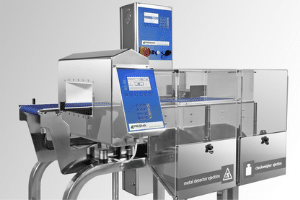
MWS offers end-to-end solutions for food manufacturers, from a main gate weighbridge for weighing bulk loads through to end of line automatic checkweighers and metal detectors manufactured by partners in Italy.
Scale Manufacturer for the Food Industry
MWS is widely regarded as the leading UK manufacturer of stainless steel weighing machinery for the food industry. Coupled with our experienced service team for ongoing support, you can rest assured you’re in safe hands.
Scales designed by MWS take into consideration stringent performance requirements focused on removing bug traps and areas where detritus can build up. This helps prevent bacteria from proliferating and causing a major hygiene issue.
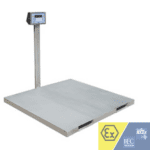
The GLF Floor Scale shown to the right highlights features important to production and hygiene managers. The hinged top plate enables operators to quickly clean under the scale safely and efficiently.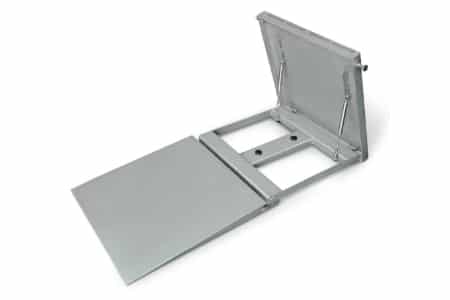
All MWS products feature a food grade bead blast finish which provides a uniform and hygienic surface. Further surface finishes such as a mechanical polish or electro polish are available on request.
Components for scales used in food manufacturing businesses are hand-picked for their robustness and ability to be readily sourced; something of high importance when considering the overall cost of ownership of new products bought from MWS.
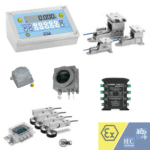
At MWS we use a range of specially designed load cells that feature IP69K rating to protect against high pressure / high temperature jet-wash clean down processes often found in food manufacturing plants.
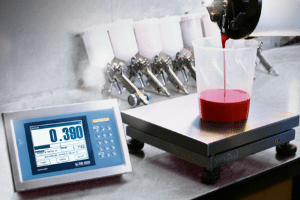
We provide unrivalled support to clients who use weighing across their processes. We are often asked to supply and support load cells and mounting solutions for production vessels, storage tanks and large silos ranging from 15kg through to 120 tonnes to weigh liquids, slurries and powders. Also available are belt weighers, loss in weight feeders and batch control solutions.
View our range of Food Manufacturing Scales
Process Weighing Solutions
MWS also supplies partners involved in the development of process equipment that require an element of weighing. We can integrate with systems that use PLCs for control such as batch weighers, for example.
At MWS we have the knowledge and experience to ensure projects featuring load cells are done right the first time.
For enquiries please contact the office on 0845 260 2602, email at sales@mws.ltd.uk or chat to one of our online representatives.
Food Calibration Services
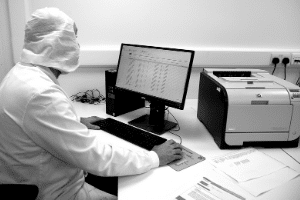
At MWS, we’ve built our reputation on delivering precise, reliable calibration services for weighing and non-weighing equipment used across the food industry. With decades of experience supporting some of the UK’s largest food manufacturers, we understand just how critical accuracy is across every aspect of production and compliance.
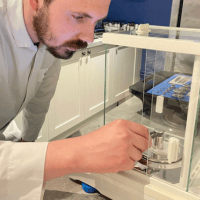
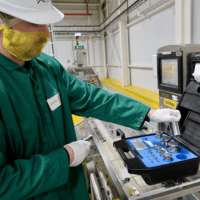
Whether you need weight, pressure, temperature, magnetic, or specialist electrical instruments calibrated, our experienced engineers deliver traceable, high-quality results you can trust. This comprehensive offering means fewer suppliers to manage, reduced downtime, and full confidence that all your critical equipment is maintained to the highest standards all within the same online asset portal.
Learn more about our calibration services for the food industry.
Food Weighing Scales FAQs
What scales are used in the food industry?
The food industry uses a range of hygienic weighing scales designed to operate safely in wet, washdown, and regulated environments. Common types include bench scales, floor scales, platform scales, checkweighers, and portion control scales.
For food production, these scales are typically manufactured from 304 or 316 stainless steel, feature sealed load cells, and have smooth, easy-to-clean surfaces to reduce the risk of contamination. Scales used in food environments are often rated IP67 or higher to withstand regular washdown and exposure to cleaning chemicals.
Choosing the right food industry scale depends on the application, required accuracy, hygiene standards, and cleaning regime, but durability, washdown protection, and serviceability are always key considerations.
How much do hygienic scales cost?
Hygienically designed scales range in cost depending on a number of factors including the materials used, function, size and capacity. Properly-designed hygienic scales are rarely the cheapest option on day one, but they are built to withstand harsh cleaning regimes and daily use without degrading, saving you money and downtime in the long run.
What IP rating should I look for (IP65, IP67, IP68)?
The correct IP rating for weighing scales depends on how wet the environment is and how the scale will be cleaned:
- IP65 scales are suitable for dry areas and light cleaning (splash resistance).
- IP67 scales are ideal for food production and washdown environments, offering strong protection against water ingress during regular cleaning.
- IP68 scales are designed for full immersion and are rarely required in food factories.
For most food and washdown applications, IP67 is the recommended IP rating for long-term reliability.
Are load cells protected against moisture and corrosion?
Yes. In food and washdown environments, load cell protection is critical. MWS scales use sealed load cells designed to resist moisture ingress, corrosion, and cleaning chemicals.
Poorly protected load cells are one of the most common causes of scale failure in wet production areas. A hygienic design with sealed components helps improve reliability and reduce downtime.
What materials are best for weighing equipment in food environments?
For food environments, 304 or 316L grade stainless steel is widely regarded as the right choice. These grades are more resistant to corrosion and better suited to regular exposure to water, chemicals, and cleaning agents. A glass bead blast finish is also worth looking for, as it creates a smooth, uniform surface that is easier to clean and less likely to trap residue.
Do small components really make a difference to hygiene?
Yes – small details matter. Fasteners are a good example. Even standard stainless steel bolts can rust over time when exposed repeatedly to cleaning chemicals. Once corrosion sets in, removing fasteners for servicing or repair can become difficult and time-consuming.
High-quality hygienic designs carefully select materials, finishes, and components that are better suited to washdown environments and easier to work with throughout the life of the scale.
Why does hygienic design matter beyond visible surfaces?
Hygienic design is often about what you cannot see. Scales built with fully welded and capped box section frames avoid gaps, joints, and open ends where moisture and product can collect.
These hidden crevices are a common place for bacteria to harbour, particularly in busy production environments where cleaning time is limited. A fully sealed, welded construction allows for more effective washdown and reduces the risk of contamination, helping to meet the expectations of auditors and regulators.
Are UK-manufactured scales better than imported alternatives?
While lower-cost imported equipment can be tempting, there are practical trade-offs to consider. UK-manufactured scales typically offer better build consistency and a longer working life, especially in demanding food environments.
Support is also an important factor. If a component fails or servicing is required, sourcing parts locally is usually faster and more reliable. Long lead times or discontinued components can quickly outweigh any initial cost savings.
How long is the expected service life of an MWS scale?
MWS scales are built for long-term use in demanding food environments. MWS-manufactured scales come with a lifetime guarantee on the structural integrity of the scale, reflecting the strength of the welded stainless steel construction.
Key components such as load cells are covered by a 5-year warranty. With regular servicing and calibration, an MWS scale is designed to deliver reliable performance over many years in washdown environments.
Is it important to service and calibrate a food scale?
Regular servicing and calibration are essential for maintaining accuracy and compliance. A well-designed scale should be straightforward to calibrate and service, without the need for specialist tools or proprietary software.
It is also worth checking that you are not locked into a single supplier for calibration or maintenance. Flexibility here can reduce costs and make routine upkeep far less disruptive to operations.
How often should food weighing equipment be calibrated?
Food weighing equipment should typically be calibrated at least once per year to maintain accuracy and support compliance requirements.
More frequent calibration may be recommended if the scale is used heavily, exposed to regular washdowns, or used for critical production checks. Routine calibration ensures accurate weighing, reduces risk, and supports audit standards.
Do you offer custom-designed weighing solutions?
Yes. Custom design is one of MWS’s core strengths. Our in-house manufacturing facility in Leicester allows us to create bespoke weighing solutions tailored to your exact requirements.
Custom Capabilities:
Tailored Dimensions:
- Non-standard platform sizes to fit your space
- Custom heights for loading requirements
- Specialized shapes for unique products
Application-Specific Design:
- Integration with existing production lines
- Hygienic designs for food and pharmaceutical environments
- Extreme environment solutions (temperature, corrosion, hazardous areas)
- Multi-scale systems with centralized control
Industry Solutions:
- Vehicle weighing systems for unique site configurations
- Overhead weighing for meat and fish processing
- Silo and tank weighing with custom mounting
- Conveyor integration for production lines
- Recipe formulation systems with multiple scales
Software Integration:
- Custom data management solutions
- Integration with your ERP or WMS systems
- Automated batching and process control
- Traceability and reporting systems