




Pharmaceutical Industry 4 – 10 May Ft: Myomaker Bio and Boehringer Ingelheim
- Myomaker Bio, a Loughborough University spin-out, has launched a world-first lab-grown human muscle platform for drug developers.
- Boehringer Ingelheim has reported positive phase III topline results for survodutide, its investigational dual glucagon/GLP-1 agonist for obesity and overweight.
A Pharmaceutical Sector Moving Towards More Human-Relevant Science
The pharmaceutical industry is undergoing a significant shift in the way new medicines are discovered, tested and developed.
From advanced laboratory models that replicate human tissue to next-generation metabolic therapies designed to address obesity and related conditions, the sector is increasingly moving towards science that is more precise, more predictive and more closely aligned with real patient biology.
Two recent developments underline that momentum. In the United Kingdom, Myomaker Bio has launched what it describes as a world-first platform of lab-grown human muscle, designed to give drug developers earlier and more accurate insight into how medicines may behave before entering clinical trials.
Meanwhile, Boehringer Ingelheim has reported positive topline results from a major phase III obesity trial for survodutide, an investigational dual glucagon/GLP-1 receptor agonist.
Together, the announcements reflect a wider industry direction: pharmaceutical innovation is no longer only about discovering promising compounds. It is also about improving the systems, technologies and biological understanding that determine whether those compounds can become safe, effective treatments.
Myomaker Bio Launches Lab-Grown Human Muscle Platform
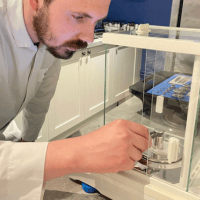
Myomaker Bio, a biotech spin-out from Loughborough University, is scaling its bioengineered human muscle technology to support pharmaceutical and biotech companies looking for faster, more reliable preclinical testing.
The platform has been developed to reduce reliance on animal studies and provide a more human-relevant view of drug behaviour at an earlier stage.
The company’s team of scientists and researchers, described as world leaders in muscle biology, has created human muscle tissues and organs that replicate the structure and function of real skeletal muscle.
These lab-grown models allow researchers to study human muscle biology, injury, regeneration and drug response within a controlled laboratory environment.
For drug developers, the promise is clear. Preclinical testing is often one of the most uncertain and expensive phases of drug development. Animal studies can provide useful information, but they do not always predict human outcomes. This can lead to costly failures later in the process, particularly when a drug moves into clinical trials and behaves differently in people than expected.
Myomaker Bio’s platform is designed to bridge that gap by giving researchers access to engineered human muscle systems that more closely reflect the biology they are ultimately trying to treat.
From University Research to Commercial Scale-Up
The technology builds on more than 50 years of combined research, with the scientific team having secured more than £37 million in funding and published more than 100 peer-reviewed papers.
That academic depth is now being channelled into a commercial platform aimed at pharmaceutical and biotech partners.
The company is now based in London laboratory facilities and is preparing for rapid scale-up after securing £325,000 investment from SFC Capital. The funding will support the expansion of its scientific team, increased production of its muscle models and deeper partnerships with global drug developers.
A professor who co-founded Myomaker Bio and recently left Loughborough University to become the company’s full-time CEO said drug development remains slow, expensive and heavily dependent on animal testing, which does not always predict human outcomes.
The company’s human muscle platforms, they explained, are intended to provide a more accurate way to evaluate medicines earlier in development, helping safer treatments reach patients faster while reducing the need for animal testing.
The Pro Vice-Chancellor for Research and Innovation at Loughborough University also described the investment as an exciting moment for Myomaker Bio, noting that its engineered human muscle systems are opening new possibilities for safer, faster and more human-relevant drug discovery.
Boehringer Ingelheim Reports Positive Phase III Results for Survodutide
While Myomaker Bio is focused on improving the preclinical testing environment, Boehringer Ingelheim’s latest announcement sits further along the drug development pathway.
The company has reported positive topline results from the phase III SYNCHRONIZE-1 trial of survodutide, its investigational dual glucagon/GLP-1 receptor agonist. The trial assessed the treatment in adults with obesity or overweight who did not have type 2 diabetes.
According to Boehringer Ingelheim, participants receiving survodutide lost up to an average of 16.6% of their body weight after 76 weeks using the efficacy estimand, compared with 3.2% for placebo. The trial met both co-primary endpoints, with up to 85.1% of adults on survodutide achieving at least a 5% reduction in body weight, compared with 38.8% on placebo.
Initial analysis suggested that most of the weight loss came from fat tissue, with lean mass contributing only a small proportion. A key secondary endpoint also showed a statistically significant reduction in waist circumference, a marker closely associated with visceral fat and cardiometabolic risk.
A Broader View of Obesity Treatment
Survodutide is designed as a dual glucagon/GLP-1 receptor agonist. This mechanism may allow it to address obesity while also supporting liver function, which plays a central role in metabolic health.
That distinction is important. Obesity is increasingly understood not simply as a question of weight, but as a chronic disease connected to a wider network of metabolic risks, including liver disease, cardiovascular concerns and conditions such as MASH, or metabolic dysfunction-associated steatohepatitis.
The Global Coordinating Investigator of the SYNCHRONIZE-1 trial said the data continue to demonstrate survodutide’s potential as a clinically meaningful treatment option for people living with obesity.
They added that there is an urgent need for new therapies that go beyond weight reduction alone and support meaningful improvements in metabolic health.
Boehringer Ingelheim’s Chairman of the Board of Managing Directors and Head of Human Pharma said the results strengthen the company’s confidence in survodutide as a treatment candidate capable of addressing obesity and potentially connected conditions including liver disease.
The company has stated that survodutide could become the first global glucagon/GLP-1 dual agonist to help people living with obesity and MASH.
Gastrointestinal events reported in the trial were consistent with the GLP-1 class and were generally mild to moderate, occurring more frequently during dose escalation. No new safety concerns were observed.
Survodutide remains investigational and has not yet been approved. Further phase III readouts are expected later in 2026, including data from the LIVERAGE and LIVERAGE-Cirrhosis trials in MASH.
What This Means for Pharmaceutical Manufacturing and Production
These developments also carry important implications for pharmaceutical manufacturing and production.
Technologies such as Myomaker Bio’s human muscle platform could help drug developers make earlier decisions about which candidates to advance, reducing wasted production effort on treatments that are less likely to succeed in humans.
More predictive preclinical models can support better pipeline efficiency, helping manufacturers plan resources, scale production more intelligently and reduce the risk of late-stage failure.
At the same time, the progress of advanced metabolic therapies such as survodutide highlights the growing production demands around complex biologically active medicines. If investigational treatments in this field continue to progress, pharmaceutical manufacturers will need robust, scalable and highly controlled production systems capable of meeting global demand while maintaining consistency, safety and quality.
In practical terms, the future of pharmaceutical production is likely to be shaped not only by larger volumes, but by smarter development pathways, more specialist manufacturing processes and tighter integration between laboratory insight and commercial-scale delivery.
A Sector Being Reshaped at Both Ends of the Pipeline
What makes these two announcements particularly interesting is that they speak to different, but connected, parts of the pharmaceutical value chain.
Myomaker Bio is working at the front end of drug development, where better models can help companies understand human biology earlier, improve decision-making and reduce reliance on less predictive testing methods.
Boehringer Ingelheim, meanwhile, is advancing a late-stage investigational therapy in one of the world’s most urgent areas of unmet medical need.
One is about improving the tools that support drug discovery. The other is about moving a potential treatment closer to the patients who may one day benefit from it. Both point towards a sector becoming more targeted, more evidence-led and more ambitious in its approach to human health.
Conclusion: From Better Testing to Better Treatments
The pharmaceutical industry is often judged by the medicines it brings to market, but the path to those medicines depends on many moving parts: the quality of early research models, the strength of clinical evidence, the scalability of production and the ability to translate scientific promise into real patient benefit.
Myomaker Bio’s lab-grown human muscle platform represents a step forward in making preclinical testing more human-relevant, potentially helping drug developers make faster and better-informed decisions. Boehringer Ingelheim’s positive phase III data for survodutide, meanwhile, adds momentum to the fast-moving field of obesity and metabolic disease treatment.
Together, these developments show a pharmaceutical sector pushing on two fronts: improving the science behind drug discovery while also advancing therapies that could address major global health challenges.
The result is a more sophisticated, more ethically aware and potentially more effective model for turning breakthrough research into treatments that make a measurable difference.
News Credits:
Myomaker Bio unveils lab‑grown human muscle platform to transform drug testing
Survodutide delivers 16.6% weight loss in major phase 3 obesity trial
Things you may also like: