

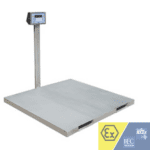

ATEX Scales
What are ATEX barriers and how do they work?
ATEX barriers, also known as Zener barriers, are protective devices installed in the safe area of a site. They limit the amount of electrical energy that can pass into a circuit running through a hazardous area, keeping it below the level that could ignite a potentially explosive atmosphere.
Why do I need an ATEX barrier for my weighing system?
When load cells or weighing platforms are used in a hazardous area but the weighing terminal sits in a safe area, the connection between them needs to be protected. An ATEX barrier makes sure that, even if a fault occurs on the safe side, the energy reaching the hazardous area stays at a safe level.
Where are ATEX barriers installed?
ATEX barriers are classed as associated equipment and are installed in the safe area, not inside the hazardous zone itself. They sit between the weighing terminal in the safe area and the load cells or weighing equipment located in the ATEX zone.
Which ATEX barriers does MWS offer?
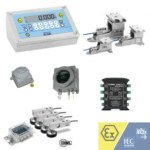
MWS offers the ZBA1S ATEX/IECEx barrier kit and the KMB4 Zener barrier kit. The ZBA1S is a low-cost solution for connecting a weighing terminal to a weight receiver system in an ATEX zone, while the KMB4 is a kit of three intrinsic protection Zener barriers housed in an ABS box.
Are MWS ATEX barriers suitable for both gas and dust environments?
Absolutely! The KMB4 Zener barrier kit carries the ATEX II (1) GD IIC IIIC marking, making it suitable for connecting equipment in areas where flammable gases or combustible dusts may be present. Our team can confirm the right barrier for your specific zone classification.
Where are ATEX barriers typically used?
You’ll often find them in petrochemical plants, pharmaceutical facilities, chemical manufacturing sites, grain handling operations and powder processing environments, anywhere weighing takes place in or near a potentially explosive atmosphere.
Can ATEX barriers be used with existing weighing equipment?
In many cases, yes. ATEX barriers can connect a range of weighing terminals and load cell systems, but compatibility depends on your equipment and hazardous area requirements. Speak to our team and we’ll help you find the right solution.
Does MWS supply complete ATEX weighing systems?
Definitely! As well as ATEX barriers, MWS supplies ATEX floor scales, bench scales, mobile scales, pallet scales, weight indicators and components. We provide complete turnkey solutions, including expert consultation, custom design, professional installation and certification support.
How are ATEX weighing systems maintained and calibrated?
Regular inspections and scheduled calibrations are key to keeping ATEX weighing systems safe, accurate and compliant. MWS offers servicing and calibration support to ensure your system continues to operate reliably over time. Learn more about our calibration services.
Can MWS help with installing ATEX barriers?
Absolutely! ATEX barriers must be installed correctly in the safe area, and because safety in hazardous areas is critical, we recommend using engineers with experience in both weighing technology and hazardous area regulations. The MWS team is on hand to help.
What are load cell mounts and how do they work?
Load cell mounts are assemblies that sit between the item being weighed and the load cell itself. They hold the load cell securely in position and transfer the weight of a tank, hopper, silo or platform onto it correctly, so the load cell can send accurate readings to a digital weight indicator.
Why do I need a load cell mount for process weighing?
A load cell performs best when the load is applied in the right direction. Load cell mounts help keep the force properly aligned while supporting the structure safely, which protects the load cell and helps maintain weighing accuracy over time.
Which load cell mounts does MWS offer?
MWS offers a selection of load cell mounts for all types of process weighing applications, including the MasterMount, the LA85 anti-vibration assembly, the LeverMount®, the KDSBN double shear beam load cell mount and the KCPN compression load cell mount.
What are load cell mounts typically used for?
They’re commonly used for weighing silos, hoppers, tanks and vessels, as well as platform scales, mixers, FIBC filling stations, belt scales and conveyors. Whether you’re monitoring stock levels or controlling a batching process, there’s a mount to suit.
Are load cell mounts suitable for hazardous areas?
Absolutely! The MasterMount is ideal for silo, hopper and tank weighing in hazardous areas, thanks to its fully welded and hermetically sealed stainless steel load cell. Our team can advise on the right ATEX components for your classified area.
Which load cell mount is best for applications with vibration?
The LA85 anti-vibration assembly is designed for applications where movement and vibration are part of everyday operation, such as mixers, conveyors, belt scales and FIBC filling. It’s also well suited to platform scales and tank and vessel weighing.
What weight capacities are available for load cell mounts?
Load cell mounts are available in a range of capacities to suit different vessel sizes. For example, the KDSBN mount supports DSBI series double shear beam load cells up to 30,000kg, making it ideal for large hoppers, tanks and silos, while the KCPN mount supports CPX series compression load cells up to 100,000kg and CPA series load cells up to 10,000kg.
How do I choose the right load cell mount for my application?
The right mount depends on your vessel or platform, the total load, the environment and any vibration or movement involved. MWS has a team of experienced weighing professionals ready to guide you to the correct load cell and mounting kit for your application.
How are load cell mounts installed and calibrated?
The supporting structure must be strong enough to carry the load, and each load cell should take an equal share of the dead weight before the mounts are secured. Once installed, regular inspections and scheduled calibrations help keep your system accurate. MWS offers installation support and load cell calibration services to ensure reliable performance. Learn more about our calibration services.
What are load cell kits and how do they work?
Load cell kits are ready-to-use sets of load cells and mounts that can turn almost any platform or vessel into an integrated weighing system. Once installed, the load cells measure the weight applied to the structure and send accurate readings to a digital weight indicator.
What are load cell kits used for?
They’re ideal for replacing load cells in existing machines or for building your own weighing solution from scratch. Recent customer applications include small electric food mixers and weighing systems mounted under gravity-fed conveyors.
Which load cell kits does MWS offer?
MWS offers a range of off-the-shelf kits, including the KCPN compression load cell mount assembly kits, the PLT Series 350 Ohm nickel-plated load cell kit, and the PLX1K-1 Series 1000 Ohm load cell kit. The PLT and PLX1K-1 kits are perfect for creating platforms with four load cells in a variety of sizes and capacities.
What weight capacities are available for load cell kits?
Load cell kits come in a wide range of capacities to suit different weighing applications. For example, the KCPN mount kits support CPX series compression load cells up to 100,000kg and CPA series load cells up to 10,000kg. The right capacity for you will depend on the dead load and live load of your system.
How do I choose the right size load cell kit?
First, work out the dead load (the weight of the structure the load cells support) and the maximum live load. Add these together and divide the total by the number of load cells. For example, a vessel with a 1,500kg dead load and a 5,000kg live load gives 6,500kg in total, or 1,625kg per load cell across four mounts. We’d recommend rounding up to at least a 2,000kg or 2,500kg load cell for safety.
Why should load cells be oversized for vessel weighing?
Most vessel and platform weighing systems are under constant load, which can cause a small amount of creep over time. Choosing load cells with extra capacity, often around double what’s strictly required, helps protect accuracy and extends the life of the system.
Can load cell kits be customised to suit specific applications?
Definitely! Kits can be made up of different load cell components, so you can build the perfect load cell kit for your application. Our process weighing team is always happy to recommend the best combination for your scale-building needs.
What is involved in installing a load cell kit?
Start by checking that the floor or supporting structure is strong enough to carry the load. If it isn’t, footings or piers may need to be added. Each load cell should then carry an equal share of the dead weight, which is checked by testing the millivolt readings. Once balanced, the load cells are secured and the stands are grouted to prevent movement.
Can I install a load cell kit myself?
While it’s possible, we don’t recommend sizing or installing a load cell kit without expert advice. Correct setup is essential for accurate weighing, and materials must be delivered in a way that doesn’t interfere with the load cell mounts. Our engineers are on hand to help, or we can handle the installation for you.
How are load cell kits calibrated and maintained?
To keep your weighing system accurate, regular inspections and scheduled calibrations are essential. MWS offers load cell and process weighing calibration services to ensure your system continues to perform reliably over time. Learn more about our calibration services.
What is a load cell junction box and what does it do?
A load cell junction box connects multiple load cells together in parallel, combining their individual signals into a single output that’s sent on to your weighing indicator. It’s an essential link between the load cells in a scale and the display that shows you the weight.
Why do I need a junction box if I already have load cells?
Most industrial scales use more than one load cell to support the platform evenly, so a junction box is needed to bring those signals together, balance them, and pass a single, accurate signal to the indicator. Without one, the load cells simply can’t communicate as a system.
How many load cells can a junction box handle?
It depends on the model. MWS supplies junction boxes for 2, 3, 4, or 6 load cells, so whether you’re running a small platform scale or a larger multi-cell system, there’s an option to match your setup.
What is an equalisation junction box?
An equalisation junction box doesn’t just combine load cell signals, it also balances or ‘equalises’ them, correcting for small differences between individual load cells so the overall weight reading stays accurate. Our JBQ, JBQI, JBQA, and JBQAI ranges are all equalisation junction boxes.
What is an intelligent junction box?
An intelligent junction box, such as our JB4T-INTELLIGENT, goes a step further by continuously monitoring your weighing system for error or fault conditions across up to four load cells. This means problems can be picked up early, helping to reduce downtime and protect weighing accuracy.
Are ATEX-rated junction boxes available?
Absolutely! MWS supplies ATEX-rated junction boxes, including the JBQA and JBQAI, for use in hazardous or potentially explosive environments. These are built to the ATEX standard to ensure safe operation wherever flammable gases, vapours, or dust could be present.
What is an ATEX rating and why does it matter?
An ATEX rating is an international safety standard for electrical equipment used in areas with a risk of explosion or fire. Products carrying an ATEX label have been tested to confirm they won’t produce sparks or flames, so it’s essential to choose ATEX-rated equipment for any hazardous area application.
Are load cell junction boxes weatherproof or waterproof?
Yes, our junction boxes are built with robust IP ratings, from IP65 up to IP67, giving reliable protection against water and dust. This makes them well suited to washdown areas and other demanding industrial environments.
What's the difference between compression and tension load cell connections?
Compression load cells are installed using a threaded hole to fix the sensor onto a beam, while tension load cells are typically mounted using adhesive tape or screws rather than a threaded hole. Your junction box and connection kit need to suit whichever type of load cell you’re using.
Can a junction box replace one that has failed?
Definitely! Our junction boxes can be supplied individually to replace an existing unit that has failed, or as part of a complete load cell kit if you’re setting up a new weighing system.
Are MWS junction boxes suitable for all industries?
Yes, we supply load cell junction boxes and connection kits to clients across a wide range of industries. Whatever you’re trying to achieve, our team will help find an affordable, safe solution for your particular application.
How do I know which junction box is right for my system?
It’s worth speaking to our team before buying, as the right choice depends on how many load cells you’re running, whether you need equalisation or intelligent monitoring, and whether the environment calls for an ATEX rating. Call us today or chat with our customer service team online, and we’ll help you find the right fit.
What is an X-ray inspection system and how does it work?
An X-ray inspection system scans products as they travel along a conveyor, using X-rays to build up an image based on how much radiation each part of the product absorbs. Denser materials, such as metal, glass, stone, bone, or hard plastic, absorb more radiation than the surrounding product, so the system can spot them and automatically reject any contaminated items.
Does X-ray inspection damage the product?
Not at all! X-ray inspection is entirely non-destructive, so products pass through the system and continue down the line completely unaffected, with no impact on quality, taste, or packaging.
What contaminants can an X-ray machine detect?
X-ray systems can identify a wide range of dense contaminants, including metal, glass, stone, bone, and hard plastics. This makes them especially useful for products where these materials might otherwise slip past a standard metal detector.
How is an X-ray detector different from a metal detector?
X-ray detectors go a step further than traditional metal detectors. As well as identifying a broader range of contaminants, they can carry out additional quality checks at the same time, such as mass measurement, component counting, fill level verification, and seal integrity inspection, all from a single machine.
Can X-ray inspection check for anything other than contamination?
Absolutely! Alongside contaminant detection, Prisma X-ray systems can verify fill levels, count components within a pack, check seal integrity, and confirm product mass, giving you a complete quality assurance checkpoint rather than just a contamination check.
Which industries use X-ray inspection systems?
X-ray inspection is widely used across food and pharmaceutical processing and packaging, wherever manufacturers need to guarantee that sealed products are free from foreign objects before they reach the customer.
Can X-ray systems inspect sealed or packaged products?
Yes, indeed! One of the biggest advantages of X-ray inspection is that it can see inside sealed packaging, checking the product itself as well as the pack, without the need to open or unwrap it.
Does X-ray inspection help with food safety compliance?
It does. X-ray inspection supports compliance with food safety standards such as BRC, IFS, and HACCP, helping manufacturers demonstrate the level of due diligence expected by auditors, retailers, and regulators.
What sizes and capacities are available for X-ray inspection systems?
Prisma X-ray systems come in a range of capacities and aperture sizes to suit different products, from smaller packaged items up to larger bulk products of several kilograms. The right model will depend on your product dimensions, weight, and line speed.
Can an X-ray system be combined with a checkweigher?
Definitely! Prisma X-ray detectors can be used as a standalone inspection point or integrated with a checkweigher, giving you a combined contamination detection and weight verification system on a single line.
Are MWS X-ray systems suitable for existing production lines?
Yes, MWS designs and supplies Prisma X-ray systems to integrate seamlessly with your existing equipment and processes, so you can add contamination detection to your line without a major overhaul.
Does MWS provide software for reporting and quality data?
MWS supplies DMT (Data Manager Tracking) software alongside its X-ray systems, which carries out detailed statistical analysis, from an individual machine right through to your entire production line, making QA reporting straightforward.
What are metal detectors and how do they work?
Metal detectors are inspection systems that scan products as they pass through on a conveyor, checking for stray pieces of metal that shouldn’t be there. A coil sends out a magnetic field, and if a metal contaminant disturbs that field, the system flags it and the product is automatically rejected from the line.
Why do I need a metal detector on my production line?
Metal detectors give you a final safeguard before products reach your customers. They catch fragments of metal that may have come from processing equipment, packaging materials, or even employees, helping you protect consumers, avoid costly recalls, and safeguard your brand’s reputation.
How does metal get into products during manufacturing?
Metal contamination can creep in from several places on a production line. Common sources include small shavings from knives and other equipment, fragments introduced by staff, or debris carried in with raw materials. A reliable metal detector is the best way to catch these before products are packaged and shipped.
What industries use metal detectors?
Metal detectors are widely used in food and beverage manufacturing, pharmaceutical production, and other sectors where product safety is critical. They’re especially important anywhere metal contamination could pose a risk to consumers or lead to a costly product recall.
What types of metal can a metal detector find?
A good metal detector will pick up ferrous, non-ferrous, and stainless steel contaminants. Stainless steel is typically the hardest to detect, so it’s worth checking a machine’s sensitivity to this type of metal before you buy, particularly if your process involves stainless equipment.
What are BRC specification metal detectors?
BRC specification metal detectors are built to meet the requirements set out in the BRCGS Food Safety Standard, currently on issue 9. MWS supplies Prisma metal detectors designed to these standards, helping manufacturers demonstrate compliance and protect their reputation with customers and auditors alike.
What are supermarket specification metal detectors?
Leading supermarkets, including M&S, Tesco, and Sainsbury’s, set their own Codes of Practice (COP) that suppliers must meet to protect their brand and supply chain. MWS metal detectors can be specified to meet these individual supermarket requirements, helping you win and retain contracts with major retailers.
Should I consider future contracts when buying a metal detector?
Definitely! It’s worth thinking ahead before investing in a metal detector. A machine that meets today’s requirements may fall short if a new client has a different Code of Practice, or if an existing customer updates their standards. Choosing a unit with the right specification from the outset can save you from a costly upgrade later.
Are washdown and hygienic metal detectors available?
Absolutely! MWS supplies washdown-rated, IP69K metal detectors that are built for hygiene-sensitive environments such as food, dairy, meat, and fish processing. These units are designed to withstand regular washdown while maintaining consistent detection performance.
What metal detector options does MWS offer?
MWS supplies a full range of Prisma Industriale metal detectors, from compact IP69K head-only units and heavy-duty conveyorised detectors to standard, pharma, and throat metal detectors, along with DMT software for statistical data capture and QA reporting. We can help you choose the right configuration for your product and process.
Are MWS metal detectors serviced and calibrated?
Yes, indeed! MWS offers dedicated servicing and calibration support for metal detectors to help keep your equipment performing reliably and in line with compliance requirements. Learn more about our calibration services.
Can metal detectors be customised for specific applications?
Definitely! Prisma metal detectors can be configured to suit your product size, conveyor requirements, aperture, sensitivity, and reporting needs, as well as BRC or supermarket specification requirements, ensuring the system fits your operation and compliance goals.
What is a Combination Checkweigher?
A Combination Checkweigher integrates two key product inspection technologies into one compact system: a checkweigher and either a metal detector or an X-ray inspection unit. This all-in-one solution simultaneously checks product weight and inspects for contaminants, ensuring every item leaving the production line meets both quality and safety standards.
What are the main benefits of a Combination Checkweigher?
There are plenty! It streamlines production by combining weighing and contaminant detection in a single unit, reduces equipment footprint to free up valuable factory floor space, and simplifies operation, maintenance, and integration into existing production lines. It also improves efficiency and reduces downtime through faster quality checks, ensures compliance with industry regulations and customer quality standards, provides full traceability and data capture for quality assurance records, and enhances product safety, consistency, and overall brand reputation.
How quickly can a Combination Checkweigher be installed?
Very quickly! These high performance units are compact and easily installed into a production line in less than 2 hours, minimising disruption to your existing operation.
How does combining a checkweigher and metal detector save space on my line?
A combination system maximises available space by combining a metal detector or X-ray unit and checkweigher into one complete unit, rather than requiring two separate machines. This is especially useful where floor space on the production line is limited.
Which industries use Combination Checkweighers?
Combination systems are widely used across food, pharmaceutical, and packaging industries, where precision and compliance are critical, helping manufacturers maintain full control over product integrity while optimising valuable line space.
Can a Combination Checkweigher include an X-ray inspection system instead of a metal detector?
Yes! As well as metal detector combination units, MWS offers X-ray inspection systems such as the 2XR51, which scans packaged food up to 1500g and dimensions of 200 x 100mm, giving you the option to detect a wider range of contaminants alongside weight checking.
What Combination Checkweigher models does MWS supply?
MWS supplies a range of compact combi checkweighers, including the 08D3, an integrated checkweigher and metal detector for small to medium format products, and the 08T3, which combines a metal detector and checkweigher in one machine with a touchscreen display, also for small to medium format products.
Does a Combination Checkweigher help with regulatory compliance?
Absolutely! By simultaneously checking product weight and inspecting for contaminants, combination checkweighers help ensure compliance with industry regulations and customer quality standards, while also providing full traceability and data capture for your quality assurance records.
How do I choose the right Combination Checkweigher for my application?
If you’re unsure which combination checkweigher is right for you, get in touch with us and our weighing specialists will be happy to provide advice and recommendations tailored to your products and production line.
What is an Average Weighing System?
An Average Weighing System allows operators to sample and record the weight of products from production batches, ensuring the average pack weight meets legal and customer specifications. These systems are commonly used across the food, chemical, and pharmaceutical industries, where compliance, consistency, and quality control are essential.
How does an Average Weighing System help with legal compliance?
The MWS Average Weighing System is designed to help manufacturers ensure compliance with the Three Packers Rules, which govern the weight of prepackaged goods. Weight inspection isn’t just a legal requirement, it’s also a crucial part of quality assurance and profit protection, and our systems provide an efficient way to monitor, record, and control product weights.
How does an Average Weighing System improve day-to-day production control?
With MWS Average Weighing Systems, manufacturers can move away from manual paperwork towards a more efficient, data-driven production environment. Our systems integrate seamlessly with your existing equipment, giving you real-time insights and complete confidence that every batch meets legal and quality requirements.
What are the main benefits of using an average weighing system?
There are several. It ensures compliance with the Three Packers Rules and other weight legislation, reduces product giveaway to help protect profit margins, and improves product consistency and overall quality control. It also provides accurate batch data for traceability and auditing, offers flexible options from simple standalone units to networked systems, enables paperless data capture with direct export to printers or databases, and saves time while reducing human error through guided operator processes.
Does MWS offer both manual and automated options?
Yes! MWS offers both manual batch sampling systems and automated end-of-line checkweighers, so you can choose the level of automation that best suits your operation, whether that’s a simple standalone unit or a fully networked, automatic system.
What products are available as part of the MWS Average Weighing System range?
We offer a range of options including the KST04GT, a bench digital scale with a stainless steel body and touch screen colour display, ideal for standalone applications; the IT6000e, a weighing terminal for statistical quality control ideal for networked data storage; and the HY10, which allows companies to weigh and record samples while producing detailed PDF reports for end of batch via printers.
Can I access batch data remotely or across multiple production lines?
Absolutely! Batch data can be seen locally on the terminal or viewed online via our client management software. Multiple lines and terminals can be installed across your manufacturing site using a simple Ethernet network, giving you a complete picture of production wherever you need it.
How is my batch data stored and secured?
Data is secured long-term using robust Microsoft SQL server database technology, so records are safely retained and can be viewed instantly, allowing your customers to see batch data at a moment’s notice if needed.
Can an Average Weighing System help reduce product giveaway?
Yes! By accurately sampling and recording batch weights, the system helps you spot and correct any tendency to overfill, reducing unnecessary product giveaway and protecting your profit margins over time.
Which industries typically use Average Weighing Systems?
They’re commonly used across the food, chemical, and pharmaceutical industries, where compliance with weight legislation, consistent product quality, and full traceability are all essential to production.
How do I get started with an Average Weighing System from MWS?
Get in touch with our team to discuss your production line and reporting needs. We’ll help you choose between our standalone and networked options and provide a straightforward quotation for your Average Weighing System.
What is a shear beam load cell?
A shear beam load cell measures weight by converting the shear stress generated in a beam into an electrical signal, using strain gauges bonded to the beam. It’s supported at one or two points and loaded in a way that produces shear in the sensing element.
How do shear beam load cells work?
The strain gauges bonded to the beam change resistance as the beam deforms under load. A Wheatstone bridge circuit then translates those resistance changes into a millivolt signal proportional to the applied force, which is amplified and converted into a weight reading by an indicator or controller.
Where are shear beam load cells typically used?
They’re commonly found in silos, tanks, hoppers, platform scales, batching systems, and process weighing applications. Their robustness makes them ideal for industrial environments requiring reliable performance across medium to high capacity ranges.
What are the advantages of shear beam load cells?
Key benefits include mechanical robustness, good resistance to off-axis or side loads, long-term stability, and suitability for harsh industrial environments. They also offer a strong cost-to-performance ratio for a wide range of scale and process applications.
What weight capacities are available?
Shear beam load cells come in a wide range of capacities, commonly from a few hundred kilograms up to tens of tonnes. It’s best to choose a cell rated close to your expected maximum load while allowing some headroom for overload scenarios.
How should shear beam load cells be mounted?
Proper mounting is crucial. Many shear beams use a single or double-ended configuration with dedicated mounting hardware, such as pins, pivot pads, or load buttons, to accommodate thermal expansion and avoid introducing bending moments. It’s important to follow the manufacturer’s mounting instructions and use the recommended accessories.
Do shear beam load cells require calibration?
Yes, calibration is essential for accuracy. An initial calibration is carried out during installation, and periodic recalibration is recommended depending on usage, process criticality, and any regulatory requirements that apply.
Can shear beam load cells be used outdoors or in washdown environments?
Many models are available in stainless steel and sealed to IP66/67 or higher, making them suitable for outdoor and washdown applications. It’s worth confirming the cell’s ingress protection rating and material specification for your intended environment.
What accuracy and repeatability can I expect from a shear beam load cell?
Accuracy depends on the model and capacity. Typical industrial shear beams offer good repeatability and accuracy suitable for process control and commercial weighing, while high-accuracy applications may call for a C3, C4, or better accuracy class.
What common problems should I watch for with shear beam load cells?
Typical issues include incorrect mounting, side loads, electrical noise, damaged cables, and environmental ingress. Using proper mounting hardware, checking wiring and shielding, and scheduling regular inspections all help avoid these problems.
Which shear beam load cells does MWS supply?
MWS supplies a wide range of shear beam load cells to suit different applications and capacities, including the CE-M approved RSBT double shear beam, the stainless steel T85, and the SB5, SB8, SLB, SB14, and SBX beam load cells, covering capacities from as little as 10kg through to over 10 tonnes.
Can MWS help me choose the right shear beam load cell for my application?
Absolutely! If you’re unsure which model or capacity suits your weighing system, our team is happy to talk through your application, whether it’s a tank, hopper, platform scale, or bespoke process weighing setup, and recommend the right load cell for the job.
What is vehicle weighing software and how does it work?
Vehicle weighing software automates the process of collecting, storing, and managing weighbridge data. It records essential information such as vehicle ID, driver details, load type, and net weight, allowing seamless communication between weighing terminals, databases, and back-office systems.
Who does MWS partner with to provide vehicle weighing software?
MWS has partnered with Giropès, a trusted leader in the weighing industry based in Spain, to offer customisable vehicle weighing software solutions designed to fit your specific requirements. From traffic control management to generating detailed reports, the software is tailored to enhance operational efficiency and ensure regulatory compliance.
What are the main benefits of using vehicle weighing software?
There are plenty! It streamlines weighbridge operations and cuts down on manual data entry, improves traceability and accountability across all vehicle movements, and provides enhanced reporting with detailed transaction and audit trails. It also integrates with existing MWS weighbridges, terminals, and third-party systems, supports both unattended and manned weighbridge operations, reduces administrative workload, and provides secure data storage with easy access to historical records.
Which industries use MWS vehicle weighing software?
Our software solutions are widely used in industries such as logistics, waste management, quarrying, agriculture, and manufacturing, where accurate and efficient weight data is vital for both operational control and legal compliance.
Can vehicle weighing software integrate with my existing weighbridge and terminals?
Yes! Our complete turnkey solutions integrate seamlessly with our range of weigh pads, weighbridges, and weighing terminals, providing everything from supply and installation to ongoing support and maintenance.
What software products does MWS offer for vehicle weighing?
MWS offers a range of Giropès software products, including GesDyn for weighing-in-motion detection and penalties in traffic, GesNet, the ideal solution for optimising the weighing process at recycling and waste treatment plants, and GesTruck, which provides access control and production yield tracking across three solutions for weighbridges.
Is vehicle weighing software suitable for unattended weighbridge sites?
Absolutely! Our software supports both unattended and manned weighbridge operations, so whether you need a simple ticketing system or a fully networked setup, there’s a solution to suit how your site operates.
Can the software be customised to my business needs?
Definitely! MWS works in partnership with Giropès to offer customisable vehicle weighing software that adapts to your business, ranging from simple ticketing systems to fully networked, cloud-based solutions with user access control and reporting dashboards.
Does MWS provide installation and ongoing support for vehicle weighing software?
Yes! With MWS, you get a fully managed service, covering supply, installation, integration, and ongoing support and maintenance, so your vehicle weighing system operates smoothly from day one.
How do I get started with a vehicle weighing software solution?
Simply get in touch with our team to discuss your requirements. We’ll help you find the right combination of software and hardware, and provide a complete, turnkey vehicle weighing solution tailored to your business.
What is the difference between an automatic checkweigher and a static scale?
An automatic checkweigher weighs products as they move through the production line, giving rapid, in-motion measurement without stopping the item. A static scale, on the other hand, requires each item to be placed on a stationary platform and weighed individually, which is slower and not suited to high-throughput environments.
How accurate are industrial dynamic checkweighers?
Accuracy depends on the model and application, but modern dynamic checkweighers typically achieve precision in the range of ±0.1g to ±5g or better. Calibration, conveyor speed, product stability, and the surrounding environment all play a part in the final accuracy achieved.
What are the main benefits of using a checkweigher on my production line?
Checkweighers play a vital role in ensuring product quality, consistency, and compliance across production lines. By automatically verifying that each item meets its target weight, checkweighers help manufacturers reduce waste, prevent costly product recalls, and maintain adherence to industry regulations. They also improve efficiency by identifying under- or overfilled packages in real time, allowing quick adjustments to filling or packaging equipment. Ultimately, checkweighers support better quality control, increased productivity, and greater customer satisfaction, which makes them an essential part of any modern manufacturing process.
Can checkweighers integrate with my existing production line?
Yes! Our systems are designed for easy integration, mounting into most conveyor setups and connecting to control systems like PLCs, MES, and ERP through standard communication protocols.
Are there flexible payment options for buying a checkweigher?
Yes! MWS can provide leasing plans to spread the cost of capital equipment over a number of years, making it easier to invest in the right system for your line. Contact us for pricing on automatic checkweighers.
Can MWS supply a bespoke checkweigher if a standard model won't fit my application?
Definitely! If there isn’t a standard checkweigher in our portfolio that suits your needs, MWS can design and manufacture a system to fit almost any application, so you’re never limited to an off-the-shelf solution.
Which checkweigher brands does MWS supply?
MWS is the UK distributor and service partner for Prisma Industriale, whose checkweighers are designed and manufactured in Italy using recognised parts, keeping service simple and cost of ownership low. We also supply a range of checkweighers from A&D, covering everything from compact benchtop units to heavy-duty, high-capacity systems.
Is checkweigher service and calibration support available in the UK?
Yes! MWS provides UK-based installation, calibration, maintenance, and support services, helping to keep your checkweigher performing at optimal levels throughout its working life.
Can checkweighers operate in washdown or dusty environments?
Yes, indeed! We offer stainless steel and IP-rated models designed for harsh environments, including washdown cleaning and dust-prone areas commonly found in food and pharmaceutical plants.
How do I choose the right checkweigher for my factory?
It comes down to a few key factors: product weight range, line speed, product dimensions, required accuracy, environmental conditions such as washdown, temperature, or dust, and your data connectivity needs. Our sales engineers are happy to help with specification and customisation.
Do checkweighers help with regulatory compliance?
Absolutely! Checkweighers help ensure products comply with weight regulations such as UK Weights & Measures and EU Directives by automatically rejecting products that are under or overweight, supporting the Three Packers Rules that apply to declared pack weights.
Which industries use dynamic checkweighers most often?
Dynamic checkweighers are widely used across food and beverage processing, pharmaceuticals and healthcare, packaging and logistics, chemical production, and automotive parts and manufacturing.
What are micro balances and what are they used for?
Micro balances are the highest tier of precision weighing instruments, engineered for applications where even the smallest discrepancy carries real consequence. With readabilities typically reaching 0.001 mg (0.000001 g), they’re the instrument of choice in pharmaceutical research, materials science, trace analysis, and other advanced laboratory environments.
How accurate are micro balances compared to other laboratory balances?
Micro balances sit above analytical and semi-micro balances in terms of precision, often measuring to 6 decimal places. This level of accuracy makes them essential wherever mass needs to be determined at the microgram level.
Which manufacturers of micro balances does MWS supply?
MWS supplies a carefully selected range of micro balances from leading manufacturers, including Ohaus, Radwag, and A&D.
What features do MWS micro balances typically include?
Alongside exceptional measurement performance, our micro balance solutions combine practical features that modern laboratories demand, such as environmental compensation systems and compliance-ready data outputs, supporting accurate, repeatable results across demanding workflows.
What industries and applications rely on micro balances?
Micro balances are widely used in pharmaceutical research, materials science, and trace analysis, as well as other advanced laboratory settings where precise, repeatable mass measurement is critical to the outcome.
Does MWS offer installation and calibration for micro balances?
Yes! As a leading weighing equipment manufacturer and supplier, MWS provides supply, installation, and calibration services for micro balances, helping to keep your instrument performing accurately from day one.
Can MWS calibrate micro balances to UKAS standards?
Absolutely! MWS is UKAS accredited for the calibration of weighing scales and laboratory balances, so your micro balance can be calibrated to the highest traceable standards alongside our standard ISO 9001 traceable calibration options.
I'm not sure which micro balance is right for my lab, can MWS help?
Definitely! If you’re unsure what you need, or can’t see a suitable model listed, our team of lab specialists will be happy to talk through your application and recommend the right instrument for your requirements.
Are MWS micro balances suitable for regulated environments?
Yes. With compliance-ready data outputs and UKAS-accredited calibration support, our micro balance solutions are well suited to laboratories operating under strict quality and regulatory requirements.
How do I get a quote or more information about micro balances?
Simply get in touch with our team of lab specialists to discuss your application. We’ll help you find the right micro balance and provide a straightforward quotation for supply, installation, or calibration.
What is UKAS weigh pad hire and how does it work?
UKAS weigh pad hire gives you access to professionally maintained, UKAS-calibrated vehicle weigh pads without the capital outlay of buying your own. MWS owns and maintains every pad in the hire fleet, and each one is calibrated under our own UKAS ISO 17025 accreditation before it leaves our facility.
Is MWS really the first UKAS-calibrated weigh pad hire service in the UK?
Yes, indeed! MWS is the first provider in the UK to offer weigh pad hire calibrated under our own UKAS ISO 17025 accreditation, aligned to the DVSA Consolidated Code of Practice. This means the equipment you hire is ready to stand up to audit and enforcement scrutiny from day one.
What brand of weigh pads does MWS hire out?
Our hire fleet is manufactured by Dini Argeo in Italy, widely regarded as among the finest vehicle weigh pads available. This gives you access to market-leading accuracy and build quality on a flexible hire basis.
How are the hire weigh pads calibrated?
Every pad is calibrated by MWS under our UKAS-accredited process, which includes linearity, eccentricity, and repeatability testing, uncertainty calculation, and consideration of tilt and gradient effects. It’s a thorough process that ensures the equipment meets both compliance and enforcement expectations.
Do you hire out third-party equipment?
No, we don’t. Unlike conventional hire arrangements, MWS hires out its own weigh pads only. There’s no reliance on third-party stock, so every pad is maintained and calibrated to our own exacting standards before it reaches your site.
Can I rely on MWS weigh pads for DVSA or VCA compliance?
Absolutely! Our calibration methodology follows NAWI-style principles applied to force-based measurement, producing results that are robust, repeatable, and defensible. Operators working to VCA requirements or subject to DVSA oversight can hire with confidence.
How flexible is the hire arrangement?
Very! Whether you need a weigh pad for a short-term project, to meet a regulatory deadline, or for ongoing operational requirements, hiring gives you flexible access to premium equipment without a long-term commitment.
Will I get support during my hire period?
Yes. MWS is an independent UK specialist in industrial weighing and calibration, and our technical team understands the regulatory landscape inside out. We’re on hand throughout your hire period to advise on compliance, correct use, and applicable standards.
What industries or applications is weigh pad hire suitable for?
UKAS weigh pad hire suits any operator needing accurate, compliant vehicle weighing, from transport and logistics businesses to enforcement bodies and sites carrying out temporary or one-off weighing checks.
How do I get a quote for weigh pad hire?
Simply get in touch with our team to discuss your requirements. With UKAS-accredited calibration built in and expert support throughout, MWS makes it easy to access reliable, compliant weigh pads exactly when you need them.
What test, measurement and process equipment does MWS calibrate?
Alongside our weighing equipment services, MWS now calibrates a broad range of test and process instruments, including pressure gauges, temperature devices, magnetic testing equipment, and specialist electrical instruments. It means you can turn to one trusted supplier for calibration across your whole site.
What pressure equipment can MWS calibrate?
We calibrate pressure equipment from -0.95 to 100 bar g, covering analogue and digital pressure gauges, vacuum gauges, switches, transmitters, and controllers. We also handle pressure-related safety and test devices such as relief valves, leak testers, and burst testers.
What temperature calibration services does MWS provide?
Our temperature calibration covers everything from handheld thermometers to temperature transmitters and industrial ovens. This includes simulation and calibration of PT100/PT1000 sensors, thermistors, and thermocouples (types K, J, N, T, R, S), plus devices like fridges, freezers, fryers, autoclaves, and storage chambers. Temperature mapping is also available for ovens and other controlled environments.
Does MWS offer magnetic equipment calibration?
Yes! We provide Gauss calibration for magnetic testing equipment, including magnetic rods and sieve magnets, which are essential tools for food safety and quality assurance applications.
What other instruments can MWS calibrate?
Beyond weighing, pressure, temperature, and magnetic equipment, we also calibrate milliamp and voltage loop measurement devices, pH and conductivity meters, salt analysers, and humidity probes.
Why choose MWS for calibration across multiple equipment types?
Using one supplier for all your calibration needs means fewer contacts to manage, faster turnaround, and less admin, with everything scheduled and documented in the same online asset portal. It also means every piece of equipment across your site is maintained to a consistently high standard.
Are MWS calibrations traceable to industry standards?
Absolutely! All calibrations are performed to UKAS-traceable standards and backed up with robust documentation, so you can rely on the results for both compliance and quality assurance purposes.
How experienced is MWS in calibration services?
MWS has been delivering industry-leading calibration services for weighing equipment for over 30 years. We’ve built that same expertise and reliability into our wider range of test, measurement, and process equipment calibration services.
Which industries use MWS for test and process equipment calibration?
We support clients across the food, chemical, pharmaceutical, and logistics sectors, where accuracy and compliance are critical to production. Our engineers understand the demands of these industries and the standards they need to meet.
How do I arrange calibration for my test or process equipment?
Get in touch with the team at MWS to discuss the equipment you need calibrated. We’ll talk you through the options and provide a straightforward quotation, giving you full confidence that your critical instruments are properly maintained.
What is UKAS calibration and why does it matter?
UKAS calibration ensures your weighing equipment is tested and calibrated to national standards, giving you assurance that it’s operating at optimum capability and delivering the accuracy your processes demand. MWS holds UKAS Accredited Laboratory Number 9617.
What's included in an MWS UKAS calibration service?
Every visit includes a UKAS survey, a full clean and functionality check of the scale or balance, a traceability label, and As Found and Definitive Certificates supplied in PDF format. Any damage, faults, or findings are also noted on the standard service report.
What happens during a UKAS survey?
The survey establishes the uncertainties based on how your machine operates, clarifies the parameters and tolerances involved, and confirms we have the capability to service the equipment, including any adjustment instructions needed.
How does UKAS calibration differ from ISO 9001 traceable calibration?
Both can be considered traceable, but UKAS calibration is carried out under an ISO/IEC 17025 quality system by a laboratory that’s been independently audited and accredited by UKAS. Reaching UKAS accreditation means meeting very high standards across training, procedures, and lab facilities, and MWS is audited annually to make sure those standards are upheld.
What does traceable calibration actually mean?
It means the reference weight used to calibrate your equipment has itself been calibrated to an even higher standard, with a documented trail leading back to a national standard. MWS uses UKAS-accredited reference weights, which are tested and drift-monitored over time via approved calibration centres, so the traceability behind every certificate is genuine.
Why would my business need UKAS calibration rather than standard traceable calibration?
It often comes down to industry, quality requirements, or customer demand. Safety-critical sectors like aerospace, automotive, oil and gas, and pharmaceuticals typically require the extra rigour of UKAS. External auditors may also request it, and some customers require their suppliers to hold UKAS-traceable certification as part of their own compliance chain.
Which areas does MWS provide UKAS calibration services to?
MWS covers the UK nationwide from two service centres, in County Durham and Leicestershire. Our Northeast team regularly covers Newcastle, Durham, Middlesbrough, Teesside, Leeds, and North Yorkshire, while our Midlands team covers Leicestershire, Nottinghamshire, Northamptonshire, Warwickshire, Derbyshire, and the wider West Midlands.
Where can I access my UKAS calibration certificates?
All documentation is produced electronically via our Calipro system, so you can easily request or download certificates if they’re ever misplaced. Where requested, certificates can also be uploaded to the MWS online client portal for quick retrieval.
I'm not sure whether I need UKAS or ISO 9001 calibration, can MWS help?
Definitely! A lot of customers find the options confusing. Our service team is happy to give free advice on which standard suits your equipment and industry, then provide a straightforward quotation for the work.
Is MWS accredited to carry out UKAS calibration?
Absolutely. MWS is ISO 17025 UKAS accredited (Laboratory Number 9617), reflecting our commitment to the highest standards in calibration and service. Get in touch with our team for further advice or to arrange a visit.
What does MWS’s scale repair service cover?
MWS repairs the full range of industrial weighing equipment, including platform floor scales, weighbridges and axle weighers, portable axle weigh pads, laboratory balances, bench scales, pallet weighing scales, dynamic checkweighers, and metal detectors. Whatever type of scale you rely on, our engineers can help get it back up and running.
Does MWS repair scales from other manufacturers, or only its own?
Absolutely! Our dedicated service team is experienced with a wide range of scale models and brands, not just MWS equipment. Our engineers undergo regular training to stay up to date with the latest industry standards and technologies, so you can trust us with whatever weighing equipment you have on site.
How quickly can MWS respond to an urgent scale repair?
We know how disruptive a malfunctioning scale can be, so urgent repairs are treated as a priority. Wherever possible, our engineers aim to resolve the issue onsite. If a scale does need to be taken offsite, our streamlined repair process is designed to keep turnaround times as short as possible, so you can get back to business quickly.
Do I need a service contract to book a repair with MWS?
Not at all! You don’t need a service contract in place to benefit from our expertise. Whether you need a one-off repair or ongoing maintenance support, we’ll deliver the same high standard of service regardless of any existing agreement.
Where is MWS based, and does it cover the whole of the UK?
Yes, indeed! With offices in the Midlands and the Northeast, MWS provides nationwide coverage for all your scale repair needs, so wherever your site is based, our engineers can reach you.
What happens if my scale can’t be repaired onsite?
If a repair can’t be completed on the day, we’ll take the equipment offsite and work through it as efficiently as possible to minimise downtime. To help keep your operations running in the meantime, MWS also offers scale hire, so you can swap in replacement equipment while repairs are underway.
Does MWS stock spare parts for scale repairs?
Yes! We hold a wide range of spare parts in stock, which allows our engineers to expedite repairs and reduce the time your equipment is out of action.
Is MWS accredited for calibration and repair work?
Absolutely! MWS is ISO 17025 UKAS and ISO 9001 accredited, reflecting our commitment to high standards across our calibration and repair services. We can also self-verify for trade approval of Class III weighing equipment, so your repaired scales stay compliant with industry regulations.
Will MWS try to sell me a new scale instead of repairing mine?
No, we won’t! We operate a “fix first” approach, meaning we’ll always aim to repair your existing scale before recommending a replacement. Our goal is to keep your equipment working reliably for as long as possible, not to push unnecessary new purchases.
How do I arrange a scale repair with MWS?
Simply get in touch with our team and let us know what’s wrong with your equipment. With skilled engineers, extensive stock, and nationwide coverage from our Midlands and Northeast offices, we’ll get your scales back up and running with minimal disruption to your business.
What are silo, tank, and vessel load cells and how do they work?
Silo, tank, and vessel load cells are sensors fitted underneath a storage vessel to measure exactly how much is inside it, whether that’s liquid, powder, or other bulk material. As weight is added or removed, the load cells detect the change and send a signal to a display or control system, giving an accurate, real-time reading of what’s in the vessel.
Why do silos, tanks, and vessels need to be weighed rather than just gauged for level?
Level sensors can tell you how full a vessel looks, but they don’t always give an accurate picture of actual weight, especially with materials that settle, compact, or vary in density. Weighing with load cells gives a true, reliable figure for what’s actually stored, which matters for stock control, dosing, and process accuracy.
What are the benefits of using load cells for silo, tank, and vessel weighing?
Load cells give highly accurate readings and support process control tasks like filling, dosing, and batching. They also allow real-time monitoring for inventory management, helping to reduce waste, prevent overfilling, and make better use of materials. MWS can provide a full turnkey solution, including installation and calibration, along with expert advice for unusual or challenging applications.
Where are silo, tank, and vessel load cells typically used?
They’re widely used across food and beverage, chemical, pharmaceutical, and bulk material handling industries, anywhere that accurate measurement and process control of stored materials is important.
What types of mounting systems are available for silo and tank load cells?
There are several mounting options to suit different vessels and site conditions, including column load cells, bending beam and compression load cells, and dedicated silo mount and lever mount systems. The right choice depends on your vessel’s size, shape, and support structure, and MWS can advise on the best fit for your application.
What weight capacities are available for silo, tank, and vessel load cells?
Capacities vary widely depending on the load cell and mounting system chosen, from smaller bending beam cells rated at a few hundred kilograms through to heavy-duty silo mounts and compression assemblies capable of handling tens of thousands of kilograms per cell. MWS can help you pick the right capacity for your vessel.
Are silo, tank, and vessel load cells suitable for hazardous or harsh environments?
Yes. Fully welded, hermetically sealed stainless steel load cells are available for use in hazardous areas, and rugged designs are built to withstand tough manufacturing environments, making them suitable for demanding industrial sites.
Can silo and vessel weighing systems handle earthquakes or extreme weather conditions?
Some load cells are specifically designed to resist earthquakes and strong winds, with a rugged construction that can cope with significant sideways, lengthways, vertical, and lift-off forces. This makes them a good choice for exposed or higher-risk sites.
How are silo, tank, and vessel load cells maintained and calibrated?
Regular visual checks of the load cells, mountings, and cabling help catch wear or damage early, and periodic calibration keeps readings accurate over time. MWS offers servicing and calibration support to help maintain reliability and compliance. Learn more about our calibration services.
Can silo, tank, and vessel weighing systems be customised for specific applications?
Yes, indeed! Silo, tank, and vessel load cells and mounting systems can be tailored to your vessel size, capacity, environment, and control requirements. If you’re unsure what you need, our process weighing specialists are happy to offer advice and put together a solution that suits your application.
What are single point load cells and how do they work?
A single point load cell is a small sensor that measures weight using just one point of contact, instead of needing a sensor under each corner of a platform. When weight is placed on it, the sensor bends very slightly, and that tiny movement gets turned into a signal that’s sent to a display, showing you the weight.
What is off-centre loading and why does it matter for single point load cells?
Off-centre loading happens when an item is placed towards one side or corner of a platform rather than dead centre. Good single point load cells are designed to compensate for this automatically, so the reading stays accurate no matter where on the platform the load is placed. This makes them ideal for everyday use, where items rarely land perfectly in the middle.
What are the benefits of single point load cells compared to other load cell types?
Because only one sensor is needed instead of three or four, single point load cells simplify design, reduce cost, and make for a more compact scale. They still deliver fast, precise, and stable readings, making them a dependable, cost-effective foundation for a wide range of compact weighing setups.
Where are single point load cells typically used?
They’re widely used in bench scales, platform scales, high-speed checkweighers, packaging machinery, multi-head weighers, and marine scales, as well as in medical, food, and pharmaceutical equipment. Their compact size also makes them a popular choice for OEM machine builders.
What weight capacities are available for single point load cells?
Single point load cells are available across a broad range of capacities to suit different applications, from smaller sensors handling around 5kg up to higher-capacity versions rated for 1000kg. The right capacity depends on the maximum load your platform or machine needs to handle.
What materials are single point load cells made from?
Single point load cells are typically manufactured from aluminium or stainless steel. Aluminium versions are lightweight and well suited to lower and medium capacity applications, while stainless steel options offer greater durability and are often the preferred choice for demanding or hygiene-sensitive environments.
Are single point load cells suitable for hygiene-sensitive or washdown environments?
Yes. Stainless steel single point load cells, including electro-polished, laser-welded designs, are built for marine, food, and pharmaceutical settings where hygiene, washdown, and corrosion resistance are essential.
Can single point load cells be used in OEM equipment builds?
Absolutely! Their compact size, wide range of capacities, and choice of mounting hole patterns make single point load cells a popular choice for OEMs building bench scales, platform scales, checkweighers, and other weighing machinery. Our weighing specialists are happy to help if you’re unsure which cell is the right fit.
How are single point load cells maintained and calibrated?
Routine visual inspection helps catch wear, corrosion, or cable damage early, and periodic calibration keeps readings accurate over time. MWS offers servicing and calibration support to help maintain reliability and compliance. Learn more about our calibration services.
Can single point load cells be customised for specific applications?
Yes, indeed! Single point load cells can be customised in terms of capacity, material, mounting hole pattern, and cable length, making sure the system aligns perfectly with your operational and compliance needs.
What is a surface mount weighbridge and how does it work?
A surface mount weighbridge is a full plate weighing platform installed above ground rather than set into a pit. Vehicles drive straight onto the platform, where built-in load cells measure the total weight and send the reading to a digital display or software system.
What are the benefits of a surface mount weighbridge compared to a pit-mounted one?
Because the platform sits on top of the ground rather than inside it, surface mount weighbridges avoid the excavation, drainage, and groundwork needed for a pit installation. This can make them quicker and more cost-effective to install, while still delivering the same accurate vehicle weighing.
What ramps or access are needed for a surface mount weighbridge?
Since the platform is raised above ground level, ramps are used to allow vehicles to drive smoothly on and off. Depending on the model and site, these can be metal ramps or built-up site ramps, giving vehicles safe, gradual access to the weighing surface.
Where are surface mount weighbridges typically used?
They’re widely used at haulage yards, quarries, waste and recycling sites, agricultural premises, and manufacturing facilities where accurate vehicle weighing is needed but excavating a pit isn’t practical or desirable.
What vehicle types can be weighed on a surface mount weighbridge?
Surface mount weighbridges are available in a range of sizes and capacities, from models suited to light vehicles right up to full length platforms for HGVs and large commercial trucks. The right size for you will depend on the vehicles you need to weigh.
What installation or civil works are required for a surface mount weighbridge?
Installation is generally more straightforward than a pit-mounted system, as there’s no need for deep excavation. A firm, level base and appropriate ramps are typically all that’s required, and MWS can advise on the best setup for your site.
Are surface mount weighbridges suitable for dusty or harsh environments?
Absolutely! Models such as the Giropes BPGSM are designed to be easy to clean, making them well suited to dusty environments like quarries and waste sites, where keeping the weighing surface free of debris is important for accuracy.
Can a surface mount weighbridge also be installed in a pit if needed?
Some models, such as the Giropes BPPCE EVO, are designed with the flexibility to be installed either above ground or within a pit. This means you can choose the installation method that best suits your site, without changing the weighbridge itself.
How are surface mount weighbridges serviced and calibrated?
To keep your weighbridge performing accurately, it’s important to carry out regular inspections, keep the platform clean, and schedule routine calibrations. MWS offers UKAS and traceable calibration support to help maintain accuracy and compliance over the lifetime of your system. Learn more about our calibration services.
Can surface mount weighbridges be customised for specific sites?
Yes, indeed! Surface mount weighbridges can be tailored in terms of platform length, capacity, ramp configuration, and indicator or software requirements, making sure the system fits your site layout and operational needs.
What are precision balances and how do they work?
Precision balances are high-quality weighing instruments used in laboratory, industrial, and quality control settings to measure small to moderate loads with a high degree of accuracy. A built-in load cell detects the weight placed on the pan and displays the reading digitally, usually to within a fraction of a gram.
How accurate are precision balances compared to other lab balances?
Precision balances sit between basic bench scales and ultra-fine analytical or micro balances, typically offering readability down to 0.01g or 0.001g depending on the model. This makes them ideal for tasks that need more accuracy than a standard scale but don’t require the extreme sensitivity of an analytical balance.
What brands of precision balances does MWS supply?
MWS supplies precision balances from leading manufacturers including Ohaus, A&D, Kern, and Radwag. This gives you access to a wide range of models and specifications, so we can help match the right balance to your budget and application.
Where are precision balances typically used?
Precision balances are commonly used in laboratories, quality control departments, food and pharmaceutical production, and other industrial settings where consistent, repeatable weighing is essential. Anywhere accurate mid-range weighing matters, a precision balance is a strong fit.
Are ATEX precision balances available for hazardous areas?
Absolutely! MWS offers ATEX-rated precision balances, such as the A&D EK-EP ATEX Series, which feature a hygienic, chemically resistant stainless steel weighing pan and adjustable response settings to help cope with drafts and vibrations in classified environments.
Do precision balances support GLP/GMP compliance?
Many of our precision balances, including the OHAUS Adventurer range, support GLP and GMP compliance requirements. Features like AutoCal internal calibration, a colour touchscreen, and versatile connectivity options help keep your weighing processes traceable and audit-ready.
Can precision balances be used in hygiene-sensitive or washdown environments?
Yes! Several of our precision balances, such as the A&D EK-i and EW-i Series, come with hygienic, chemically resistant stainless steel weighing pans that are well suited to washdown areas and other hygiene-sensitive environments.
What weighing capacities are available for precision balances?
Precision balances come in a wide range of capacities to suit different applications, from lightweight lab samples up to higher capacity models like the Radwag APP.X2, which is designed for high capacity weighing with advanced data capture capabilities. The right capacity for you will depend on the size and nature of what you’re weighing.
Are precision balances portable or easy to store?
Some models are designed with portability and storage in mind. The EJ Series, for example, is compact and stackable, making it a good choice for applications where space is limited or the balance needs to be moved between work areas.
How are precision balances serviced and calibrated?
To keep a precision balance performing accurately, it’s important to carry out regular cleaning, routine inspections, and scheduled calibrations. MWS offers UKAS and traceable calibration support to help maintain accuracy and compliance throughout the life of your balance. Learn more about our calibration services.
Can MWS help me choose the right precision balance for my application?
Definitely! With access to leading brands such as Ohaus, A&D, Kern, and Radwag, our team can help you find a precision balance that matches your required accuracy, capacity, connectivity, and environment, whether that’s a standard lab setup or a demanding industrial or hazardous area application.
What are semi-micro balances and how do they work?
Semi-micro balances are highly sensitive laboratory balances that use precision load cell or strain gauge technology to measure extremely small samples. They typically offer readability down to 0.01 mg (0.00001 g), giving you ultra-fine accuracy for detailed sample analysis without the added complexity of a full microbalance system.
What is the difference between a semi-micro balance and a microbalance?
Semi-micro balances strike a balance between precision and practicality, offering ultra-fine readability down to 0.01 mg while remaining easier to use day to day than a full microbalance. Microbalances go a step further, offering readability into the microgram range for the most demanding applications.
What are the benefits of using a semi-micro balance?
Semi-micro balances give you reliable, repeatable results for very small sample weights, supporting detailed sample analysis and strict quality control protocols. They combine cutting-edge weighing technology with easy-to-use features, so you get lab-grade precision without unnecessary complexity.
Where are semi-micro balances typically used?
They’re widely used in pharmaceuticals, analytical chemistry, and research settings, along with any laboratory environment where even the tiniest variation in weight can make a big difference to results.
What semi-micro balance models are available from MWS?
Our range spans everyday high-performance balances for routine lab and industrial use, right through to advanced touchscreen models with features like auto calibration and high-speed precision for more demanding workflows. Whatever your accuracy requirements or budget, there’s an option in our Ohaus, Radwag, and A&D range to suit.
Do semi-micro balances offer connectivity and data features?
Many of our semi-micro balances do. Models such as the OHAUS Explorer Semi-Micro EXR Balances feature touchscreen control and seamless connectivity, making it easy to capture and share weighing data as part of your lab’s wider systems.
Do semi-micro balances need regular calibration?
Yes, regular calibration is essential to keep a semi-micro balance performing to its stated accuracy, given how sensitive these instruments are to even the smallest changes in load. MWS offers servicing and calibration support to help maintain accuracy and compliance over time.
Does MWS supply, install, and calibrate semi-micro balances?
Absolutely! MWS handles the supply, installation, and calibration of semi-micro balances, so you have a single trusted partner covering your balance from initial setup through to ongoing servicing.
Can MWS help me choose the right semi-micro balance for my lab?
Definitely! Whether you’re carrying out detailed sample analysis or adhering to strict quality control protocols, our team can help match you to a semi-micro balance from our Ohaus, Radwag, or A&D range that suits your accuracy requirements and day-to-day workflow.
What are parts counting scales and how do they work?
Parts counting scales combine precise weighing technology with intelligent software to work out how many individual pieces are in a batch. You enter the reference weight of a single item, and the scale automatically calculates the total quantity sitting on the platform, giving you an accurate count in seconds.
What is the purpose of a counting scale compared to manual counting?
Counting scales take the guesswork and time out of manual counting by weighing a batch and converting it straight into a piece count. This means you get a fast, accurate figure every time, without operators having to count items one by one.
What are the benefits of counting scales in production and packing environments?
Counting scales offer rapid and accurate piece counting for high-volume operations, reduce manual counting errors, and save operator time. They also support stock control, order fulfilment, and quality assurance processes, and can integrate with data capture and reporting systems for full traceability.
Where are parts counting scales typically used?
Parts counting scales are widely used across manufacturing, logistics, food production, and pharmaceuticals, along with shipping and receiving, warehousing, and general production facilities. Anywhere large quantities of identical items need to be counted quickly and accurately, a counting scale is a great fit.
What types of counting scales does MWS offer?
MWS offers a range of counting scales to suit different applications, including the Defender 6000 Series Washdown Bench Scale with its stainless steel washdown build and traffic light feature, the Cruiser Counting Scale for shipping, receiving, and warehouse use, and the KSTAF02 Series digital counting scales with a stainless steel body and colour touch screen display.
Are counting scales suitable for washdown or hygiene-sensitive environments?
Absolutely! Options like the Defender 6000 Series are built with a stainless steel washdown design, making them well suited to food production and other hygiene-sensitive environments where regular cleaning is essential.
Can counting scales help with checking quantities in cartons or containers?
Yes, indeed! Scales such as the Cruiser Counting Scale make it easy to check the number of pieces in a carton or container, helping to reduce waste and catch discrepancies before goods are shipped or received.
Can counting scales be connected to other systems for data capture?
They can. MWS counting scales offer optional connectivity to weighing terminals and database systems, allowing operators to capture and store counting data for traceability, compliance, and reporting purposes across both small and large-scale operations.
What weight capacities are available for parts counting scales?
Counting scales are available in a range of capacities to suit different product sizes and weights, from small, lightweight components up to larger parts and cartons. The right capacity for you will depend on the items you’re counting and your typical batch sizes.
How are counting scales serviced and calibrated over time?
To keep your counting scale performing accurately, it’s important to carry out regular inspections and schedule routine calibrations. MWS offers servicing and calibration support to help maintain accuracy and compliance over the lifetime of your equipment. Learn more about our calibration services.
Can parts counting scales be customised to suit specific applications?
Definitely! Counting scales can be tailored in terms of platform size, capacity, indicator type, and connectivity options to fit your specific counting application. If you don’t see exactly what you’re looking for, speak to us today about a custom design.
What are conveyor belt weighers and how do they work?
Conveyor belt weighers (also called belt scales or weigh frames) are precision weighing systems that fit beneath a conveyor belt to continuously measure the load passing over it. Load cells built into the weigh frame track the weight of material on a short section of belt, combine this with belt speed, and feed real-time flow rate and total load data to a digital display or control system.
What is the purpose of a belt weigh frame on a conveyor?
The weigh frame replaces a standard section of conveyor idler with a weighing platform, allowing the belt to keep running exactly as before while the load cells capture continuous, in-motion weight data. This means you get accurate throughput figures without ever stopping the belt or handling material separately.
What are the benefits of belt weighers compared to static weighing methods?
Belt weighers give you continuous, real-time weight and flow rate data rather than a single static reading, so you can monitor production as it happens. This can improve stock control, cut down on waste, support tighter quality control, and make it much easier to spot process issues before they become costly.
Where are conveyor belt weighers typically used?
They’re widely used in mining, quarrying, agriculture, food processing, manufacturing, waste management, and any industry that relies on conveyors to move bulk materials. Anywhere accurate, continuous throughput data matters, a belt weigher is a great fit.
Can belt weighers be fitted to an existing conveyor?
Absolutely! MWS belt scale weigh frames are designed to fit under conveyor belts and can be retrofitted to existing installations, so you don’t need to replace your whole conveyor system to add accurate in-motion weighing.
What civil works or installation is required for a belt weigher?
In most cases, installation is straightforward. Models such as the BS311 are designed to fit directly onto the existing conveyor frame using just four bolts, while larger systems may need some additional bracketry depending on belt width and capacity. MWS can advise on the best fit for your conveyor and support you through installation.
What capacities and belt widths are belt weighers available in?
MWS offers a range of belt scale weigh frames, from the BS311 for lighter to medium duty conveyors, up to the BS143 and BS221DB for medium to heavy capacity applications. The right option for you will depend on your belt width, conveyor speed, and the loads you need to measure.
How accurate are conveyor belt weighers?
Belt weighers are built to deliver high accuracy continuous weighing, even under demanding, heavy-duty conditions. Models like the BS143 are specifically designed for high accuracy applications, giving you dependable flow rate and total load figures you can rely on for stock control and process management.
How are belt weighers serviced and calibrated over time?
To keep your belt weigher performing accurately, it’s important to carry out regular inspections, keep the weigh frame and idlers clean, and schedule routine calibrations. MWS offers servicing and calibration support to help maintain accuracy and compliance over the lifetime of your system. Learn more about our calibration services.
Can belt weighers be customised for specific applications?
Yes, indeed! Belt scale weigh frames can be tailored to suit specific belt widths, capacities, conveyor frame dimensions, and indicator requirements, ensuring the system integrates smoothly with your existing conveyor and meets your operational needs.
What are overhead track scales and how do they work?
Overhead track scales are twin load cell weighing systems designed to be fitted directly into an overhead rail, such as Euro rail or Lamb rail. As product is moved along the rail on trolleys or hooks, the load cells built into the scale measure the weight in transit and send an accurate reading to a digital display, all without interrupting the flow of product along the line.
What is the purpose of the twin load cell design?
Using two load cells rather than one helps keep the weighing point stable and accurate even as loads move and swing along the rail. This gives you reliable, repeatable readings in a moving-product environment, which is essential when precision matters most.
Where are overhead track scales typically used?
They’re most commonly found in abattoirs and meat processing facilities, where product needs to be weighed as it travels along overhead rail systems. MWS overhead track scales have been supplied to a large number of abattoirs and meat processors throughout the UK and Ireland.
Are overhead track scales suitable for hygiene-sensitive environments?
Absolutely! MWS overhead track scales are manufactured from 304 stainless steel with a glass bead blast finish, making them well suited to the washdown and hygiene-sensitive conditions found in meat and food processing environments.
Are overhead track scales EC verified?
Yes, MWS overhead track scales are fully approved for use with EC verified systems, giving you confidence that your weighing data is legally compliant and trade accurate where it’s needed most.
Can overhead track scales be fitted to different rail systems?
They can. Our overhead track scales are suitable for use with both Euro rail and Lamb rail systems and can be designed around the fixings you already have in place. Give us a call to discuss the right fitting for your setup.
What weight capacity do overhead track scales offer?
The MWS OHT Twin Load Cell scale has a maximum capacity of 600kg, making it well suited to the loads typically handled on overhead rail systems in abattoirs and meat processing lines.
How are overhead track scales serviced and calibrated over time?
To keep your overhead track scale performing accurately, it’s important to carry out regular inspections and schedule routine calibrations, with optional 1st and 2nd stage onsite verification available using MWS engineers. MWS also offers ongoing servicing and calibration support to help maintain accuracy and compliance. Learn more about our calibration services.
Can overhead track scales be customised to suit specific applications?
Definitely! Overhead track scales can be tailored to fit your specific rail type, fixings, and site requirements. MWS can also create bespoke, turn-key solutions, so if you don’t see exactly what you’re looking for, speak to us today about a custom design.
What are ATEX pallet truck scales and how do they work?
ATEX pallet truck scales combine a standard hand pallet truck with a built-in electronic weighing system, so you can lift, move, and weigh pallets in a single motion. They’re designed specifically for areas where airborne dust or gases create a risk of explosion, using ATEX-certified components throughout so the truck can be used safely in classified hazardous zones.
What ATEX zones do MWS pallet truck scales cover?
Our range covers both higher and lower risk classified areas. Some models are rated for Zones 1 and 21 as well as 2 and 22, giving you protection in the most demanding hazardous environments, while others are built specifically for Zone 2 and 22 applications where the risk profile is lower. We’ll help you match the right zone rating to your site classification.
What's the difference between the 2GD and 3GD ATEX pallet truck scales?
The 2GD models are the heavier-duty option, certified for Zones 1 and 21 in addition to 2 and 22, making them suitable for higher-risk classified areas. The 3GD models are built for Zone 2 and 22 environments and often include useful extras such as wireless data transfer to a safe area. Both use ATEX-certified load cells and IP68-rated stainless steel indicators as standard.
Is there a stainless steel ATEX pallet truck scale for hygiene or washdown environments?
Yes, absolutely! For sites where corrosion resistance or hygiene is a priority, such as chemical or pharmaceutical environments, we offer versions built with a complete AISI 304 stainless steel structure, including the pump and fork assembly. These are available in both Zone 1/21 & 2/22 and Zone 2/22 configurations.
What weight capacities are available for ATEX pallet truck scales?
Most models in the range offer a standard maximum lifting capacity of 2,000 kg, with special capacities of up to 3,000 kg available on request for certain stainless steel versions. The right capacity for you will depend on the loads you’re handling and the specific model chosen.
How long does the battery last on an ATEX pallet truck scale?
Battery life varies by model, with typical autonomy ranging from around 100 to 150 hours of use between charges. Batteries are removable and charged safely outside the hazardous zone, and an optional second battery can be fitted where continuous, round-the-clock use is needed.
Can ATEX pallet truck scales transmit weight data wirelessly from hazardous zones?
Yes, indeed! Certain models in the range support wireless communication to a safe area, allowing weight data to be transferred without needing to bring non-rated devices into the classified zone. This makes recording and monitoring weights simpler and helps keep operations compliant.
Are MWS ATEX pallet truck scales legal for trade?
Legal-for-trade, or ‘approved’, versions are available across the range where this is required for your application. Simply let us know if you need a legal-for-trade configuration and we’ll make sure the specification meets those requirements.
What weighing functions do ATEX pallet truck scales offer?
As well as accurate weighing as you lift, the range supports practical functions such as zeroing, tare, and net/gross weighing, plus load accumulation for tracking multiple lifts. Settings can be configured via the keyboard, and some versions also support setup from a PC.
Can MWS help with installation, servicing, and calibration of ATEX pallet truck scales?
Absolutely! Our UK-based engineers can support you from initial specification through to ongoing servicing and calibration, helping keep your ATEX pallet truck scale accurate, compliant, and running reliably for years to come. Get in touch with our team to discuss the right model for your site and hazardous area classification. Learn more about our calibration services.
What are portable ATEX mobile scales and how do they work?
Portable ATEX mobile scales are wheeled or trolley-mounted weighing platforms built for use in hazardous areas where flammable gases, vapours, or combustible dusts may be present. Items such as IBCs, pallecons, drums, and barrels are placed on the platform, and ATEX-rated load cells measure the weight before sending the reading to an intrinsically safe display or indicator.
Why would I need an ATEX rated scale rather than a standard mobile scale?
If your site has classified hazardous zones, standard weighing equipment simply isn’t safe or compliant to use there. ATEX certification means every part of the scale, from the load cells to the enclosures and cabling, has been assessed and configured to remove any risk of ignition. It’s a legal requirement in many industries, not just best practice.
Does MWS manufacture the ATEX mobile scales themselves?
Yes, absolutely! MWS designs and manufactures its range of portable ATEX weighing scales in-house at our Leicester facility, including scales supplied to OEM partners. The ATEX-specific components within the scale, such as the load cells, zener barriers, and amplifiers, are supplied rather than manufactured by MWS, and are sourced from established European manufacturers to guarantee certified, reliable performance.
What sizes and weight capacities are available for portable ATEX scales?
Our portable ATEX range covers a wide span of applications, from 1500 x 1500mm platforms suited to IBCs and large pallecons, right down to compact 500 x 500mm scales for weighing 210 litre drums and barrels. Capacities vary by model, so we’ll help match the right platform to your load and container type.
Which industries typically use portable ATEX mobile scales?
They’re widely used across chemical manufacturing, paint and solvent production, pharmaceutical processing, and food production sites handling fine powders that can become combustible in dust form. Anywhere drums, barrels, or IBCs need to be weighed accurately within a classified hazardous zone, a portable ATEX scale is likely to be the right fit.
What materials are ATEX mobile scales made from?
Our ATEX mobile scales are typically constructed from stainless steel, giving a stable weighing surface that also resists corrosion from aggressive chemicals and withstands washdown. This makes them well suited to hygiene-sensitive environments as well as harsh industrial settings.
How easy is it to move an ATEX mobile scale around site?
Very easy! Models like the FLTS feature built-in fork lift guides, while others such as the MBS come with an integral ramp for straightforward loading. Depending on the model, you’ll find integrated wheels, rear stands, or fixed castors, all designed so the scale can be safely repositioned between production areas, storage, or filling stations as needed.
Can portable ATEX scales be customised to suit our specific application?
Definitely! Platform size, capacity, terminal and battery bracket options, and hazardous area classification can all be tailored to your requirements. Whether you’re weighing 210 litre drums or large IBCs, we’ll work with you to specify a scale that fits your process and site layout.
Do ATEX mobile scales stay accurate despite being moved regularly?
Yes, indeed! Our ATEX mobile scales use high-resolution load cells that maintain their accuracy even as the platform is repositioned, so you can rely on consistent readings for batch formulation, quality control sampling, inventory management, and process weighing wherever the scale is being used.
How are portable ATEX scales serviced, calibrated, and supported?
Regular inspections and scheduled calibrations are essential to keep any ATEX scale compliant and accurate over time. MWS offers UKAS-traceable calibration and ongoing servicing support across our ATEX range, so your equipment stays reliable and safe throughout its working life. View our calibration services or get in touch with our team to discuss your ATEX weighing requirements or to arrange a callback.
What are ATEX bench scales and how do they work?
ATEX bench scales are precision weighing platforms designed and certified for use in potentially explosive atmospheres. Built-in load cells measure the applied weight, and the reading is sent to a digital display, just like a standard bench scale, but with the added protection needed to prevent ignition sources in hazardous zones.
What does ATEX certification actually mean?
ATEX certification confirms that a scale meets the safety requirements set out in ATEX Directive 2014/34/EU for equipment used in explosive atmospheres. Depending on the model, this can include suitability for Zone 1(21) or Zone 2(22) areas, covering environments where flammable gases, vapours, or combustible dusts may be present.
What weight capacities are available for ATEX bench scales?
Capacities span from ultra-precise 3kg models suited to laboratory and small-batch weighing, right up to 600kg platforms for bulk material handling. The right capacity depends on your application, whether that’s dispensing active pharmaceutical ingredients, batching chemical formulations, or portioning food products.
Are MWS ATEX bench scales manufactured in the UK?
Yes – our ATEX bench scales are designed and manufactured right here in the UK, giving you the benefit of British engineering and faster lead times. We also supply ATEX components from leading European manufacturers, so you get a full range of certified options whether you need a UK-built scale or an international brand.
Which industries typically use ATEX bench scales?
You’ll find ATEX bench scales in pharmaceutical manufacturing, chemical processing, food production, and petrochemical operations, essentially anywhere flammable gases, vapours, or combustible dusts create a risk of explosion. They’re just as useful for precise laboratory dispensing as they are for heavier industrial batching.
Can ATEX bench scales be used in washdown or hygienic environments?
Absolutely! Many ATEX bench scales are available in stainless steel, making them well suited to washdown areas and hygiene-sensitive environments such as food and pharmaceutical production. This helps support good housekeeping and compliance alongside explosion protection.
What certification documentation is provided with ATEX bench scales?
Every ATEX bench scale we supply comes with full certification documentation, including EU-type examination certificates and declarations of conformity. Our technical team can also advise on zone classification and installation requirements, so you can be confident your weighing operation stays compliant.
How are ATEX bench scales serviced and calibrated?
Regular inspections and scheduled calibrations are essential to keep an ATEX bench scale performing accurately and safely. MWS offers servicing and calibration support to help maintain reliability and compliance over the lifetime of the scale. Learn more about our calibration services.
Can ATEX bench scales be customised to suit specific applications?
Yes, indeed! ATEX bench scales can be tailored to your zone classification, capacity, indicator type, and construction material, so the scale fits your exact operational and safety requirements. Get in touch with our team to talk through the right specification for your hazardous area.
What is an ATEX scale and why do I need one?
An ATEX scale is a weighing system that has been specifically designed and certified for use in areas where there is a risk of explosion, such as environments with flammable gases, vapours, or combustible dust. If your site handles or stores these materials, standard weighing equipment simply isn’t safe to use, as it could act as a source of ignition. ATEX scales are built to prevent that risk, keeping your team and site protected while still giving you accurate, reliable readings.
What exactly is a hazardous area?
A hazardous area is any location where there’s a potential risk of an explosion occurring, usually because flammable gases, vapours, or combustible dusts could be present in the atmosphere at some point. This might be constant, occasional, or only under abnormal conditions, but the risk still needs to be planned for. Every hazardous area is different, and the equipment used within it has to match the specific atmosphere and explosive elements present on site.
What do ATEX zones like Zone 1, 2, 21 and 22 actually mean?
These zones classify how likely it is that an explosive atmosphere will be present. Zone 1 and Zone 2 cover areas where flammable gases or liquids are the main risk, with Zone 1 indicating a higher likelihood of an explosive atmosphere than Zone 2. Zone 21 and Zone 22 apply to areas where combustible dust is the concern, again ranging from more likely to less likely. Getting the zone classification right is the first step in choosing the correct scale for your site.
What's the difference between gas rated and dust rated ATEX scales?
There is an important distinction here! Gas rated scales are designed for environments where flammable gases or liquids present the main hazard, while dust rated scales are built for areas where combustible dust is the risk. Many ATEX scales are rated for both gas and dust, giving you flexibility if your site has mixed hazards, though some models are only certified for one or the other. It’s worth checking this carefully against your specific application before making a decision.
Are MWS ATEX scales manufactured in the UK?
Absolutely! We manufacture our ATEX scales right here in the UK, giving you the same consistent quality and reliable long-term support you’d expect from any MWS product. We also supply our ATEX scales to OEM system builders, so you’ll find our equipment at the heart of a wide range of certified hazardous area solutions.
What ATEX components does MWS offer alongside the scales themselves?
Absolutely, we don’t just offer the scale itself. We also supply load cell amplifiers to condition and transmit signals safely, and zener barriers, both sourced from trusted European manufacturers, to protect intrinsically safe circuits from hazardous energy levels. Having access to the full system, not just the platform, means everything is matched correctly for your zone and atmosphere from the get go.
Are ATEX platform and floor scales available from MWS?
Yes, indeed! We supply a dedicated range of ATEX floor scales designed for use in classified hazardous areas. These are built around ATEX rated load cells and intrinsically safe components, giving you a robust, compliant weighing platform for gas or dust rated environments, depending on what your site requires.
What industries typically need ATEX weighing equipment?
You’ll commonly find ATEX scales in the oil and gas sector, chemical and petrochemical processing, pharmaceuticals, and food production sites where fine dusts such as flour or sugar are present. Any industry where flammable liquids, gases, or combustible dusts are handled, stored, or processed as part of normal operations should be considering ATEX rated weighing equipment as standard practice.
How do I choose the right ATEX scale for my application?
This is where experience really matters. Unfortunately, there are plenty of suppliers offering ATEX scales with little real knowledge of hazardous area applications, and getting it wrong can have serious safety and compliance consequences. As the UK manufacturer of our own ATEX scale range, we take the time to understand your site, the specific zone classification, and whether gas, dust, or both are a factor, before recommending equipment that genuinely fits your operational and regulatory needs.
Can ATEX weighing systems be customised, and how do I get started?
Definitely! ATEX scales and components can be tailored to your platform size, capacity, zone rating, and indicator requirements, so the system you end up with is built around your actual application rather than a generic standard. If you operate in a hazardous area and want to talk through your requirements, get in touch with our team and we’ll help you find the right ATEX solution for your site.
How are ATEX scales serviced and calibrated?
ATEX scales need regular servicing and calibration, just like any other weighing equipment, but it has to be carried out with hazardous area requirements in mind throughout. This means using engineers who understand the zone classification and certification of the equipment, so the integrity of the ATEX rating isn’t compromised during inspection or adjustment. MWS offers servicing and calibration support for ATEX scales, helping you stay compliant and keep your equipment performing accurately over time. Learn more about our calibration services.
What is a dynamic axle weighing system and how does it work?
A dynamic axle weighing system is a type of weighbridge that captures individual axle weights and gross vehicle weights as trucks, lorries, or other vehicles pass over an in-ground platform at low speed. As each axle crosses the platform, built-in load cells measure the applied weight and transmit precise readings to a digital display or connected software system. MWS systems are designed to operate accurately at speeds between 5 and 8 km/h, allowing for continuous traffic flow with minimal disruption.
What is the difference between dynamic axle weighing and static weighing?
Static weighing requires a vehicle to come to a complete stop on the platform before a reading is taken, which can slow down operations considerably. Dynamic axle weighing, on the other hand, captures axle and gross vehicle weights while the vehicle is moving at low speed. This means significantly reduced weighing time, better traffic flow efficiency, and a more streamlined process overall, making it particularly well suited to busy logistics, quarry, and waste management environments.
Where are dynamic axle weighing systems typically used?
Dynamic axle weighing systems are widely used in logistics hubs, quarries, waste management sites, recycling facilities, transport depots, and any industrial or commercial setting where frequent vehicle weighing is required. They are also used to verify vehicle weights before entry to the public highway, supporting compliance with road safety and load regulations.
Can a dynamic axle weighing system be integrated with ANPR cameras?
Yes, absolutely! MWS dynamic axle weighing systems can be fully integrated with ANPR (Automatic Number Plate Recognition) cameras, enabling automatic vehicle identification alongside weight capture. This removes the need for manual data entry, reduces the risk of errors, and ensures every vehicle movement is accurately logged.
What cloud-based reporting options are available with MWS dynamic axle weighing systems?
MWS systems can be combined with cloud-based data capture and reporting software, giving operators the ability to monitor, record, and manage vehicle weights in real time. This provides complete traceability for vehicles entering or leaving site premises, and makes it straightforward to retrieve historical records for audits, compliance reporting, or operational analysis. Learn more about our vehicle weighing software.
What dynamic axle weighing products does MWS offer?
MWS offers a range of dynamic axle weighing solutions to suit different applications and budgets. These include RWS Axle Weighing Scales, which feature a reinforced flush-floor platform for vehicles in transit; Abnormal Load Axle Weighing Scales for movement orders requiring detailed axle and gross weight reporting; and Dini Argeo Portable Wireless Weigh Pads for flexible, site-adaptable weighing. Our team can help identify the right solution for your specific operational requirements.
How do dynamic axle weighing systems support legal compliance?
Dynamic axle weighing helps operators ensure vehicles are within legal weight limits before they exit a site and enter the public highway. By accurately recording individual axle weights and total gross vehicle weights, the system supports compliance with road traffic legislation and load regulations. Automated data capture also creates a clear audit trail, which can be invaluable in the event of an inspection or dispute.
What civil works are needed to install a dynamic axle weighing system?
Installation typically requires a concrete pit constructed to specific dimensions, along with appropriate drainage and cable routing. The exact requirements will depend on the platform size, site layout, and whether ANPR or other integrations are included. MWS can provide detailed technical drawings and work alongside your civil works contractor to ensure the site is prepared to the correct specification.
How are dynamic axle weighing systems maintained and calibrated?
To maintain reliable performance, dynamic axle weighing systems should be subject to routine cleaning, regular inspections, and scheduled calibrations. MWS offers ongoing servicing and calibration support to keep your system operating accurately and in compliance with relevant standards. Our engineers have extensive experience across a wide range of industrial weighing environments. Learn more about our calibration services.
Can MWS provide a complete dynamic axle weighing solution from installation to ongoing support?
Yes, indeed! MWS provides complete dynamic axle weighing solutions, covering everything from initial consultation and system design through to installation, software integration, and long-term servicing support. Whether you need a straightforward single-platform installation or a fully integrated system with ANPR and cloud-based reporting, our team can deliver a solution tailored to your operational and compliance needs.
What is recipe formulation software and how does it work?
Recipe formulation software is a digital system used to manage and control the creation of product recipes in manufacturing environments. It guides operators through each stage of the weighing and mixing process, ensuring every ingredient is measured accurately and added in the correct sequence. By automating and recording these steps, recipe formulation systems help manufacturers maintain product consistency, reduce human error, and achieve full batch traceability.
What industries benefit from recipe formulation software?
Recipe formulation software is widely used in food and beverage production, chemical manufacturing, and pharmaceutical environments, where precise formulation and repeatable quality are essential. It’s also well-suited to any industry that relies on consistent batch production, controlled ingredient weighing, or strict compliance and auditing requirements.
What are the main benefits of using a recipe formulation system?
There are several key advantages. A recipe formulation system ensures consistent product quality through controlled recipe management, reduces ingredient waste, and improves production efficiency. It also provides full batch traceability for compliance and auditing, simplifies operator tasks with clear on-screen guidance, and integrates with existing weighing equipment. With scalable options available, these systems can grow alongside your business.
Does MWS offer recipe formulation software to suit different budgets?
Yes, indeed! MWS offers a range of recipe formulation options, from budget-friendly recipe management solutions right through to comprehensive factory traceability systems. Whether you’re looking for a straightforward system to guide operators through weighing steps or a fully integrated solution with advanced traceability and reporting, MWS can tailor a system to suit your needs and budget.
What is WeighLogic Recipe and what does it do?
WeighLogic Recipe is MWS’s own recipe weighing and formulation module, designed to produce consistent recipe formulations with full forwards and backwards ingredient traceability. It guides operators step-by-step through each stage of the batching process, helping to reduce errors, improve accuracy, and maintain a complete record of every batch produced.
Can recipe formulation software integrate with existing weighing equipment?
Absolutely! MWS recipe formulation solutions are designed to integrate seamlessly with existing weighing equipment and production systems. With decades of experience in industrial weighing and process control, MWS can ensure the software works in harmony with your current setup, minimising disruption and delivering greater efficiency from day one.
How does recipe formulation software support traceability and compliance?
Recipe formulation software records every step of the batching process, creating a detailed audit trail that captures ingredient quantities, batch numbers, operator actions, and timestamps. This full batch traceability supports compliance with industry regulations and quality standards, making it easier to respond to audits, investigate non-conformances, and demonstrate due diligence across your production line.
Can recipe formulation software help reduce ingredient waste?
Yes, absolutely! By guiding operators through each weighing step with precision, recipe formulation software significantly reduces the risk of over-weighing or under-weighing ingredients. This controlled approach to batching cuts down on material waste, improves cost control, and helps maintain consistent product quality batch after batch.
Is MWS recipe formulation software scalable as my business grows?
Yes, indeed! MWS recipe formulation solutions are built to scale with your business. Whether you’re starting with a single production line or looking to roll out across multiple departments or sites, MWS can configure a system that fits your current operation and grows with your future requirements. Our team will work with you to ensure the solution remains aligned with your processes as your business evolves.
How do I find out which recipe formulation solution is right for my business?
The best starting point is a conversation with the MWS team. With extensive experience across food, chemical, pharmaceutical, and other manufacturing sectors, our engineers can assess your production processes, compliance requirements, and budget to recommend the most suitable solution. Get in touch with MWS today to discuss your recipe formulation needs.
What are the benefits of choosing a bespoke weighing system over an off-the-shelf solution?
Off-the-shelf scales are a great fit for many applications, but they can fall short when your process has specific space constraints, unusual capacity requirements, or strict hygiene and environmental standards. A bespoke weighing system is designed around your exact operational needs, which means better accuracy, less compromise, and a solution that integrates seamlessly into your existing workflow. Over time, that fit tends to translate into lower maintenance costs, reduced downtime, and greater confidence in your data.
Can MWS design and manufacture a bespoke weighing scale for my application?
Yes, absolutely! MWS has been designing and manufacturing bespoke industrial weighing scales since 1998. Whether you need a one-off custom solution or a full production run, our in-house engineering and fabrication team works closely with you from initial brief through to final delivery, ensuring the finished product is perfectly matched to your application and operational requirements.
What types of custom weighing solutions can MWS produce?
Our product portfolio is extensive. We design and manufacture everything from axle weighbridges and heavy-duty industrial platforms to small, hygienic scales built for food production or pharmaceutical environments with strict washdown requirements. If you have a specific weighing challenge, our team will work with you to develop a solution that meets it.
Does MWS manufacture bespoke weighing equipment in the UK?
Yes, indeed! All MWS bespoke weighing products are designed and manufactured entirely in-house at our head office in Leicester. Being a proud member of the Made in Britain association, we uphold the highest standards of British manufacturing quality and integrity, and our products carry the Made in Britain mark as a guarantee of that commitment.
Can MWS supply a complete bespoke weighing system, including software and integration?
Yes, indeed! MWS can deliver fully integrated, turn-key weighing solutions that go well beyond the scale itself. Depending on your requirements, a bespoke system can incorporate custom software, data capture and reporting tools, connectivity with your existing ERP or production management systems, and automation features such as batch control or recipe weighing. Our in-house team handles the design, manufacture, and integration, so you have a single point of contact for the entire project.
Can MWS provide OEM or white-label weighing solutions?
Absolutely! MWS works with OEM companies and other scale manufacturers that rely on our manufacturing capabilities through white-label agreements. We offer complete turn-key weighing solutions, giving our OEM partners the confidence of consistent quality, UK-based manufacturing, and reliable after-sales support.
Can MWS scale up production if I need multiple units of a bespoke design?
Yes, absolutely! Once a bespoke design has been developed and signed off, MWS is well placed to manufacture multiple units to the same specification. Our in-house manufacturing facility in Leicester gives us full control over quality and lead times, whether you need a small batch or an ongoing production run. This also makes MWS a practical choice for OEM partners who need a reliable UK manufacturing base behind their own product range.
Can MWS retrofit or upgrade an existing weighing system rather than replace it entirely?
In many cases, yes. Rather than a full replacement, it’s sometimes possible to upgrade key components such as load cells, indicators, or software to restore accuracy, improve performance, or bring a system up to current compliance standards. Our engineers can assess your existing setup and recommend the most cost-effective route forward, whether that’s a targeted retrofit, a partial upgrade, or a new bespoke solution where a like-for-like repair wouldn’t be the right long-term answer.
Learn more about an upgrade project we did for a major food manufacturer.
Can bespoke weighing equipment be designed for outdoor or harsh environment use?
Yes, indeed! MWS designs and manufactures bespoke weighing systems built to withstand demanding conditions, including outdoor installation, exposure to water, dust, chemicals, and extremes of temperature. Depending on your application, this might mean specifying higher IP-rated enclosures, corrosion-resistant stainless steel construction, or ruggedised cabling and connectors. Industries such as waste management, agriculture, and construction all have specific environmental challenges, and our team has the experience to design around them.
Does MWS offer bespoke weighing solutions for ATEX or hazardous area environments?
Yes, absolutely! MWS has experience designing and manufacturing bespoke weighing systems for use in classified hazardous areas. Depending on your application, this can include ATEX-rated load cells, intrinsically safe junction boxes, and anti-static components, all specified and integrated to meet the requirements of your environment. If you’re operating in a zone where flammable gases, vapours, or dusts may be present, our team can work with you to ensure your bespoke weighing solution is both safe and compliant.
How does the bespoke weighing design process work at MWS?
We welcome clients to visit our manufacturing site in Leicester to collaborate directly with our experienced scale design team, or we can arrange a video or phone call. From there, we work through your requirements, develop detailed engineering drawings, and keep you informed at every stage of manufacture. Our goal is to make the process straightforward and transparent, delivering a solution that performs exactly as specified.
Is bespoke weighing equipment from MWS competitively priced?
Yes, and we think you might be pleasantly surprised. As a direct supplier and manufacturer, we offer highly competitive pricing, often comparable to inferior imported alternatives, but with the peace of mind that you have a machine built to last. You get the benefit of UK-manufactured quality, full after-sales support, and ISO 9001-accredited processes, without the premium you might expect from a custom solution.
Can MWS supply bespoke weighing solutions to other weighing companies?
Yes, absolutely! MWS is one of the few UK manufacturers with the capacity to supply bespoke weighing equipment to other scale companies on a white-label basis. If you need a reliable manufacturing partner to support your own product range or client projects, our team would be happy to discuss how we can help.
Does MWS offer after-sales support and calibration for bespoke weighing equipment?
Yes, indeed! Our dedicated service and calibration team is on hand to support all equipment supplied by MWS, including bespoke products. As a UKAS ISO 17025 and ISO 9001 accredited company, we provide calibration, servicing, and maintenance to keep your custom weighing solution performing accurately and compliantly over its lifetime. Learn more about our calibration services.
What industries does MWS supply bespoke weighing scales to?
Our bespoke weighing solutions are used across a wide range of industries, including food production, pharmaceuticals, manufacturing, logistics, waste management, and more. Whatever the sector, our engineering team has the experience to design a weighing system that meets your specific process, hygiene, capacity, and regulatory requirements.
Do MWS bespoke manufactured scales come with a warranty?
Yes, absolutely! All weighing scales designed and manufactured by MWS come with a lifetime guarantee on structural integrity, giving you complete peace of mind from day one. It’s a reflection of our confidence in the quality of our UK manufacturing and the materials we use, and it means you can invest in a bespoke solution knowing it’s built to last. Learn more here.
What is weighbridge calibration and why does it matter?
Weighbridge calibration is the process of verifying and adjusting your weighbridge to ensure it’s measuring accurately and consistently across its full range. Even small errors add up quickly when you’re processing hundreds of weighments a day, and inaccuracies tend to creep in gradually. By the time you notice a problem through a dispute or a failed inspection, the impact on your margins or compliance record can already be significant.
How can I maintain my weighbridge?
A lot of weighbridge problems start with basic site conditions. Regular housekeeping makes a real difference to accuracy and reliability. If your weighbridge is in a pit, keeping drainage working and stopping debris buildup is essential. If it’s surface mounted, keeping the approach areas clean and stable helps reduce shock loads and improves consistency.
Simple upkeep that helps:
- Keep the pit and under-deck areas clear of mud, stone, and material buildup
- Check for standing water and sort drainage issues early
- Look for cable damage, loose connections, and signs of rodents
- Get drivers to enter and exit steadily, avoiding harsh braking on the deck
- Report changing behaviour early: drift, instability, slow settling, or inconsistent tickets
How often should a weighbridge be calibrated?
This depends on how heavily your weighbridge is used and the conditions it operates in. High-throughput sites with demanding traffic levels will typically need more frequent calibration than lower-volume operations. MWS can assess your site and recommend a calibration schedule that keeps accuracy reliable without unnecessary visits.
When should I seek calibration for my weighbridge?
If you’re seeing any of these issues, give us a ring:
- The same vehicle gives different results within a short period
- Weights drift throughout the day or after rain and temperature changes
- The scale doesn’t return to zero reliably
- Corner errors or position sensitivity across the deck
- Repeated calibration failures or you can’t get it to calibrate
- Water, debris, or contamination in the pit or around load points
- Visible cable issues, intermittent faults, or erratic indicator behaviour
What does MWS check during a calibration visit?
When we calibrate your weighbridge, we look at the things that really matter: zero stability, span performance, repeatability, and whether readings shift depending on where the vehicle sits on the deck. If weights drift during the day, vary based on axle placement, or the scale won’t settle back to zero reliably, that all gets investigated and resolved.
What are the signs that my weighbridge needs calibrating?
Common signs include the same vehicle producing different results within a short period, weights drifting throughout the day or after changes in temperature or weather, corner or position errors across the deck, and repeated failures to settle. If you’re seeing any of these, it’s worth getting in touch with MWS sooner rather than later.
Is weighbridge calibration a legal requirement?
If your weighbridge is used for trade, it is subject to legal metrological requirements and must be maintained to a verified standard. Calibration is a key part of demonstrating that your equipment meets those obligations and produces defensible, accurate readings. MWS can advise on the specific requirements relevant to your site.
Can calibration fix an inaccurate weighbridge, or does it just confirm the problem?
Calibration does both. We confirm whether your weighbridge is performing correctly and, where adjustments are needed, we make them. If there’s an underlying mechanical or electrical issue causing the inaccuracy, we’ll identify it and advise on the appropriate repair, rather than simply adjusting around a fault that will keep coming back.
Does MWS offer planned calibration as part of a maintenance package?
Yes. Scheduled calibration visits can be included as part of an MWS maintenance package, alongside mechanical inspections, electrical health checks, and housekeeping support. This approach keeps accuracy tight, reduces the risk of unexpected downtime, and gives you a consistent, documented compliance record over time.
Are MWS weighbridge calibration services available across the UK?
Absolutely! MWS provides calibration and servicing support across the UK, with a practical focus on getting your weighbridge back to dependable, defensible accuracy with as little disruption to your operation as possible.
Can MWS help with process weighing in hazardous areas?
Absolutely! Many process weighing applications operate in harsh conditions including hygiene-sensitive production, corrosive atmospheres, dusty plants, high-temperature zones, or hazardous areas.
MWS can specify suitable equipment, protection methods and installation practices to suit your environment, including support for hazardous-area aligned solutions where required.
What industries use process weighing?
Process weighing is essential anywhere accuracy, consistency and control impact cost, quality or compliance. MWS supports process weighing across sectors including:
- Food & beverage (mixing, batching, ingredient control, filling)
- Pharmaceutical and healthcare (controlled dosing, traceability, repeatability)
- Chemicals and process manufacturing (robust systems for demanding environments)
- Paints, coatings, inks and adhesives (recipe accuracy and consistency)
- Plastics and polymers (feed control, blending and material accountability)
- Bulk materials (powders, granulates, aggregates and minerals)
- Waste and recycling (verification, batching and material tracking)
If your process depends on material going in, out or through — process weighing gives you control you can trust.
What is process weighing?
Process weighing is the use of load cells, weighing modules and control electronics to measure material directly within manufacturing equipment — such as tanks, silos, vessels, hoppers, platforms and frames — and use that data to control the process.
Instead of manual checks or disconnected scales, process weighing enables:
- Automated filling, dosing and batching
- Repeatable recipes and consistent blends
- Real-time stock visibility in vessels, silos and hoppers
- Less giveaway, waste and rework
- Better traceability and reporting
- Faster cycle times and fewer stoppages
Put simply: it’s how modern plants weigh smarter, reduce risk, and maintain control.
What is batch weighing and how does it work?
A batch weighing system measures and controls the precise amount of material used in a specific batch or recipe. The operator sets up the desired formula, specifying the required quantity of each ingredient. As production begins, the system accurately weighs each material in turn, ensures the correct amounts are added, and the ingredients are then mixed or processed according to requirements. Many systems are integrated with automation and data logging to reduce human error and support traceability.
What batch weighing solutions does MWS offer?
MWS provides batch weighing solutions for process weighing and standalone recipe weighing applications. This includes control filling, dosing, and check weighing systems driven by an intelligent weighing indicator, as well as integrated solutions for batch control across a wide range of industrial processes.
What industries use batch weighing systems?
Batch weighing systems are widely used across food and beverage production, pharmaceuticals, chemicals, plastics, animal feed, and general manufacturing. Basically, anywhere that accurate, repeatable ingredient measurement is critical for product quality, safety, or regulatory compliance.
What is the difference between process weighing and recipe weighing?
Process weighing refers to the continuous measurement and control of materials within a production line, such as filling or dosing systems that operate as part of a larger automated process. Recipe weighing is typically a standalone application where a specific set of ingredients are weighed out in sequence according to a stored formula, often with operator prompting at each step.
What are the key benefits of using a batch weighing system?
Batch weighing systems deliver a number of important advantages: high accuracy ensures the correct quantities of each ingredient are used consistently; automation reduces the risk of human error and speeds up production; data logging supports traceability and quality assurance; precise measurement minimises material wastage, leading to cost savings over time; and the flexibility to store multiple recipes makes them suitable for a wide range of production scenarios.
How does an intelligent weighing indicator improve batch control?
An intelligent weighing indicator acts as the brain of the batch weighing system, controlling the sequence of filling, dosing, and check weighing operations. It can store multiple recipes, prompt operators through each weighing step, monitor tolerances in real time, and communicate with PLCs or other automation systems. This helps to ensure consistent, accurate batches with minimal manual intervention.
Can MWS batch weighing systems be integrated with existing automation?
Yes, absolutely. MWS batch weighing systems are designed to integrate with existing PLCs, SCADA systems, and wider automation infrastructure. This makes it straightforward to incorporate batch control into your current production environment without the need for a complete system overhaul.
How does batch weighing support quality control and traceability?
Batch weighing systems record the weight of each ingredient used in every batch, creating a detailed production record. This data can be used to demonstrate compliance with product specifications, support internal quality audits, and meet regulatory traceability requirements. This is particularly important in sectors such as food production and pharmaceuticals.
Can batch weighing systems be customised for specific applications?
Yes, indeed! MWS batch weighing systems can be tailored to suit your specific process requirements, including bespoke recipe configurations, choice of weighing platform or vessel, indicator type, and integration with control systems. Whether you need a straightforward standalone recipe station or a fully automated multi-ingredient dosing system, MWS can design a solution to match your operational needs.
What are mobile and portable scales and how do they work?
Mobile and portable scales are weighing platforms designed to be easily moved around a factory or production environment. When items are placed on the platform, built-in load cells measure the weight and send an accurate reading to a digital display. Unlike fixed floor scales, mobile and portable scales can be brought directly to the material or goods being weighed, making them ideal for bulk materials and hard-to-move loads.
What is the difference between a mobile scale and a portable scale?
While the terms are often used interchangeably, mobile scales typically feature built-in wheels, castors, or forklift guides that allow them to be repositioned quickly and independently. Portable scales are designed to be moved with ease around a site, often to weigh materials that are held in bulk and need the scale brought to them. MWS manufactures a full range of both types, so our team can help you identify the right solution for your application.
What types of mobile and portable scales does MWS manufacture?
MWS manufactures a wide range of mobile and portable weighing solutions, including: the DTSP Scales, a low-profile scale with low-profile castors capable of handling loads up to 1,500kg, popular in food and chemical industries; the Cronos Mobile Weigh Station, commonly used in food production for target-weight applications such as sandwiches, meals, and pizzas; the FLPS and FLTS Portable Floor Scales, both designed to be moved easily by forklift and widely used in industrial manufacturing; the LPBW Scales, a trolley scale built for weighing drums and barrels up to 300kg; and the MBS Mild Steel Mobile Scale, which comes with a built-in ramp for loading components and parts with ease. We also offer the MBW and MBD mobile scales as additional solutions.
Where are mobile and portable scales typically used?
Mobile and portable scales are used across a wide range of industries, including food production, chemical manufacturing, warehousing, and general industrial settings. They are particularly useful wherever goods need to be weighed at different points around a facility, or where layouts and processes change frequently. Applications include weighing bulk materials, intermediate bulk containers (IBCs), drums, barrels, pallets, and production batches.
How do I move a mobile scale around my site safely?
MWS mobile and portable scales are built with safe, efficient repositioning in mind. Depending on the model, scales feature either integrated wheels or castors for freestanding movement, or forklift guides for repositioning by forklift. Always ensure the scale is moved on a suitable surface and positioned on a flat, hard floor before weighing to achieve the most accurate readings.
Does moving a portable scale affect its accuracy?
Moving a scale can potentially affect its accuracy over time. To get the most reliable readings, we recommend calibrating the scale in the position where it will be used. We understand this is not always practical in a busy industrial environment, so as a minimum, always ensure the scale is placed on a flat, hard surface before taking any measurements. MWS offers full servicing and calibration support to help keep your scales performing accurately. Learn more about our calibration services.
What weight capacities are available for mobile and portable scales?
MWS mobile and portable scales are available in a range of capacities to suit different applications. Trolley scales such as the LPBW handle loads up to 300kg for drums and barrels, while low-profile castor scales like the DTSP handle loads up to 1,500kg. Forklift-compatible models such as the FLPS and FLTS are suited to heavier industrial loads. The right capacity will depend on your platform size and intended use. Speak to our team to find the best match for your operations.
Are MWS mobile and portable scales manufactured in the UK?
Absolutely! All MWS mobile and portable scales are designed and manufactured right here in the UK, ensuring consistent quality, compliance with relevant standards, and reliable long-term service support. Our scales also come with a lifetime guarantee on structural integrity, giving you complete peace of mind.
Can mobile and portable scales be customised to suit specific applications?
Yes, indeed! MWS mobile and portable scales can be customised to meet the requirements of your site and application. Options include platform size, material specification (including stainless steel grades 304 and 316 for hygiene-sensitive or washdown environments), capacity, indicator type, and ATEX-rated configurations for use in hazardous or classified areas. Get in touch with our team to discuss your specific requirements.
How are mobile and portable scales serviced and calibrated?
To keep your mobile and portable scales performing accurately, regular cleaning, routine inspections, and scheduled calibrations are essential. MWS offers comprehensive servicing and calibration support to ensure your scales remain reliable and compliant over time. As the leading manufacturer of industrial scales in the UK, we are well placed to support you throughout the lifetime of your equipment.
How much does a mobile or portable scale cost?
Mobile and portable scales vary in price depending on the size, capacity, materials, and specification required. At MWS, our range starts from around £1,500 for straightforward mobile scales, rising to approximately £10,000 for larger, more complex solutions with bespoke configurations, specialist materials such as stainless steel, or ATEX-rated components for hazardous environments.
To get an accurate quote tailored to your application, speak to a member of our team today. We will help you identify the right solution for your needs and your budget.
What is dynamic checkweigher calibration and how does it differ from static scale calibration?
Dynamic checkweigher calibration verifies the accuracy of a weighing system while products are moving along the conveyor at normal line speed. Unlike static calibration, which tests a stationary scale with a fixed weight, dynamic calibration assesses how the system performs in real production conditions, including speed, timing, filtering and mechanical influences.
Why is dynamic calibration important in high-speed production environments?
On fast-moving lines, even small measurement errors can lead to product giveaway, underweight packs or unnecessary rejects. Regular dynamic calibration confirms the checkweigher is making correct pass or reject decisions, protecting compliance, reducing waste and supporting consistent product quality.
What does MWS test during a dynamic checkweigher calibration?
We assess span and linearity across the working range, repeatability under production conditions, timing and sampling performance, and mechanical integration with conveyors. Where relevant, we also review software settings, rejection timing and the overall measurement chain to ensure the entire system is performing as intended.
Will calibration be carried out at our normal line speed?
Yes. Wherever possible, we calibrate under realistic operating conditions using representative products and typical belt speeds. This approach ensures the results reflect how the machine performs during day-to-day production, rather than under artificial test conditions.
Do you provide “as found” and “as left” calibration reports?
We do. Our certificates clearly document the condition of the machine before adjustment and after calibration. Each report includes measurement results, stated uncertainty, environmental conditions and traceability details to support audit and quality requirements.
Are your calibrations traceable to national standards?
All reference equipment used by MWS is calibrated to national standards through an unbroken chain of traceability. We provide full documentation so you can demonstrate compliance with internal quality systems and external regulatory requirements.
Can MWS support BRCGS and supermarket audit requirements?
Yes. We provide performance validation schedules and certification aligned with recognised food safety and GMP expectations. Our documentation is designed to withstand audit scrutiny and give clear evidence that your checkweigher is operating within specification.
Is UKAS-accredited dynamic checkweigher calibration available?
Where required, we can arrange UKAS-accredited calibration. We also offer traceable calibration with detailed uncertainty statements for businesses operating under internal quality management systems that do not require UKAS accreditation.
How do you minimise disruption to production during calibration?
We plan each visit with your site team to reduce downtime. This may include shift-based scheduling, pre-agreed test plans and rapid on-site reporting so decisions can be made immediately. The aim is to complete calibration efficiently while maintaining measurement integrity.
Do you also calibrate related inspection equipment such as metal detectors?
Yes. In addition to dynamic checkweighers, we can arrange calibration and performance verification of metal detection systems using traceable test pieces. A certificate is issued on completion, helping you maintain compliance across your full inspection line.
What are check weighing scales and how do they work?
Check weighing scales, also known as portion control scales or under-over scales, are precision weighing tools designed to confirm whether a product falls within a set weight range. When an item is placed on the platform, built-in load cells measure its weight and instantly compare it against pre-programmed target limits. The result is displayed on a digital readout, and on many models, visual or audible signals let operators know whether the weight is acceptable at a glance.
What is the difference between a check weigher, a portion control scale, and a traffic light scale?
These terms are often used interchangeably, as they all refer to the same core functionality. Check weighers verify that products meet a target weight. Portion control scales ensure consistent serving or packaging portions. Traffic light scales use yellow, red and green indicator lights to signal whether a weight is within tolerance. Many MWS scales can perform all three roles, depending on how they’re configured.
How do traffic light scales work, and why are they so effective?
Traffic light scales use a simple colour-coded system: green means the weight is within the acceptable range, yellow means it is under, and red means it is over. This approach removes the need for operators to interpret numbers, making the process faster, more intuitive, and accessible across any language barrier. Many scales can also trigger buzzers or external lights, making them ideal for busy production environments where speed and accuracy both matter.
What industries use check weighing and portion control scales?
Check weighing scales are widely used in food production, meat processing, deli and catering operations, pharmaceutical manufacturing, agriculture, and chemical production. Anywhere consistent portion sizes or packaging weights are critical, whether for compliance, cost control, or quality assurance, a check weigher adds real value.
Why is check weighing important in food production and packaging?
Profit margins in food manufacturing are notoriously slim, and even small inconsistencies in portion weight can add up to significant losses over time. At the same time, overfilling packages cuts directly into profit. Check weighing scales help strike the right balance, ensuring that every package is filled accurately without slowing down the line. They also support compliance with trading standards and labelling regulations.
Can check weighing scales help reduce product giveaway?
Absolutely. Product giveaway — where items are consistently packed above target weight — is one of the most common and costly issues in manual packaging operations. By giving packers instant feedback on whether they’re within tolerance, check weighing scales make it easy to correct course in real time, reducing waste and protecting your bottom line without adding complexity to the process.
Are MWS check weighing scales suitable for washdown and hygiene-sensitive environments?
Yes. MWS offers check weighing and portion control scales built for food-safe and hygiene-critical environments. Stainless steel construction (including 304 and 316 grades) and sealed components make them suitable for washdown areas, helping you meet hygiene standards without compromising on performance or durability.
Can check weighing scales be customised to suit specific applications?
Definitely! MWS works closely with customers to configure check weighing solutions that fit their exact needs. This includes setting custom weight tolerances, selecting the right platform size and material, choosing appropriate indicator types, and specifying connectivity options such as outputs to lights, buzzers, or data systems. Whether you need a standalone unit or an integrated solution, we can help.
How are check weighing scales serviced and calibrated?
To maintain accuracy and compliance, check weighing scales should be cleaned regularly, visually inspected for wear or damage, and calibrated at scheduled intervals. MWS provides dedicated servicing and calibration support to keep your scales performing at their best. Get in touch to find out more about our calibration services and ongoing maintenance packages.
Who Uses Washdown Scales?
Washdown bench scales are often found in food factories that require regular cleaning and washdowns. For example, you will find bench scales in the back of a fish market to weigh the catch and at the front of the shop to weigh out customers’ orders. All scales in a fish market will be washed and cleaned regularly.
How Much Do Bench Scales Cost?
The cost of bench scales in the UK can vary based on factors such as capacity, precision, and additional features. Bench scales range from around £100 to over £10,000, depending on the specifications and brand. For more accurate pricing tailored to your specific needs, it’s recommended to contact local suppliers or manufacturers, such as Micro Weighing Solutions, for a quote based on your requirements.
What is a moisture analyser and how does it work?
A moisture analyser is a precision instrument designed to measure the moisture content in various materials quickly and accurately. It works using the thermogravimetric method, where a sample is heated using a halogen lamp or infrared heat source, causing the moisture to evaporate. The instrument continuously measures the weight loss during this heating process and calculates the moisture content as a percentage of the original sample weight. Advanced models like the M Series feature halogen lamps with SRA (Secondary Radiation Assist) filters that provide fast, uniform heating for shorter measurement times and more reliable results.
What industries use moisture analysers?
Moisture analysers are essential across numerous industries including pharmaceuticals, food and beverage production, agriculture, chemicals, plastics manufacturing, and research laboratories. They’re used wherever precise moisture measurement is critical for quality control, compliance with regulations, or process optimization. In pharmaceutical manufacturing, they ensure medications meet strict moisture specifications. Food producers use them to maintain product consistency and shelf life. Agricultural businesses rely on them to assess grain and crop quality.
Why is accurate moisture measurement important?
Accurate moisture measurement is crucial for product quality, safety, and profitability. Excess moisture can lead to microbial growth, reduced shelf life, and product degradation. Insufficient moisture can affect texture, taste, and processing characteristics. In manufacturing, incorrect moisture levels can cause production issues, waste, and non-compliance with industry standards. Financial implications are significant too – since moisture adds weight but not value, accurately measuring it ensures you’re paying for product, not water.
What are the advantages of halogen moisture analysers?
Halogen moisture analysers offer several key advantages over traditional drying ovens. They provide rapid results, often completing measurements in minutes rather than hours. The halogen heating technology delivers uniform, controlled heat distribution for consistent, reproducible results. They require minimal sample preparation and smaller sample sizes, reducing material waste. The M Series specifically uses SRA filter technology for enhanced heating efficiency. These instruments also eliminate operator subjectivity with automated measurements and digital displays, improving accuracy and reducing human error.
What brands of moisture analysers does MWS supply?
MWS is a certified dealer for a number of major moisture analyser brands, including OHAUS, A&D and more. If you can’t see the model you want on our website, speak to one of our team who will be able to quickly source the produce for you.
How do I choose the right moisture analyser for my application?
Selecting the right moisture analyser depends on several factors. Consider your sample types and their temperature sensitivity – some materials require gentler heating profiles. Evaluate the required accuracy and readability, typically ranging from 0.001% to 0.01% moisture content. Think about your throughput needs and whether rapid measurement times are essential. Check the maximum sample weight capacity matches your typical sample sizes. Also consider ease of use, data management features, and compliance requirements for your industry. The M Series with its fast heating and uniform temperature distribution is ideal for applications requiring both speed and precision.
What maintenance do moisture analysers require?
Regular maintenance ensures optimal performance and longevity of your moisture analyser. Keep the heating chamber and sample pan clean, removing any residue after each use. Regularly calibrate the instrument using certified reference materials or standard weights to maintain accuracy. Inspect the halogen lamp periodically and replace it according to manufacturer recommendations. Clean the protective glass or filter to ensure efficient heat transfer. Store the instrument in a stable environment away from vibrations, direct sunlight, and temperature fluctuations. Following these practices will maintain measurement precision and extend equipment life.
Can moisture analysers handle different types of samples?
Yes, modern moisture analysers are versatile instruments capable of handling a wide range of sample types. They can analyse powders, granules, pastes, slurries, liquids, and solid materials. The key is selecting appropriate heating profiles and parameters for each sample type. Temperature-sensitive materials require lower heating temperatures or gradual heating ramps to prevent sample degradation or burning. Dense samples may need longer heating times for moisture to fully evaporate. Most moisture analysers offer programmable methods that can be saved and recalled for different sample types, ensuring consistent testing procedures across your quality control processes.
What results and data can I expect from a moisture analyser?
Moisture analysers provide comprehensive measurement data beyond just the final moisture percentage. They typically display moisture content, dry content, and the actual weight loss during drying. Many models show real-time drying curves, allowing you to monitor the evaporation process. Results can include measurement duration, heating temperature, and final sample weight. Advanced units offer data storage capabilities, allowing you to save results for quality control records and regulatory compliance. Some instruments feature connectivity options for exporting data to computers or laboratory information management systems (LIMS), facilitating seamless documentation and analysis of moisture trends over time.
How long does a moisture analysis typically take?
Measurement time varies depending on the sample type, moisture content, and desired accuracy. With advanced halogen technology like the M Series with SRA filter, many analyses complete in 3-15 minutes. Samples with high moisture content or those requiring lower temperatures may take longer. Conversely, low-moisture samples or those that can withstand higher temperatures often finish in just a few minutes. The rapid heating and uniform temperature distribution of modern moisture analysers significantly reduce measurement times compared to traditional oven methods, which can take several hours, improving laboratory productivity and enabling faster quality control decisions.
Are moisture analysers difficult to operate?
Modern moisture analysers are designed for ease of use, making them accessible even to operators with minimal training. Most feature intuitive touchscreen interfaces or simple button controls with clear menu navigation. Pre-programmed methods can be stored and recalled with a single touch, ensuring consistency between operators and reducing setup time. The automated measurement process eliminates subjective interpretation – simply place the sample, start the analysis, and the instrument does the rest. Built-in guidance and help functions assist with troubleshooting. While initial training on proper sampling techniques and method development is important, day-to-day operation is straightforward and efficient.
What are vehicle weigh pads and how do they work?
Vehicle weigh pads are portable weighing instruments placed beneath a vehicle’s axles or wheels to measure individual axle loads or gross vehicle weight. Each pad captures the load bearing down on it, with readings displayed on a connected indicator or software interface. Their portability makes them suitable for use across multiple sites without the need for fixed weighbridge infrastructure.
What are the benefits of using portable vehicle weigh pads?
Portable vehicle weigh pads offer a practical and cost-effective alternative to fixed weighbridge installations. Their lightweight construction makes them straightforward to transport and deploy, whether for on-site operations, roadside checks, or temporary weighing applications. Built to withstand demanding industrial and outdoor environments, Dini Argeo pads deliver accurate axle and gross vehicle weight measurements wherever they are needed.
Beyond the hardware itself, weigh pads play an important role in load management. Regular use helps prevent vehicle overloading, supporting legal compliance and reducing the risk of fines, vehicle wear, and road damage. Optional wireless connectivity and data capture software extend this further, with compatibility with MWS data management and reporting systems enabling straightforward record-keeping and audit trails across your operation.
What vehicles can be weighed using weigh pads?
Weigh pads are suitable for a wide range of vehicles, including HGVs, articulated lorries, tankers, flatbeds, and other heavy commercial vehicles. The appropriate pad capacity and configuration will depend on your vehicle types and axle arrangements. Our specialists can help identify the right solution for your fleet.
Are weigh pads portable?
Portability is one of the primary advantages of weigh pad systems. Dini Argeo weigh pads are designed for straightforward deployment across different locations, making them a practical alternative to fixed weighbridges for operators who need flexibility across multiple sites or depots.
How accurate are vehicle weigh pads?
Dini Argeo weigh pads are precision instruments built to European standards, offering reliable and repeatable measurement performance. Accuracy is determined by the specific model and its certified division value. For applications requiring legally verified accuracy, CE-M approved models certified to OIML R-76 / EN 45501 provide the assurance needed.
Does MWS supply UKAS-calibrated weigh pads?
Yes. UKAS-calibrated weigh pads are available from MWS upon request, supplied ready for use straight from the box. To remain compliant, weigh pads require UKAS calibration on an annual basis. MWS offers this ongoing calibration service, and is the only provider in the UK whose UKAS calibration methodology uses force and is explicitly aligned to the DVSA Consolidated Code of Practice. For operators who need full confidence in the traceability and regulatory standing of their weighing equipment, this is a meaningful distinction.
Learn more about our UKAS calibration service for weigh pads.
Does MWS offer vehicle weigh pads for hire?
Yes indeed! MWS maintains a stock of Dini Argeo vehicle weigh pads available for short and long-term hire, providing a flexible option for operators who require weighing capability on a temporary basis. Whether you need pads for a specific project, a short-term compliance requirement, or to evaluate a system before committing to a purchase, our hire service offers a practical and cost-effective solution. Contact our team to check availability and discuss your requirements
Can weigh pads be integrated with vehicle weighing software?
Yes. MWS offers bespoke vehicle weighing systems that integrate Dini Argeo hardware with specialist software solutions. This enables automated data capture, reporting, and, where required, integration with fleet management or logistics platforms. Custom system builds are available for organisations with specific operational requirements.
Does MWS provide installation and training for weigh pad systems?
Supply, installation, and operator training are all available through MWS. Our vehicle weighing specialists handle the full deployment process, ensuring your team understands how to operate the system correctly and that measurements are being taken in accordance with best practice. We are also happy to arrange demos before you buy.
What is the difference between CE-M approved weigh pads and standard models?
CE-M approved weigh pads are certified to OIML R-76 / EN 45501 and are legally verified for use in trade and regulatory applications. Standard, non-approved models are accurate instruments suitable for operational and internal monitoring purposes, but cannot be used where a legally traceable weight is required. If your application involves SOLAS compliance or legally defensible load data, CE-M approved pads are the correct choice.
Why choose Dini Argeo weigh pads over other brands?
Dini Argeo is a well-established European manufacturer with a strong reputation for measurement accuracy and build quality. As the UK’s largest supplier of Dini Argeo weigh pads, MWS offers the full product range alongside specialist advice, professional installation, and ongoing support. We provide a level of service and product quality that imported alternatives are unable to match.
What are analytical balances and how do they work?
Analytical balances are high-precision weighing instruments designed to measure mass to an extremely fine resolution, typically to four or more decimal places (0.0001g or better). When a sample is placed on the weighing pan, internal load cells or electromagnetic force restoration technology detects the force applied and converts it into an accurate digital reading, displayed on an integrated screen.
What is the difference between an analytical balance and a precision balance?
The key difference lies in resolution and sensitivity. Analytical balances typically offer readabilities of 0.1mg (0.0001g) or finer, making them ideal for highly accurate laboratory work. Precision balances generally read to 0.01g or 0.001g and are better suited to applications where slightly less resolution is acceptable. Choosing between the two comes down to the accuracy requirements of your specific application.
What are analytical balances used for?
Analytical balances are used across a wide range of applications where precise measurement is critical. You’ll find them in pharmaceutical laboratories, quality control, chemical research, food science, educational institutions, and manufacturing environments. They’re particularly well-suited to sample preparation, formulation, and compliance testing where even the smallest deviation in weight can have significant consequences.
What capacity and readability options are available for analytical balances?
Analytical balances are available in a range of capacities and readabilities to suit different laboratory needs. Common configurations include 80g to 520g capacity with readabilities from 0.01mg to 0.1mg. The right balance for you will depend on the size and weight of samples you’re working with, as well as the level of accuracy your application demands.
Are MWS analytical balances suitable for regulated or accredited laboratory environments?
Absolutely! MWS analytical balances are designed with compliance in mind, supporting GLP (Good Laboratory Practice) and GMP (Good Manufacturing Practice) requirements. Features such as data output, audit trails, and calibration documentation make them well-suited to regulated industries including pharmaceuticals, food production, and industrial quality assurance.
How do I choose the right analytical balance for my application?
Selecting the right analytical balance comes down to a few key factors: the maximum weight of your samples, the resolution you need, your working environment, and any connectivity or compliance requirements. MWS can help guide you through the selection process to ensure the balance you choose aligns with your operational and regulatory needs.
What environmental factors can affect the accuracy of an analytical balance?
Analytical balances are sensitive instruments, and factors such as air currents, vibration, humidity, and temperature fluctuations can all impact performance. Most analytical balances come with a draft shield to minimise the effect of air movement. For best results, they should be positioned on a stable, level surface away from vents, windows, and heavy foot traffic.
What brands of analytical balances does MWS supply?
MWS supplies analytical balances from a range of leading global manufacturers, including OHAUS, Radwag, Sartorius, Kern, A&D and more. Whether you’re looking for a trusted workhorse balance for everyday lab use or a high-specification instrument for regulated environments, we can help you find the right solution from the right brand.
How are analytical balances calibrated and maintained?
Regular calibration is essential to ensure your analytical balance continues to deliver accurate, reliable results. Many models feature internal auto-calibration, which automatically adjusts for changes in temperature and environment. In addition to this, routine external calibration by a qualified technician, such as those provided by MWS, ensures full traceability and compliance. We recommend scheduling calibrations at regular intervals, depending on usage and regulatory requirements. Learn more about our lab calibration services.
Can analytical balances be connected to a computer or laboratory information system (LIMS)?
Yes, most analytical balances offer data connectivity options including RS-232, USB, and in some cases Ethernet or wireless communication. This allows weight data to be transferred directly to a PC, printer, or laboratory information management system (LIMS), reducing the risk of manual transcription errors and supporting seamless integration into digital workflows.
What details are included in the UKAS certificate?
The following information is included in our UKAS certificates for weigh pads:
- Title of certificate (“Certificate of Calibration”)
- Name and address of calibration laboratory
- Unique certificate ID (serial number) for each weigh pad
- Page ID
- Client name and address
- Identification of method(s) used: the method we use for all tests and standards used for each test are on the certificate. These include our internal calibration method, the DVSA consolidated code of practise accuracy tests, Eccentricity test to BS EN 45501:2015, out of level test required in the DVSA consolidated code of practice document.
- Date of calibration
- Results with units of measurement
- Name/function/signature of person(s) authorising calibration
- Uncertainty of measurement details
- Evidence that measurements are traceable (UKAS/SI)
- Results to relate only to quantities and functional tests. If the customer chooses a specific option, we provide statement of conformity for the results.
- If the item was adjusted/repaired, before/after calibration results to be reported
- No recommendation of next due date to be issued unless the customer requests this
What is humidity calibration and why does it matter?
Humidity calibration is the process of verifying and adjusting humidity measuring instruments to ensure their readings are accurate and traceable to national standards. Accurate humidity measurement is essential for maintaining product quality, safety, and regulatory compliance in industries such as manufacturing, food and beverage production, healthcare, and laboratory environments. Without regular calibration, instrument drift can go undetected, putting processes and compliance at risk.
What types of humidity instruments does MWS calibrate?
MWS calibrates a wide range of humidity sensors and instruments, including handheld meters, transmitters, humidity probes and readouts, and environmental chambers. Whether you need a single instrument checked or a full site service, our engineers have the expertise and equipment to support you.
What humidity calibration services does MWS offer on site?
We provide three core on-site humidity calibration services: humidity simulation, humidity probe and readout calibration, and humidity mapping. Each service targets a different part of the measurement system and can be delivered individually or combined as part of a comprehensive site visit.
What is humidity simulation calibration and when is it used?
Humidity simulation is used when a sensor feeds into a chart recorder, controller, or HMI screen that cannot be taken out of service. By simulating humidity signals across the full operating range, our engineers verify that the chart recorder or controller is correctly configured, that displayed values match the simulated input, and that scaling and settings are accurate, all without interrupting your process.
What does humidity probe and readout calibration involve?
For full loop calibration, MWS tests humidity probes and their associated indicators from 11 to 75% RH using calibration sets. This service checks the complete measurement chain from probe through to display, confirming that the probe is performing within tolerance, the transmitter or indicator is reading correctly, and the system as a whole is delivering reliable data.
What is humidity mapping and which environments require it?
Humidity mapping is used to assess the humidity conditions within controlled environments such as environmental chambers. Using three calibrated probes, our engineers monitor humidity over a defined period to evaluate gradients within the space, stability over time, and overall compliance with your required limits. Our mapping equipment covers the full 0 to 100% RH range, making it suitable for a broad range of industrial and controlled applications.
Are MWS humidity calibration services traceable and accredited?
Absolutely. All MWS humidity calibrations are traceable to national standards. MWS is accredited to UKAS ISO/IEC 17025:2017 and operates a quality management system certified to ISO 9001. Our procedures are fully documented and regularly audited, giving you the confidence and evidence you need to satisfy regulatory and quality requirements.
Where does MWS carry out humidity calibration?
MWS provides both on-site and in-house humidity calibration services. Our engineers operate from our Head Office in Leicester and our Northeast Service Centre in County Durham, giving us strong national coverage. For instruments that cannot leave your facility, we can come to you and carry out calibration as part of a scheduled site visit.
Can MWS calibrate other instruments during the same site visit?
Yes we can! This is one of the key advantages of working with MWS. In addition to humidity instruments, we are accredited to calibrate weighing equipment and a wide range of test and measurement tools. This means we can support your entire site with a joined-up, efficient approach, reducing downtime and the number of service providers you need to manage.
How do I arrange a humidity calibration service with MWS?
Getting started is straightforward. Simply get in touch with the MWS team and we’ll discuss your equipment, applicable standards, and scheduling requirements. We’ll recommend the most appropriate service – whether that’s simulation, loop testing, or environmental mapping – and provide clear, practical advice with no unnecessary complexity. Contact us today to speak with one of our experienced calibration engineers.
What is gauss calibration for magnets?
Gauss calibration measures the magnetic field strength of rods, plate, grates and sieve magnets using a certified gauss meter to confirm they meet required performance levels.
Why is magnetic strength testing important in food production?
It helps ensure metal contaminants are effectively removed and provides documented evidence for food safety audits and quality assurance procedures.
What types of magnets does MWS test?
We test magnetic rods, plate magnets, grate magnets, sieve magnets and other magnetic assemblies used within food processing environments.
Which standards do you follow when calibrating magnets?
Testing is carried out in line with relevant parts of HACCP 0909MAGSEP 1-2010 International Food Safety Standard to support compliance and traceability.
How is magnet strength measured?
Our engineers use a certified gauss meter to record the magnetic field strength at specified points on the magnet assembly.
Do you provide documentation for audit purposes?
Yes! We supply a detailed report showing required strength, actual readings, pass or fail status, condition assessment and accompanying photographs.
What gauss strength should food industry magnets have?
This depends on the application. Ferrite magnets are typically 1500 to 2000 gauss, while rare earth magnets can reach up to 12000 gauss. Some products, such as flour with iron additives, may require lower strengths.
How often should magnets be tested?
Testing frequency depends on your HACCP plan and risk assessment, but regular scheduled checks are recommended to maintain compliance.
Can you provide proof that your gauss meter is calibrated?
Yes! Our gauss meter is calibrated annually, and we can provide a copy of the calibration certificate on request.
How is magnet calibration priced?
We charge on a half-day or full-day basis, depending on the number of magnets to be tested and the site location.
If you have other equipment that requires calibrating such as weighing scales or temperature probes, for example, we can often work provide a discounted rate. Speak to our team who can advise.
What is pressure calibration and why is it important for industrial equipment?
Pressure calibration checks that an instrument is reading accurately by comparing it against a known reference. Over time, pressure devices can drift due to wear, vibration or temperature changes. Regular calibration helps maintain safety, product quality and reliable process control.
What pressure range can MWS calibrate?
We calibrate pressure equipment from –0.95 to 100 bar g, using pneumatic test systems covering –95 kPa to 10 MPa. This range supports most industrial and process applications.
What types of pressure instruments does MWS calibrate?
Our service covers analogue and digital pressure gauges, vacuum gauges, pressure switches, transmitters, transducers, controllers, relief valves, leak testers and burst testers.
Do you calibrate both analogue and digital pressure gauges?
Yes. Analogue gauges are calibrated in accordance with BS EN 837:1996. Digital gauges are calibrated to the manufacturer’s specification and instructions to ensure they perform within stated tolerances.
Are pressure switches and transmitters included in your calibration service?
Yes indeed! Pressure switches are checked for correct activation points, while transmitters and transducers are tested across their full range, typically verifying the 4–20 mA output signal.
Can MWS calibrate pressure relief valves and other safety devices?
Yes. Relief valves are tested to confirm the exact opening pressure matches the rated setting. We also calibrate pressure-related safety and test devices such as leak testers and burst testers.
What standards are followed during pressure gauge calibration?
Analogue pressure gauges are calibrated to BS EN 837:1996. Digital instruments are calibrated to the relevant manufacturer’s specifications and documented procedures.
Is on-site pressure calibration available?
On-site calibration is available for many types of pressure equipment, helping reduce downtime and disruption. Workshop calibration can also be arranged where appropriate.
How often should pressure equipment be calibrated?
Calibration frequency depends on usage, environment and any regulatory requirements. Many businesses schedule annual calibration, though higher-risk or critical applications may require more frequent checks.
Can you calibrate other types of test, measurement and process equipment?
We sure can! MWS provides calibration services for weighing and non-weighing equipment such as temperature, pressure, magnets, metal detectors, humidity, salt analysers, Milliamp and voltage loop measurement, pH and conductivity meters, and more!
Will I receive a calibration certificate after the service?
Yes – following calibration, you will receive clear documentation detailing the results, reference standards used and confirmation of performance against the required specification.
What is temperature calibration and why is it important for regulated industries?
Temperature calibration is all about making sure that your thermometer, probe, or temperature system is spot on by comparing it to a known reference. This process is crucial for industries that are heavily regulated, like food production, pharmaceuticals, and laboratories, where keeping an eye on temperature can make or break product quality, safety, and compliance. By regularly calibrating, you can trust that your readings are accurate, meet audit standards, and minimise the chances of losing products due to temperature mishaps.
What types of temperature sensors can MWS calibrate on site?
MWS can calibrate a variety of sensors and instruments, including PT100 and PT1000 sensors, thermistors, and thermocouples like Type K, J, N, T, R, and S.
Our services extend to handheld thermometers, temperature transmitters, indicators, chart recorders, controllers, and HMI displays, plus complete systems that are set up on ovens, fridges, freezers, and other process equipment.
What is the difference between temperature simulation and full loop temperature calibration?
Temperature simulation is when we create a known electrical signal to mimic a specific probe. This helps us check that the chart recorder, controller, or HMI is set up correctly and showing accurate values.
On the other hand, full loop calibration takes a deeper dive, testing the entire measurement chain, from the physical probe all the way to the indicator or display. This ensures that every component of the system is working in harmony and that the temperature reading truly reflects what’s being measured.
What temperature range can MWS calibrate?
For our probes and readouts, we calibrate temperatures from -25°C to 660°C using dry temperature blocks, which can also be adapted for liquid baths, perfect for hygiene probes.
When it comes to temperature mapping applications, our probes can handle a broader range from -40°C to 1200°C. This flexibility allows us to support everything from cold storage to high-temperature industrial processes.
Do you provide temperature mapping for ovens, fridges and environmental chambers?
Absolutely! We conduct temperature mapping for controlled environments like ovens, environmental chambers, fridges, and freezers.
Using nine calibrated probes strategically placed throughout the area, we monitor the temperature over a set period to evaluate gradients and stability. The results provide clear evidence that the environment meets your specified limits and operates consistently.
Are MWS temperature calibrations traceable to national standards?
All our temperature calibrations are traceable to national standards and comply with the International Temperature Scale of 1990 (ITS-90).
For thermocouple calibration, we follow BS EN 60584-1:2013, ensuring that we adhere to recognised standards and documented procedures.
Can MWS carry out temperature calibration alongside weighing equipment calibration during the same visit?
Absolutely! MWS is fully accredited to calibrate a wide range of weighing equipment, from precision balances up to industrial bench scales and weigh bridges, as well as a range of test, measurement and process equipment.
Thanks to our team of multiskilled engineers, we can often tackle both types of calibration during the same visit. This not only minimises disruption at your site but also streamlines your calibration program.
How often should temperature instruments be calibrated?
The frequency of calibration really depends on the specific application, how critical the process is, and any regulatory or quality system requirements you might have.
Many organisations opt for annual calibration as a baseline, but if you’re dealing with higher-risk or frequently used systems, you might need to check them more often. We can take a look at your process and recommend a suitable calibration interval based on practical risks and compliance needs.
Do you provide UKAS-accredited temperature calibration certificates?
We provide calibration certificates that are traceable to UKAS.
Our procedures are conducted within a UKAS ISO/IEC 17025:2017 accredited quality system, ensuring that all calibrations are performed using controlled methods and well-documented processes.
If you require UKAS calibration, speak to our team who can advise you.
What is metal detector calibration and why is it important?
Metal detector calibration is the process of checking that your inspection system is detecting metal contaminants at the correct sensitivity levels set by the manufacturer. Over time, performance can drift due to wear, environmental factors or product changes. Regular calibration helps ensure product safety, audit compliance and protection of your brand.
How often should a food metal detector be calibrated?
Calibration frequency depends on your production risk assessment, retailer requirements and audit standards such as BRCGS. Many food manufacturers schedule formal calibration annually, alongside routine in-house performance checks. MWS can advise on a suitable schedule based on your operation.
What standards does MWS follow for metal detector calibration?
Our service supports compliance with recognised food safety and GMP standards, including BRCGS and EFSIS requirements. We also work in line with manufacturer specifications to ensure the equipment operates within its designed parameters.
What are traceable test sticks and why are they used?
Traceable test sticks contain certified samples of ferrous, non-ferrous and stainless steel. They are used to verify that your metal detector can identify different types of contamination at specified sizes. Because the test pieces are traceable, you have documented evidence for audits and inspections.
What is included in an MWS metal detector calibration visit?
During a visit, our engineer checks that the system is functioning correctly and tests it using certified test pieces. We confirm sensitivity levels, review reject mechanisms and ensure the detector is operating as intended. Once complete, we issue a calibration certificate for your records.
What is performance validation and how does it differ from calibration?
Calibration confirms that the equipment meets the manufacturer’s settings. Performance validation goes further by verifying that the system consistently detects agreed test pieces under real production conditions. This is often required by major retailers and forms part of ongoing compliance programmes.
Do supermarkets and food retailers require metal detector performance certification?
In most cases, yes. Many major supermarkets require documented proof of metal detection performance as part of their supplier approval process. Certification also supports compliance with BRCGS and GMP standards, which are widely expected across the food industry.
Can MWS provide metal detection training for our operators?
Yes. We deliver on-site training tailored to your team and equipment. This can cover the principles of metal detection, common faults, retailer codes of practice, product set-up and routine performance testing. Well-trained operators are key to maintaining consistent standards between formal calibration visits.
What types of metal detection systems can MWS support?
We can arrange calibration and validation for a wide range of industrial metal detection systems used in food production and packaging environments. If you are unsure whether your system is covered, speak to our team and we will advise.
How do I arrange metal detector calibration or validation with MWS?
Simply contact our team with details of your site and equipment. We will agree a suitable schedule, arrange a visit at a convenient time and provide the certification you need for compliance and audit purposes.
What is laboratory balance calibration and why is it important?
Laboratory balance calibration is all about making sure that your balance is measuring weight accurately. This involves checking and adjusting the balance using known reference weights to confirm its performance across its entire operating range.
Getting this calibration right is crucial for reliable results. In a lab, even tiny measurement errors can have a big impact on product quality, research findings, or compliance with regulations. By regularly calibrating your equipment, you maintain traceability, support your quality systems, and minimise the chances of expensive rework or failed audits.
How often should a laboratory balance be calibrated?
The frequency of calibration really depends on how you’re using the balance, the environment it’s in, and any regulatory standards you need to follow. Many labs stick to an annual calibration as a baseline.
However, if your equipment is in daily use, especially for critical measurements or in regulated industries, you might need to calibrate it more often. We can help you figure out a calibration schedule that fits your specific application and quality standards.
What is the difference between internal and external calibration on a lab balance?
Internal calibration uses a built-in reference weight inside the balance, allowing it to self-adjust, often with just a button press. This is handy for routine checks and compensating for minor temperature fluctuations.
On the other hand, external calibration involves certified test weights that a technician applies. This method provides independent verification of the balance’s performance and is usually necessary for traceable calibration and formal certification.
Does MWS provide UKAS-traceable calibration certificates for laboratory balances?
Absolutely! We provide calibration certificates that are traceable to national standards, which are available for download within 24 hours of calibration via your own dedicated online portal.
These certificates detail the results we obtain, the equipment we use, and the entire traceability chain. This documentation is essential for meeting audit requirements and supporting quality management systems like ISO 9001.
Can MWS calibrate balances used in regulated environments such as pharmaceutical or food laboratories?
Yes, we frequently calibrate balances used in pharmaceutical, food, chemical, and research laboratories. Our engineers are well-versed in the documentation and traceability requirements specific to regulated environments.
We can carry out work according to your internal procedures, ensuring that all records are clear and ready for inspection.
What types and capacities of laboratory balances can MWS calibrate?
We calibrate a diverse range of laboratory weighing equipment, from analytical balances with high precision to precision balances that handle larger capacities.
Whether you need to measure milligram-level samples or larger weights, we have the certified test weights and procedures necessary to ensure accurate performance verification.
Is on-site laboratory balance calibration available?
Absolutely! MWS has a dedicated team of field service engineers with decades of experience who can travel to your site to carry out the calibrations.
On-site calibration is not only available but often the most convenient choice for lab settings. It minimises downtime and eliminates the risks that come with moving delicate equipment around.
If needed, balances can also be sent back to our facility for calibration and servicing. We’ll guide you on the best approach tailored to your specific needs.
How does temperature and environment affect laboratory balance calibration?
Laboratory balances are quite sensitive. Fluctuations in temperature, air flow, vibrations, and humidity can all affect their readings.
That’s why it’s crucial to perform calibration in stable conditions. Balances should be kept away from drafts, direct sunlight, and heavy machinery. Keeping the environment controlled helps maintain accuracy between service intervals.
What standards and procedures are followed during laboratory balance calibration?
Calibration is conducted using certified reference weights that are traceable to national standards. We take measurements at specific points across the balance’s capacity to evaluate accuracy and consistency.
Our procedures align with recognised metrological principles and can be integrated with your internal quality system requirements. All results are documented in a clear and organised certificate.
How much does it cost to calibrate a lab balance?
When it comes to calibrating a lab balance, our pricing is based on the type of balance you have and the level of calibration you need. The costs can vary depending on several factors, including the balance’s capacity, readability, and whether you require traceable certification.
We pride ourselves on offering competitive and transparent pricing. Before we start, we’ll give you a detailed quote so you know exactly what’s included.
How can I arrange laboratory balance calibration or servicing with MWS?
All it takes is a list of your machines, and we’ll take care of the rest.
If you’re looking to arrange calibration or servicing for your laboratory balance with MWS, just reach out to our team via phone or email. We’ll discuss your equipment and specific needs, confirm the scope of work, provide a quote, and set up a convenient date for the calibration.
For those managing multiple balances or locations, we can also assist in creating a regular service schedule to ensure everything stays compliant and operates smoothly.
What is a weighbridge and how does it work for vehicle weighing?
A weighbridge is essentially a big scale designed to weigh entire vehicles like vans, rigid trucks, and articulated lorries. When a vehicle drives onto the platform, which is made of steel or concrete, it rests on load cells. These load cells measure the weight by detecting the force applied and then display the accurate weight on a digital indicator.
You’ll often find weighbridges in industries like logistics, waste management, agriculture, quarries, and manufacturing, where weight plays a crucial role in buying, selling, or monitoring goods. They can record gross, tare, and net weights, which helps businesses keep clear and reliable records.
They are also used to ensure vehicles are not overloaded, which can result in accidents and fines.
What’s the difference between a weigh bridge and weigh pads?
A weighbridge measures the entire vehicle at once on a single platform. It’s usually a permanent installation, making it ideal for high-traffic areas or operations that need trade-approved weighing.
On the other hand, weigh pads are smaller platforms placed under each wheel or axle. They’re often portable, allowing for easy movement between sites. Weigh pads are great for checking axle loads or for temporary setups, while a weighbridge is typically the go-to for weighing full vehicles and handling higher volumes.
What are the benefits of using a weigh bridge?
Accurate vehicle weighing is key for compliance, billing, and stock control. A weighbridge makes it easy to record incoming and outgoing loads, which helps minimise disputes and enhances traceability.
Plus, it boosts operational efficiency. Vehicles can be weighed quickly, and data can be recorded electronically, cutting down on paperwork. Over time, this leads to better load management and clearer reporting throughout the business.
What types of weighbridges does MWS supply for commercial and industrial use?
MWS has you covered with options from Dini Argeo and Giropes. We offer a variety of designs, including above-ground and pit-mounted models, tailored to fit different site conditions, access needs, and civil engineering requirements.
Our systems can weigh everything from light commercial vehicles to heavy duty articulated lorries. Depending on your site’s needs, you can choose from steel or concrete decks, trade-approved setups, and integrated software solutions.
What is the difference between above-ground and pit-mounted weighbridges?
An above-ground weighbridge is set up on top of the ground, complete with access ramps at both ends. This setup is often easier to install and works well if you have the space for ramps. Plus, it’s simpler to move if your site requirements change.
On the other hand, a pit-mounted weighbridge is level with the surrounding ground, allowing vehicles to drive on and off from any direction. This can be a real advantage in tighter spaces. The choice between the two typically hinges on traffic flow, ground conditions, and how much space you have.
Are MWS weighbridges suitable for weighing both light vehicles and large lorries?
Absolutely! Our weighbridges are built to accommodate a wide range of vehicles, from smaller commercial vans to large articulated lorries.
We select platform sizes and load capacities based on the expected vehicle weights and traffic levels, ensuring that the system fits your needs, whether you’re operating a small industrial yard or a bustling distribution centre.
Which weighbridge brands does MWS supply in the UK?
We proudly offer weighbridges from Dini Argeo and Giropes, both reputable European manufacturers known for their durable vehicle weighing systems.
These brands provide a variety of configurations and technical options, allowing us to customise the equipment to meet the specific operational and environmental needs of your site.
Can MWS weighbridges be integrated with existing software and site management systems?
Absolutely! Our weighbridges can be supplied with digital indicators and software that facilitate data capture, reporting, and seamless system integration. This means you can easily connect weight data with your site management, stock control, or accounting systems whenever needed.
By integrating these systems, you can cut down on manual data entry and enhance the accuracy of your records. We’ll take a close look at your current processes and suggest the best approach to ensure that the weighing system fits smoothly into your overall operations.
How are weighbridges installed, calibrated and maintained by MWS?
The installation process starts with a thorough site assessment to check ground conditions, access, and service needs. We work closely with you and, if needed, civil contractors to make sure the weighbridge is set up correctly and safely.
After installation, we calibrate the system to guarantee it performs accurately. We can also arrange ongoing servicing and routine calibration to keep everything running reliably and, when necessary, in line with trade regulations. Plus, we’re here to support you throughout the entire lifespan of the equipment.
What are bench scales and how are they used in industrial weighing applications?
Bench scales are compact weighing platforms designed to sit on a workbench or packing table. They are commonly used for counting, portion control, checkweighing and general weighing tasks in factories, warehouses and laboratories where accuracy and ease of use are important.
What weight capacities are available for MWS bench scales?
We’ve got you covered from light-duty to heavy-duty needs. Our compact models can handle up to 3 kg, while our larger industrial bench scales can weigh in at a hefty 300 kg, depending on the design and platform size you need.
Can MWS bench scales be supplied in stainless steel for food or pharmaceutical use?
Absolutely! We produce stainless steel bench scales specifically for hygiene-sensitive settings like food production and pharmaceutical processing. These models are designed for easy cleaning and are perfect for washdown areas.
Do you supply ATEX bench scales?
Yes, we do supply ATEX-certified bench scales that are safe for use in potentially explosive environments, ensuring that weighing in hazardous areas is both safe and compliant.
Do you supply trade-approved bench scales?
Yes – you can find trade-approved options across many of our bench scale designs, making them ideal for situations where goods are bought or sold by weight.
Do MWS bench scales come with digital weight indicators and connectivity options?
Absolutely! Our bench scales can be equipped with a variety of digital weight indicators. Plus, we offer connectivity options like USB, RS232, or Ethernet to facilitate data transfer, printing, or system integration whenever you need it.
Can bench scales from MWS be integrated with existing production or quality control systems?
Yes, they can! We frequently provide bench scales that seamlessly fit into production lines and quality control processes, including checkweighing and data capture systems. Our team is here to help you find the best configuration for your setup.
Are MWS bench scales manufactured in the UK?
Our bench scales are designed and manufactured right here in the UK, which helps us uphold high-quality standards and quickly respond to your specific needs.
Can MWS design and build custom bench scales to meet specific operational requirements?
Yep, if a standard model doesn’t quite fit the bill, we specialise in designing and building bespoke bench scales that cater to your unique application, environment, and capacity needs.
How are MWS bench scales installed, serviced and calibrated?
Our bench scales come ready for easy installation. We also offer servicing, maintenance, and calibration support to ensure long-term accuracy and compliance, whether you need a one-time service or a part of a planned program. Learn more here.
What are IBC scales and how do they work?
IBC scales are specialised weighing systems tailored for Intermediate Bulk Containers and FIBCs. To use them, you simply place the container on the scale with a pallet truck or forklift, and the integrated load cells take care of measuring the weight, which is then shown on a digital display.
What types of IBC scales does MWS manufacture?
MWS offers a variety of IBC weighing solutions, such as U-frame scales, floor scales, and pallet beam scales. Each type is crafted to accommodate different handling techniques and site configurations.
What is a U-frame IBC scale and when is it used?
A U-frame IBC scale is designed so that a pallet truck can easily position an IBC right onto the weighing frame. These scales are often found in factories and warehouses where containers are frequently moved, making efficient use of space essential.
How do pallet beam scales work for IBC weighing?
Pallet beam scales feature two parallel beams that sit beneath the container or pallet. This adaptable design allows them to handle various container sizes and makes it simple to move them around as needed.
What weight capacities are available for IBC scales?
IBC scales are available in a variety of capacities to match typical container weights and industrial needs. The right capacity will depend on the size of the IBC or FIBC and the maximum load you need to weigh.
Are IBC scales suitable for use in hazardous or ATEX environments?
Absolutely. IBC scales can be equipped with ATEX-rated load cells and other components for safe use in classified hazardous areas, ensuring safe weighing even when flammable materials are involved.
Can IBC scales be manufactured in stainless steel for washdown areas?
Absolutely! Stainless steel IBC scales, including both 304 and 316 grades, are perfect for settings where hygiene, corrosion resistance, or frequent washdowns are a must.
Are MWS IBC scales manufactured in the UK?
Yes, indeed! All MWS IBC scales are designed and manufactured right here in the UK, which guarantees top-notch build quality and dependable after sales support. Furthermore, all our scales come with a lifetime guarantee on the structural integrity of the scale – a first in the weighing industry.
Can MWS design and build custom IBC weighing solutions?
Definitely! MWS has the capability to design and build custom IBC weighing systems tailored to specific container sizes, capacities, site limitations, or integration needs.
How are IBC scales serviced and calibrated?
Regular inspections, cleaning, and scheduled calibrations are key to keeping performance accurate. MWS offers servicing and calibration support to ensure ongoing reliability and compliance. Learn more.
What are mobile floor scales and how do they work?
Mobile floor scales are handy weighing platforms that you can easily move around a site. When goods are placed on the platform, built-in load cells measure the weight and send the reading to a digital display.
What are the benefits of mobile floor scales in factory environments?
They let you weigh items right where you need to, cutting down on unnecessary handling and streamlining the workflow. This is especially beneficial in busy factories where layouts or processes can change frequently.
What materials are mobile floor scales made from?
Typically, they’re made from either mild steel or stainless steel, depending on what you need them for. Stainless steel options, like the 304 and 316 grades, are perfect for environments where hygiene, corrosion resistance, or washdown is a priority.
Does MWS provide ATEX options for mobile floor scales?
Absolutely! MWS provides ATEX options for hazardous environments, featuring anti-static castors, ATEX-rated load cells, and intrinsically safe ATEX-rated junction boxes to ensure safe operation in classified areas.
How easy is it to move a mobile floor scale around a site?
Mobile floor scales are built for easy mobility, featuring either integrated wheels or forklift guides. This design allows for safe and efficient repositioning between different departments or work areas.
Where are mobile floor scales typically used?
You’ll often find them in manufacturing facilities, warehouses, food production sites, chemical plants, and other industrial settings where flexible weighing is essential.
What weight capacities are available for mobile floor scales?
Mobile floor scales come in a variety of capacities to meet the needs of different industrial applications, ranging from lighter pallet loads to heavier bulk materials. The capacity you choose will depend on the platform size and its intended use.
Are MWS mobile floor scales manufactured in the UK?
Absolutely! All MWS mobile floor scales are designed and manufactured right here in the UK, ensuring top-notch quality and reliable long-term service support. Furthermore, they come with a lifetime guarantee on the structural integrity of the scale, giving you peace of mind.
Can mobile floor scales be customised to suit specific applications?
Definitely! You can customise the platform size, material specifications, capacity, indicator type, and even features for hazardous areas to fit your specific operational needs.
How are mobile floor scales maintained and calibrated?
To keep them performing accurately, regular cleaning, routine inspections, and scheduled calibrations are key. MWS also offers servicing and calibration support to ensure they operate reliably over time. Learn more.
How are low profile floor scales maintained and calibrated?
Keeping them in top shape involves routine cleaning, regular inspections, and scheduled calibrations. MWS offers servicing and calibration support to help ensure they perform reliably over the long haul. Learn more about our calibration services.
Can MWS create custom floor scales?
Yes, indeed! We can create floor scales that fit your specific platform sizes, capacities, surface finishes, and indicator needs, making sure they meet your unique site requirements.
Are MWS low profile floor scales manufactured in the UK?
Absolutely! MWS designs and manufactures these scales right in the UK, ensuring top-notch build quality and reliable service support. Furthermore, MWS offers a lifetime guarantee on the structural integrity of all its UK-made scales.
What weight capacities are available for low profile floor scales?
They come in various capacities tailored for different industrial needs. The capacity you choose will depend on the platform size and what you plan to use it for.
Do low profile floor scales require a pit installation?
Not at all! They are designed to be installed above ground, so there’s no need for a pit, making them a practical choice when excavation isn’t an option.
Can low profile scales be used for weighing dolavs and palletised goods?
Yes, indeed! These scales are commonly used for weighing dolavs, palletised products, and other wheeled containers in both production and warehouse settings.
Are low profile floor scales suitable for pallet truck loading?
Absolutely! Their low platform height makes them perfect for pallet truck loading, which means less effort is needed to position and remove loads during regular weighing tasks.
What are low profile scales used for in production areas?
They’re typically used to weigh palletised goods, dolavs, and bulk containers as they move between different workstations. Their compact design helps streamline workflows in manufacturing and packing environments.
What is the height of a low profile floor scale?
The height can differ depending on the model, but they’re specifically designed to have a minimal height for easy access with pallet trucks and wheeled containers.
What are low profile floor scales and how do they work?
Low profile floor scales are specialised weighing platforms that sit above ground with a lower height. You can easily place items on them using a pallet truck or even by hand, and they come equipped with built-in load cells that accurately measure the weight, showing the results on a digital display.
Can you create custom gas lift platform scales?
Yes, indeed! Gas lift platform scales can be customised to fit specific site layouts, capacities, surface finishes, and indicator requirements, making sure the system aligns perfectly with your operational and compliance needs.
How are gas lift platform scales serviced and calibrated over time?
To ensure accurate performance, it’s important to regularly clean the pit area, conduct routine inspections, and schedule calibrations. MWS offers servicing and calibration support to help maintain reliability and compliance. Learn more about our calibration services.
Are MWS gas lift platform scales manufactured in the UK?
Absolutely! All MWS gas lift platform scales are designed and manufactured right here in the UK, which guarantees consistent quality, compliance, and reliable long-term service support.
What weight capacities are available for gas lift platform scales?
Gas lift platform scales come in various capacities to meet the needs of different industrial applications, whether you’re weighing standard pallets or tackling heavier loads. The capacity you choose will depend on the size and design of the platform.
What civil works are required to install a gas lift platform scale?
You’ll need a concrete pit built to specific standards, along with proper drainage and cable pathways. MWS can provide detailed drawings and work together with any civil works organisation to help ensure the site is prepared correctly.
How does the lifting mechanism improve maintenance and cleaning?
By raising the platform in a controlled way, the gas lift system gives you clear access to the load cells and the pit floor. This makes routine cleaning, inspections, and servicing much easier and safer.
Are gas lift platform scales suitable for washdown or hygiene-sensitive environments?
Absolutely! These scales are designed for washdown areas and hygiene-sensitive locations, as the lifting mechanism allows for thorough cleaning beneath the platform, supporting good housekeeping and compliance standards.
Where are gas lift platform scales typically used?
They’re often used in food production, manufacturing, waste management, and other industrial settings where debris, dust, or liquids might accumulate in the pit area.
What are the benefits of gas lift platform scales compared to standard pit mounted scales?
They offer the same seamless installation as their standard counterparts, but with the added perk of better access below the platform. This can make maintenance easier, cut down on downtime, and help keep weighing accuracy intact over time.
What is the purpose of the gas lift mechanism on a platform scale?
The gas lift mechanism allows the platform to be lifted safely for easy inspection and cleaning underneath. This means you can access the pit area without having to struggle with heavy lifting equipment.
What are gas lift platform scales and how do they work?
Gas lift platform scales are specialised in-ground weighing systems that come equipped with a lifting mechanism. When in use, the platform is level with the pit, and built-in load cells accurately measure the weight applied, sending precise readings to a digital display.
How are pit mounted platform scales maintained and calibrated over time?
To keep everything running smoothly, regular inspections, cleaning of the pit area, and consistent calibration are key to ensuring accurate performance. MWS is here to provide servicing and calibration support, helping you maintain compliance and reliability throughout the scale’s lifespan. Learn more about our calibration services.
Can MWS' pit mounted platform scales be customised?
Absolutely! MWS offers customisation options for platform size, capacity, surface finish, and indicator features to perfectly match your site requirements and applications.
What weight capacities are available for pit mounted platform scales?
When it comes to pit mounted platform scales, you’ll find a variety of weight capacities designed to meet different operational needs, ranging from standard industrial loads to those heavy-duty tasks. The specific capacity you can choose will depend on the platform design you select.
Are MWS pit mounted platform scales manufactured in the UK?
Yes, all MWS pit mounted platform scales are designed and manufactured in the UK, ensuring consistent quality and reliable long-term support. Learn more about our manufacturing process.
How long does it take to install an in-ground platform scale?
The installation time can vary based on site conditions and the amount of civil work required, but once the pit is ready, setting up the scale itself is generally a straightforward and efficient process.
What civil works are required for installing pit mounted platform scales?
The installation process involves creating a concrete pit to specific dimensions, along with ensuring proper drainage and access for cabling. Detailed drawings are usually provided to help with the correct setup. MWS can collaborate with any civil works organisation to ensure the work meets the requirements of the scale.
Are pit mounted platform scales suitable for vehicle and pallet weighing?
Absolutely! Pit mounted platform scales can be tailored for various applications, including weighing pallets with pallet trucks or forklifts, as well as vehicles, depending on the size and capacity of the platform.
Where are pit mounted platform scales typically installed?
You’ll typically find them in factories, warehouses, logistics centres, and production facilities where weighing happens frequently and a permanent, in-ground solution is desired.
What are the benefits of pit mounted platform scales compared to surface-mounted scales?
Since the platform is level with the floor, pit mounted scales facilitate smooth traffic flow without the need for ramps. This design can enhance safety, cut down on handling time, and optimise the use of space in busy settings.
What are pit mounted platform scales and how do they work?
Pit mounted platform scales are specialised weighing systems that are set up within a concrete pit, allowing the platform to sit flush with the surrounding floor. When loads are driven or placed directly onto the platform, load cells measure the weight applied and send a signal to a connected indicator.
How do I maintain and calibrate a surface platform scale
Regular checks, cleaning, and periodic calibrations are key to maintaining precision. MWS is here to help with servicing, calibration, and ongoing support, so your scale stays reliable and performs at its best.
What weight capacities are available for surface platform scales?
These scales come in a variety of capacities tailored for different uses, ranging from lighter industrial tasks to weighing heavy-duty vehicles. The exact weight limits will vary based on the model and the size of the platform. Our weighing specialists can advise you on the right capacity for your needs.
Are MWS surface platform scales made in the UK?
Yes, indeed! MWS surface platform scales are designed and manufactured right here in the UK, ensuring you get consistent build quality and support throughout the product’s lifecycle. It also means we’re able to customise any design to suit your exact needs.
Do surface platform scales need any civil works or foundations?
In most cases, all they need is a solid concrete base, which means you won’t have to deal with extensive civil works. This makes them a practical choice for sites that want to keep disruptions to a minimum.
How do you install above-ground platform scales?
The installation process usually involves placing the scale on a level concrete surface and adding access ramps as needed. Since the scale is above ground, the installation tends to be quicker than that of a pit-mounted option.
Are surface platform scales good for weighing vehicles and pallets?
Absolutely! These scales can be tailored to handle a variety of tasks, from weighing pallets with pallet trucks or forklifts to weighing vehicles, depending on the size and capacity of the platform.
Where are surface platform scales used?
You’ll often see them in warehouses, factories, waste and recycling sites, logistics centres, and yards where an above-ground setup is preferred or where digging isn’t practical. They can be used in any industry that requires heavy-duty weighing equipment.
What's the difference between surface platform scales and pit-mounted platform scales?
Surface platform scales are positioned on top of the ground and accessed via ramps, while pit-mounted scales are installed flush with the surrounding floor. Generally, surface installations are quicker to set up and much easier to relocate or service.
What are surface platform scales and how do they function?
Surface platform scales are above-ground weighing platforms that help measure the weight of vehicles, pallets, or various goods. You simply place the load directly onto the platform, and the load cells do their magic by converting the force applied into an accurate weight reading, which you can see on an indicator.
What scales are used in the food industry?
The food industry uses a range of hygienic weighing scales designed to operate safely in wet, washdown, and regulated environments. Common types include bench scales, floor scales, platform scales, checkweighers, and portion control scales.
For food production, these scales are typically manufactured from 304 or 316 stainless steel, feature sealed load cells, and have smooth, easy-to-clean surfaces to reduce the risk of contamination. Scales used in food environments are often rated IP67 or higher to withstand regular washdown and exposure to cleaning chemicals.
Choosing the right food industry scale depends on the application, required accuracy, hygiene standards, and cleaning regime, but durability, washdown protection, and serviceability are always key considerations.
How much do hygienic scales cost?
Hygienically designed scales range in cost depending on a number of factors including the materials used, function, size and capacity. Properly-designed hygienic scales are rarely the cheapest option on day one, but they are built to withstand harsh cleaning regimes and daily use without degrading, saving you money and downtime in the long run.
What IP rating should I look for (IP65, IP67, IP68)?
The correct IP rating for weighing scales depends on how wet the environment is and how the scale will be cleaned:
- IP65 scales are suitable for dry areas and light cleaning (splash resistance).
- IP67 scales are ideal for food production and washdown environments, offering strong protection against water ingress during regular cleaning.
- IP68 scales are designed for full immersion and are rarely required in food factories.
For most food and washdown applications, IP67 is the recommended IP rating for long-term reliability.
Are load cells protected against moisture and corrosion?
Yes. In food and washdown environments, load cell protection is critical. MWS scales use sealed load cells designed to resist moisture ingress, corrosion, and cleaning chemicals.
Poorly protected load cells are one of the most common causes of scale failure in wet production areas. A hygienic design with sealed components helps improve reliability and reduce downtime.
What materials are best for weighing equipment in food environments?
For food environments, 304 or 316L grade stainless steel is widely regarded as the right choice. These grades are more resistant to corrosion and better suited to regular exposure to water, chemicals, and cleaning agents. A glass bead blast finish is also worth looking for, as it creates a smooth, uniform surface that is easier to clean and less likely to trap residue.
Do small components really make a difference to hygiene?
Yes – small details matter. Fasteners are a good example. Even standard stainless steel bolts can rust over time when exposed repeatedly to cleaning chemicals. Once corrosion sets in, removing fasteners for servicing or repair can become difficult and time-consuming.
High-quality hygienic designs carefully select materials, finishes, and components that are better suited to washdown environments and easier to work with throughout the life of the scale.
Why does hygienic design matter beyond visible surfaces?
Hygienic design is often about what you cannot see. Scales built with fully welded and capped box section frames avoid gaps, joints, and open ends where moisture and product can collect.
These hidden crevices are a common place for bacteria to harbour, particularly in busy production environments where cleaning time is limited. A fully sealed, welded construction allows for more effective washdown and reduces the risk of contamination, helping to meet the expectations of auditors and regulators.
Are UK-manufactured scales better than imported alternatives?
While lower-cost imported equipment can be tempting, there are practical trade-offs to consider. UK-manufactured scales typically offer better build consistency and a longer working life, especially in demanding food environments.
Support is also an important factor. If a component fails or servicing is required, sourcing parts locally is usually faster and more reliable. Long lead times or discontinued components can quickly outweigh any initial cost savings.
How long is the expected service life of an MWS scale?
MWS scales are built for long-term use in demanding food environments. MWS-manufactured scales come with a lifetime guarantee on the structural integrity of the scale, reflecting the strength of the welded stainless steel construction.
Key components such as load cells are covered by a 5-year warranty. With regular servicing and calibration, an MWS scale is designed to deliver reliable performance over many years in washdown environments.
Is it important to service and calibrate a food scale?
Regular servicing and calibration are essential for maintaining accuracy and compliance. A well-designed scale should be straightforward to calibrate and service, without the need for specialist tools or proprietary software.
It is also worth checking that you are not locked into a single supplier for calibration or maintenance. Flexibility here can reduce costs and make routine upkeep far less disruptive to operations.
How often should food weighing equipment be calibrated?
Food weighing equipment should typically be calibrated at least once per year to maintain accuracy and support compliance requirements.
More frequent calibration may be recommended if the scale is used heavily, exposed to regular washdowns, or used for critical production checks. Routine calibration ensures accurate weighing, reduces risk, and supports audit standards.
What is a load cell and how does it work?
A load cell is a transducer that converts mechanical force or weight into an electrical signal. When force is applied to the load cell, it causes deformation in a strain gauge element. This deformation changes the electrical resistance of the strain gauge, which is then measured and converted into a precise weight or force reading. Load cells are essential components in weighing systems, from small bench scales to large industrial applications like tank weighing and vehicle scales.
What are the main types of load cells used in industry?
The most common industrial load cell types include compression load cells (designed to measure pushing forces), tension load cells (for pulling forces), and shear beam load cells (resistant to side loads). Other specialized types include bending beam load cells for platform scales, S-type load cells for both tension and compression, canister load cells for high-capacity applications, and single point load cells commonly used in bench and floor scales. The choice depends on your specific application, capacity requirements, and environmental conditions.
How do I select the right load cell capacity for my application?
Load cell capacity should typically be rated 50-100% higher than your maximum expected load to ensure accuracy and longevity. For example, if your maximum load is 1,000 kg, choose a load cell rated for 1,500-2,000 kg. This safety margin accounts for shock loads, uneven weight distribution, and ensures the load cell operates within its optimal accuracy range. For multi-load cell systems, divide the maximum total load by the number of load cells and apply the safety factor to each cell.
What is load cell accuracy class and why does it matter?
Load cell accuracy is classified according to international standards, with common classes being C3 (3,000 divisions), C4 (4,000 divisions), and C6 (6,000 divisions). The class indicates how many increments the load cell can reliably measure within its capacity. Higher class numbers mean greater precision. C3 load cells are suitable for general industrial weighing, while C6 load cells are used for legal-for-trade applications and precision industrial processes. Your accuracy requirement should match your application’s tolerance needs and any regulatory requirements.
Can load cells operate in harsh environmental conditions?
Yes, many industrial load cells are specifically designed for challenging environments. Stainless steel load cells offer excellent corrosion resistance for wet, washdown, or chemical environments. IP68-rated load cells provide protection against dust and water ingress, making them suitable for outdoor use or food processing applications. For extreme temperatures, specialized load cells can operate from -40°C to +80°C or higher. When selecting a load cell, always consider environmental factors including moisture, temperature extremes, corrosive substances, and potential impact or vibration.
What is the difference between analog and digital load cells?
Analog load cells output a low-level millivolt signal proportional to the applied load, requiring separate signal conditioning and analog-to-digital conversion. Digital load cells have built-in electronics that convert the signal to digital format within the load cell itself, providing better noise immunity, longer cable runs without signal degradation, and easier multi-load cell installations. Digital systems also offer individual load cell diagnostics and calibration. While analog systems are typically less expensive, digital load cells provide superior performance in complex industrial applications and are increasingly becoming the standard.
How often do load cells need calibration?
Calibration frequency depends on usage intensity, accuracy requirements, and regulatory standards. For general industrial applications, annual calibration is typical. High-precision or legal-for-trade applications may require calibration every 6 months or quarterly. Load cells should also be recalibrated after installation, relocation, repairs, or if accuracy appears compromised. Regular verification checks between formal calibrations help identify drift early. Maintaining calibration records is essential for quality systems and regulatory compliance.
What causes load cell measurement errors and how can they be prevented?
Common causes of load cell errors include incorrect installation (binding, side loading, or eccentric loading), temperature fluctuations, electrical interference, mechanical shock, and moisture ingress. Prevention measures include proper mounting with load buttons or kits that accommodate thermal expansion, using appropriate cable shielding and grounding, installing surge protection, ensuring environmental seals remain intact, and regular inspection. Side loads can be minimized using check rods or anti-tilt devices. Proper installation according to manufacturer specifications is critical for long-term accuracy.
Can existing load cells be replaced or upgraded without replacing the entire system?
In most cases, yes. Load cells can be replaced with equivalent models having the same capacity, output, and mounting dimensions. When upgrading, you may need to verify compatibility between the new load cell and existing instrumentation, particularly regarding sensitivity (mV/V rating) and input/output specifications. Converting from analog to digital load cells typically requires replacing the indicator or controller as well. It’s advisable to consult with your supplier or the original equipment manufacturer to ensure compatibility and optimal performance after replacement.
What maintenance do load cells require?
Load cells require minimal but important maintenance. Regular visual inspections should check for physical damage, corrosion, loose mounting bolts, and cable integrity. Keep load cell surfaces clean and free from debris buildup that could affect accuracy. Verify that environmental seals remain intact and that no moisture has entered junction boxes. Check mounting hardware for tightness and ensure no binding has developed in the mechanical system. Perform periodic accuracy checks using calibrated test weights. Maintain records of all inspections, calibrations, and repairs. Proper maintenance extends load cell life and ensures consistent accuracy.
What types of industrial scales do you supply?
We supply and support a wide range of industrial scales, including bench scales, floor scales, pallet scales, mobile scales, and complete weighing stations. If a standard product won’t quite fit your process, we can also design and build a bespoke weighing solution around how you work.
Are your industrial scales manufactured in the UK?
Yes. We design and manufacture industrial scales here in the UK at our Leicester head office. That means you can speak directly with the people who build and support the equipment, and we can tailor solutions quickly when you need something specific.
What sizes and capacities do your industrial floor scales come in?
Our industrial scales are available in standard sizes from 500 × 500 mm up to 4 m × 3 m, with capacities from 150 kg up to 15,000 kg (15 t) depending on the application.
If you’re unsure what’s right, we’ll help you match platform size and capacity to your loads and handling method.
Of course, all of our scales can be designed to fit a size required by the customer.
What materials and finishes can you offer?
We can manufacture floor scales in aluminium, stainless steel (304 or 314), or mild steel, depending on your environment and hygiene requirements. We also offer finishes such as bead blasting, machine polishing, galvanising, or powder coating, created so the scale fits the reality of your site, not just a catalogue specification from a manufacturer.
How do we choose the right industrial scale?
We keep it straightforward. We’ll ask a few practical questions, then recommend the right option:
-
What’s the maximum load and the typical load?
-
What platform size do you need for your product or pallet?
-
Is the environment wet, dusty, corrosive, or temperature-sensitive?
-
Do you need trade approval or specific compliance?
-
How will you use it day-to-day: static weighing, checkweighing, batching/recipe, labelling, or data capture?
You don’t need to know all the answers up front—we’ll guide you through it.
Do you provide ATEX-rated industrial scales for hazardous areas?
Yes, we can supply ATEX options across multiple industrial weighing applications where hazardous-area compliance is required. If you tell us your zone and site requirements, we’ll propose the correct approach and make sure the overall system is suitable.
What does an IP rating mean, and what do we need for washdown?
An IP rating tells you how well equipment is protected against dust and water ingress. For washdown or wet production environments, we’ll help you choose a suitable IP level for both the platform and the electronics/indicator, based on how you clean the area and the exposure risk. This is one of those details that makes a big difference to reliability, so we’ll make sure it’s right.
Do you offer calibration and certification?
Yes. We provide calibration services including UKAS calibration (ISO/IEC 17025) and ISO 9001 traceable calibration, plus repairs and ongoing service support. If you have audits, customer standards, or internal QC requirements, we’ll help you stay compliant and confident in the results.
Every new scale from us comes with ISO 9001 traceable certificate.
Do we need a trade-approved (legal-for-trade) scale?
If you sell goods by weight, or the weight determines the price charged, you may need a trade-approved (legal-for-trade) scale. If weighing is only for internal process control—like batching, portioning, or quality checks—you may not need trade approval. If you tell us how you’ll use the scale, we’ll advise you clearly either way.
Can you install, service, and support us long-term?
Yes. We support customers nationwide from our Leicester head office and our Northeast service centre (County Durham). We’re set up for the full lifecycle, advice up front, installation, calibration, servicing, repairs, and help when you need it.
What does “Site Calibration Services” mean?
MWS provides on-site calibration across a wide range of weighing and process instruments, backed by documented traceability to support compliance, quality, and audit readiness.
What areas in the UK does MWS cover?
Our service teams operate from our Head Office in Leicester and our Northeast Service Centre in County Durham, and we travel nationwide.
We have currently have 14 engineers located around the UK.
What types of weighing equipment does MWS calibrate?
MWS calibrates all weighing equipment, ranging from analytical laboratory balances and microbalances through to weighbridges, silos, and process weighing vessels.
Does MWS support non-weighing instruments too?
Yes. In addition to weighing, MWS calibrates and/or verifies other non-weighing instruments such as pressure, temperature, humidity, and other process/inspection assets listed on the page.
What documentation does MWS provide after calibration?
MWS provides PDF downloadable calibration certificates via our client portal, including as-found / as-left results, with certificates stored for quick retrieval 24/7/365.
How quickly are certificates available after a visit?
For standard calibration visits, certificates are typically available within 12 hours of the engineer’s visit (UKAS certificates require review/sign-off) thus take a little longer to be approved and available online.
Do we offer UKAS ISO/IEC 17025 accredited calibration or “traceable” calibration?
We offer both options, and we publish guidance to help you decide which level you require.
What’s the difference between UKAS-accredited and traceable (ISO 9001) calibration?
UKAS calibration is carried out under our ISO/IEC 17025 accreditation (UKAS laboratory no. 9617) and the certificate carries the UKAS mark. Traceable calibration follows our ISO 9001 procedures using weights traceable to national standards. Choose UKAS when a customer, auditor or standard requires it; traceable suits most internal quality checks.
How often should equipment be calibrated?
Calibration frequency depends on usage intensity, environment, risk, and internal QA requirements—many industry sources suggest at least annual calibration for weighing equipment, with more frequent checks where risk or throughput is high.
Does MWS calibrate weighbridges, and to what capacity?
Yes—our field service team can organise periodic weighbridge calibration using a test unit up to 50 tonnes.
Can MWS help keep downtime to a minimum?
Yes. MWS helps minimise downtime through rapid response to breakdowns and routine preventative maintenance schedules, supported by detailed service reporting.
Does MWS calibrate dynamic checkweighers properly “at line speed”?
Yes—dynamic checkweigher calibration must replicate production conditions rather than being a single static comparison, and MWS calibrates checkweighers accordingly (timing, belt speed effects, and performance across the operating range).
What does metal detector calibration include?
MWS verifies operation against manufacturer parameters using traceable test sticks, issue a calibration certificate, and also check rejects, sensors, belt speeds, and general head condition during testing.
What pressure range does MWS calibrate?
MWS calibrates pressure measurement equipment from -0.95 to 100 bar g, including gauges, switches, transmitters/controllers, and pressure-related safety/test devices.
What temperature instruments does MWS support?
MWS handles simulation and calibration for common sensor types (e.g., PT100/PT1000, thermistors, thermocouples) and devices such as fridges/freezers, autoclaves, and chambers—and we also offer temperature mapping for ovens and other controlled environments.
How does MWS calibrate pH and conductivity equipment?
For conductivity, MWS uses a standards-based approach: rinse the probe, immerse in reference solutions, adjust to each standard, rinse between solutions, and complete a final verification check with a separate standard.
Does MWS calibrate portable axle weigh pads, and how is that done?
Yes. MWS uses UKAS-calibrated hydraulic force test rigs and can generate calibration certificates for various portable axle pads up to 12.5 tonnes.
Can MWS calibrate load cells on silos, tanks, hoppers, and vessels?
Yes. Where loading with mass is difficult, our engineers can use a hydraulic force rig to carry out push-up/pull-down calibrations using reference load cells certificated to UKAS standards.
Does MWS help customers manage calibrated test weights?
Yes—our service range includes management of calibrated test weight sets, and we also provide reference weight comparison checks using our traceable calibration weights with certificates available via the portal.
Can we calibrate assets not listed on the page?
Often, yes. If you have additional assets beyond those shown, we encourage you to contact us so we can confirm capability and the appropriate certification route.
How do I get in touch to arrange site calibration services?
Call Leicester on 0116 242 6910 or our Durham office on 0191 716 0280, email info@mws.ltd.uk, or use the enquiry form on this page.
Do you offer installation, commissioning, and calibration?
Yes. MWS can support projects from supply-only through to installation, commissioning, and calibration/documentation options.
Can you supply a complete set of parts, not just the load cells?
Yes. MWS can supply load cells along with mounting hardware, cabling, junction boxes, and associated accessories as required.
Do you support industrial networking protocols like Profinet or Modbus?
Yes. Networked integration options can be supported depending on the instrumentation and project requirements.
Can I get a PLC-ready output from the weighing system?
Yes. Depending on the instrumentation selected, outputs such as 4–20 mA and other PLC-friendly interfaces are available.
Do you support OEMs and system builders integrating weighing into their machines?
Yes. MWS supplies components and subsystems for OEM builds and supports integration into automation and control systems.
Do you offer calibration, servicing, and tailored builds?
Yes. MWS notes it can tailor a product to your application (dimensions, construction, indicator options, accessories). For ongoing compliance and performance, plan for commissioning and periodic calibration/service appropriate to your process and audit requirements.
Can pallet scales connect to printers, Wi-Fi, or warehouse/ERP systems?
Yes, there are pallet truck scale configurations that support higher-spec data features (e.g., printing and connectivity such as Wi-Fi), depending on the indicator and model series. If you need integration, specify what you’re connecting to (WMS/ERP, label printer, PC, PLC, etc.) and what data you need (gross/net/tare, time/date, ID fields).
Do you supply ATEX pallet scales for hazardous areas?
Yes, ATEX pallet truck scale options are available for relevant zones/areas, and MWS positions these as European-designed/manufactured solutions suitable for ATEX compliance requirements. If you tell us your zone (e.g., gas/dust) and site classification, we can guide the correct ATEX configuration.
Can pallet scales be used in wet, washdown, or food environments?
Yes, many applications use stainless steel pallet scales and load cells designed for harsh or wet conditions. For example, some pallet truck scale designs use protected load cells (e.g., IP rated stainless load cells) and stainless frames to support hygiene and corrosion resistance
Are your pallet scales “trade approved” (legal for trade)?
Some pallet weighing solutions are available with CE-M / trade approval options (model dependent). If you need weights for invoicing, despatch documentation, or customer billing, specify “trade approved” at enquiry so the correct approved configuration is offered.
How accurate are pallet scales?
Accuracy depends on:
-
Scale design (beams vs U-frame vs truck)
-
Load cell specification and environmental protection
-
Floor condition and load placement
-
Indicator features (filtering/stability algorithms)
If you need repeatable results, choose the right structure for your load and environment, and ensure calibration is maintained.
What capacities can pallet scales handle?
Most pallet weighing applications are in the high-capacity range (often up to 2,000 kg and beyond, depending on model and construction). Capacity, overload protection, and physical dimensions should be selected based on your pallet type, handling method, and safety margin.
Which pallet scale is best for my application?
As a rule of thumb:
-
High throughput logistics / goods-in-goods-out: pallet truck scales (fastest workflow)
-
Multiple areas / temporary weighing points: pallet beams (portable, adaptable)
-
Wet washdown areas / hygiene-driven sites: stainless U-frame or stainless pallet truck scales
-
Fixed process points (repeatable checks): floor scale or U-frame for consistency
What’s the difference between pallet beams, U-frame scales, and pallet truck scales?
-
Pallet beam scales (weigh beams / weigh bars): Two independent beams you position under a pallet—ideal when you need portability and flexibility for different load sizes/shapes
-
U-frame scales: A stable “U” structure that the pallet/IBC sits over—often chosen when you want the stability of a platform with easier access for pallet trucks.
-
Pallet truck scales: A manual or electric pallet truck with integrated weighing—lift, move, and weigh in one process to reduce handling time.
What are pallet scales?
Pallet scales are heavy-duty industrial weighing systems designed to weigh palletised loads (pallets, crates, IBCs/pallecons) safely and efficiently, either in a fixed location (e.g., a floor scale) or as a portable/mobile solution (e.g., pallet beams or pallet truck scales).
Do you offer a system/portal to manage certificates and assets?
Yes. We offer a digital system/portal option to help customers manage:
-
Certificates and service reports in one place
-
Asset registers (equipment list, IDs, locations, serial numbers)
-
Calibration/service due dates and reminders
-
Visit history and audit-ready document retrieval
How do you ensure traceability in service records and calibrations?
We maintain traceability through a controlled, auditable process that typically includes:
-
Use of calibrated reference standards with documented traceability to recognised national/international standards
-
Unique identification for customer assets (e.g., asset ID/serial number), linked to each visit, certificate, and service record
-
Controlled procedures for measurement, uncertainty reporting (where applicable), and record retention
-
Technician/engineer job records capturing environmental conditions and test configuration where relevant
-
Certificate numbering and version control to protect the integrity of the documentation over time
Do you provide calibration certificates and service documentation?
Yes. After calibration and/or service, we provide formal documentation appropriate to the work completed. This typically includes:
-
Calibration certificates (UKAS-accredited where applicable and within scope, or non-UKAS where requested/appropriate)
-
Service reports detailing findings, actions taken, parts replaced (if any), and functional checks
-
“As found / as left” results where relevant, so you have a clear audit trail of performance before and after work
Do you offer preventative maintenance and service contracts (or one-off visits)?
Can you calibrate and repair equipment from other manufacturers?
Yes. MWS engineers support multiple models and brands and can repair and calibrate equipment beyond the original manufacturer, subject to application, condition, and calibration scope.
We cover a wide range of equipment from major manufacturers such as the following, plus many more smaller brands.
-
Mettler Toledo
- Ohaus
- Dini Argeo
-
Avery Weigh-Tronix
- Kern & Sohn
-
Sartorius
-
Minebea Intec
-
A&D Weighing (A&D Company)
-
Adam Equipment
-
Rice Lake Weighing Systems
-
Bizerba
What is the difference between calibration, verification, and adjustment?
-
Calibration: determining and reporting measurement performance (metrological values) on a calibration certificate. UKAS guidance is explicit that calibration is not verification and not adjustment.
-
Verification (legal / trade approval context): a conformity process for trade-use NAWI that can only be performed by approved/notified bodies; MWS is certified for initial verification and re-verification activities for non-automatic weighing instruments.
-
Adjustment: changing the instrument to bring it closer to nominal performance; guidance notes that adjustment can invalidate existing calibration results for that system.
How often should my weighing equipment be calibrated?
Calibration frequency should be set by risk (usage, criticality, environment, audit/regulatory requirements). In practice, most customers use annual calibration, and higher-criticality applications often use 6-monthly visits. MWS service proposals and contracts commonly reflect both 12-monthly and 6-monthly service intervals, but can be tailored to each clients requirements.
Do you provide UKAS-accredited calibration services?
Yes. Micro Weighing Solutions (MWS) is UKAS accredited to ISO/IEC 17025 (UKAS Calibration Laboratory No. 9617) and issues UKAS calibration certificates with traceability to recognised standards.
What is load cell calibration?
Load cell calibration is the process of verifying and adjusting (if applicable) the relationship between applied load (force/weight) and the load cell’s output signal so it produces accurate readings across its operating range.
Why do load cells need calibration?
Calibration confirms accuracy and detects drift caused by:
-
Mechanical fatigue, overload events, shock loading, or creep
-
Temperature cycling and environmental exposure (moisture, corrosion)
-
Changes in mounting/fixtures, load introduction hardware, or cable damage
-
Electronics changes (instrument replacement, re-ranging, firmware updates)
How often should a load cell be calibrated?
It depends on risk and use, but common intervals are:
-
Every 6–12 months for most industrial applications
-
More frequently for safety-critical, trade/regulated, high-cycle, or harsh environments
-
After specific events (overload, impact, repair, relocation, cable replacement, or major mechanical changes)
A good rule: calibrate as often as you need to confidently meet your measurement uncertainty and compliance requirements.
What’s the difference between “calibration” and “verification”?
-
Verification: you check performance against known standards and record results—no adjustments.
-
Calibration: you verify performance and may adjust the system (or apply correction factors) to bring it into tolerance.
In practice, customers may use the word “calibration” to mean either—your paperwork should specify what was actually done.
Can you calibrate a load cell without removing it from the machine?
Often, yes—depending on access, loading method, and required uncertainty. Options include:
-
In-situ (on-site) calibration using traceable test weights, hydraulic loaders, or transfer standards
-
Off-site (laboratory) calibration when best uncertainty, full range access, or controlled conditions are needed
In-situ is convenient but may have higher uncertainty because the mechanical system influences results.
What does “traceable calibration” mean?
It means the calibration results can be linked through an unbroken chain of comparisons to national/international standards (typically via calibrated reference equipment), with documented uncertainty.
Do I need an accredited calibration?
You may need accredited calibration if you operate under quality systems or regulated environments (e.g., ISO 9001 supplier requirements, aerospace, medical, legal-for-trade). If you simply need confidence in performance for internal process control, traceable (non-accredited) may be sufficient. The key is matching the certificate type to your compliance obligations.
What information do you need from me to quote a calibration?
Typical quote inputs:
-
Load cell make/model and capacity (e.g., 5 t, 50 kN), not always required
-
Accuracy class or tolerance requirements (if known)
-
Environment and usage (temperature range, outdoor, washdown, hazardous area)
-
Whether it’s load cell only or load cell + indicator/amplifier as a process system
-
On-site vs off-site preference and location/access constraints
Do you calibrate the load cell alone, or the whole weighing system?
Both are possible:
-
Load cell-only calibration assesses the transducer’s output vs applied load.
-
System calibration (load cell(s) + junction box + indicator/amplifier + mechanics) validates what your process actually reads.
If your concern is “what the operator sees,” system calibration is usually the better fit.
What is “as found” and “definitive” data on a certificate?
-
As found: performance before any adjustments/repairs—shows drift and current condition.
-
Definitive: performance after adjustment/repair (if performed)—shows final condition.
Customers often request both for audit trails.
What’s typically included on a calibration certificate?
Common inclusions:
-
Identification: serial number, model, capacity
-
Calibration method, range, and test points
-
Reference standards used and traceability statement
-
Results table (output vs applied load), error, repeatability
-
Measurement uncertainty (where provided)
-
Environmental conditions (temperature/humidity)
-
Pass/fail decision against stated tolerances (if requested)
What accuracy can you achieve?
Accuracy depends on:
-
Reference standard quality and loading method
-
Capacity and design of the load cell
-
Test setup (alignment, load introduction, mounting)
-
Temperature stability and electrical noise
-
Whether calibration is in-lab or on-site
A good provider will specify measurement uncertainty and help you decide if it meets your needs.
What is creep and does calibration include it?
Creep is the slow change in output under a constant load over time. Some calibrations include a creep test (e.g., hold at a stated load for a defined period) if it’s relevant to your application, such as batching, tank weighing, or long-duration holds.
Do you test the load cell at multiple points across the range?
Yes—multi-point calibration is standard. Typical sequences include:
-
0%, 20%, 40%, 60%, 80%, 100% (varies by requirement)
-
Increasing and sometimes decreasing runs (hysteresis check)
-
Repeatability checks at one or more points
What is hysteresis and why does it matter?
Hysteresis is the difference in output at the same load when approached from increasing vs decreasing direction. It can be influenced by mechanics, mounting, and the load cell’s internal structure. It matters when loads are cycled up and down and you expect the same reading at the same load.
What happens if a load cell fails calibration?
Options typically include:
-
Confirm the test setup and mounting conditions
-
Inspect for overload evidence, mechanical damage, moisture ingress, or cable faults
-
Recalibrate the system (if mechanics are influencing results)
-
Repair (if possible) or replace the load cell
-
Apply correction factors (where acceptable) and document limitations
Will temperature affect calibration results?
Yes. Load cells have temperature effects on zero and span. If your process experiences wide temperature swings, consider:
-
Calibrating near typical operating temperature
-
Specifying a temperature range requirement
-
Using temperature-compensated cells and appropriate cable practices
-
Environmental sealing and proper strain relief
Can you calibrate tension and compression load cells?
Yes we can, provided the test rig can apply the correct direction of force and proper fixturing is used.
Tension requires appropriate pulling fixtures and alignment control; compression requires stable platens and centered load introduction.
How long does calibration take?
Typical ranges:
- Standard lab calibration: often 3–10 working days depending on queue, capacity, and test scope
- On-site calibration: commonly half-day to multi-day depending on number of channels, access, and rigging
Time is mostly driven by setup complexity and whether additional testing (creep, repeatability, temperature characterization) is requested.
Is MWS accredited for calibration work?
MWS operates with ISO 9001 and ISO/IEC 17025 traceability in its calibration services, showing adherence to recognised quality and technical standards.
Are calibration certificates provided?
Yes — after calibration, documentation is issued confirming calibration to the appropriate standard, which is useful for audits and compliance purposes.
Our UKAS ISO 17025 certificates show the uncertainty budgets required by the VCA.
How long does calibration take?
Turnaround times can vary. MWS aims for efficient processing to minimise downtime, but exact times depend on workload and the condition of the pads. Contact MWS for current estimates.
What are the benefits of having calibrated weigh pads?
Calibrated pads help ensure vehicles aren’t overloaded, maintain compliance with regulations, reduce safety risks, and provide confidence in weight data used for logistics or tax purposes.
Do I need to send my pads to you?
Yes — the calibration service is typically performed at the MWS facility (e.g., Leicester), where the specialised test rigs are located.
What is involved in the calibration process?
Pads are placed on MWS’s test rig and loaded up to 10 tonnes of force using a certified load cell kit. Measurements are compared against known standards and adjusted as needed to ensure accurate output.
Can I calibrate weigh pads myself?
DIY calibration is not advised. Accurately calibrating heavy axle weigh pads requires specialist equipment and trained personnel to ensure safe and precise results — something MWS technicians are equipped for.
What standards are used for calibration?
MWS calibrates weighing pads using force rigs tested with a certified reference load cell kit with ISO 17025 certification, and processes to ISO 9001 standards.
How often should axle weigh pads be calibrated?
It’s industry best practice to have weighing devices calibrated at least annually. Frequent use, environmental conditions, or inconsistent results may require more regular checks.
Why do I need my weigh pads calibrated?
Regular calibration ensures the pads remain accurate and reliable. This helps prevent overloaded vehicles, supports compliance with legal weight limits, and protects your business from fines or safety risks.
What is axle weighing pad calibration?
Axle weighing pad calibration is a precision service that tests and adjusts portable axle weighing pads so they provide accurate weight measurements when used on vehicles. MWS uses specialised rigs to apply known loads and verify pad readings to recognised standards.
We have load cells already, but the readings drift — can you help?
Yes. Unstable readings are usually caused by external forces (pipework, vibration, movement, structural behaviour) or signal issues (cabling, junction boxes, moisture, configuration).
We specialise in troubleshooting and stabilising real installations.
How accurate can silo or tank weighing be?
Accuracy depends on the application, vessel mechanics, mounting design and environment. The most dependable results come from correct load cell selection, correct installation, and commissioning/calibration under real operating conditions.
Can you integrate vessel weighing into our PLC or SCADA?
Yes. Integration is often where weighing delivers the biggest operational gains. We can support the interface approach and ensure the weight data is stable, correctly filtered and meaningful for control and reporting.
Can you retrofit load cells to an existing silo or vessel?
Yes. Many projects are retrofits or upgrades. We’ll assess the structure, supports, mounts and constraints, then recommend the most reliable approach, including any fabricated components required to install correctly.
What payment terms and financing options are available?
MWS offers flexible payment options to suit different business requirements:
Standard Payment Terms:
Established Business Clients:
- 30-day payment terms upon approval of credit application
- Net monthly account for regular service contracts
- Purchase orders accepted
New Clients:
- Pro forma payment (typically 50% deposit, 50% on completion)
- Payment on delivery for smaller orders
- Credit terms available after initial transaction and credit check
Large Capital Projects:
- Stage payments aligned with project milestones
- Deposit on order, progress payments during manufacture, final payment on commissioning
- Negotiable terms for significant investments
Financing & Leasing:
Equipment Leasing:
- Operating leases available through finance partners
- Spreads cost over equipment lifetime
- Preserves capital for other business investments
- May offer tax advantages (consult your accountant)
Hire Purchase:
- Own equipment at end of agreement
- Fixed monthly payments
- VAT can often be reclaimed upfront
Rental Options:
- Short-term rental for temporary needs
- Trial before purchase for some equipment types
- Particularly applicable to axle weigh pads and vehicle weighing equipment
Service Contracts:
- Annual or quarterly payment options for ongoing calibration and maintenance
- Budgeted annual costs rather than unpredictable repair expenses
Payment Methods:
- Bank transfer (BACS/CHAPS)
- Credit/debit card (for smaller amounts)
- Purchase orders from approved accounts
- Cash/cheque (though electronic payment preferred)
VAT: All prices subject to UK VAT at the prevailing rate.
Currency: All transactions in GBP (£).
Financial Discussions: We understand that capital equipment purchases require financial planning. Our sales team can discuss flexible arrangements tailored to your business circumstances.
Get a Quote: Contact us at 0845 260 2602 to discuss your project and appropriate payment arrangements. All quotations clearly state payment terms and conditions.
What's the difference between UKAS calibration and standard calibration?
Standard Traceable Calibration (ISO 9001):
- Traceable to national standards
- Suitable for internal quality control
- Meets most general industrial requirements
- More cost-effective option
- Certificate shows calibration results
- Adequate for non-regulated industries
UKAS Calibration (ISO/IEC 17025):
- Highest level of independent accreditation
- Required for regulated industries (pharmaceutical, healthcare, some food applications)
- Provides global recognition and acceptance
- Includes detailed measurement uncertainty analysis
- Stricter documentation and traceability requirements
- May be required by customers, auditors, or regulatory bodies
- Essential for legal metrology and trade-approved equipment
- Provides an uncertainty of measurement budget
Which do you need?
If you’re unsure, our service team can advise based on your industry, application, and any regulatory requirements you must meet. Many clients use UKAS calibration for critical scales and standard calibration for general process equipment to balance cost with compliance.
Can you provide a free site survey or consultation?
Yes. MWS offers free, no-obligation site surveys and consultations for clients considering weighing equipment or system upgrades.
What’s Included in a Site Survey:
Physical Assessment:
- Measurement of available space
- Floor loading and structural assessment
- Access for installation and maintenance
- Power supply and environmental factors
- Integration points with existing equipment
Application Review:
- Understanding your weighing processes
- Identifying bottlenecks or inefficiencies
- Discussing accuracy and capacity requirements
- Regulatory compliance needs assessment
Technical Consultation:
- Review of options and alternatives
- Discussion of custom vs. standard solutions
- Integration with existing systems (ERP, WMS, PLCs)
- Scalability for future growth
Recommendation & Quotation:
- Specific equipment recommendations
- Project timeline estimates
- Formal written quotation
- Return on investment discussion
When to Request a Site Survey:
New Equipment: When standard product specifications don’t fully address your needs, or you’re unsure which solution is best.
System Upgrades: When replacing or upgrading existing equipment to ensure compatibility and optimal performance.
Complex Projects: Any custom design, multi-scale system, or integration project benefits from on-site assessment.
Compliance Projects: When you need to ensure equipment meets regulatory requirements for your industry.
No Obligation: Site surveys are provided free with no obligation to purchase. We believe informed clients make better decisions, and we’re happy to invest time in understanding your needs properly.
How to Request:
- Phone: 0845 260 2602
- Website: Complete our contact form indicating you’d like a site survey
- Email: Provide basic details about your project
Typical Timeline: Site surveys can usually be arranged within 1-2 weeks of your request, depending on location and scheduling.
How do I arrange a scale repair or calibration service?
Arranging service is straightforward:
Step 1: Contact Us
- Phone: 0845 260 2602 (local rate, UK-wide)
- Email: Through our website contact form
- Client Portal: Existing clients can book through our online portal
Step 2: Provide Equipment Details
- Equipment type and manufacturer
- Model number and serial number (if available)
- Location of equipment
- Nature of issue (for repairs) or last calibration date
- Any specific requirements (UKAS calibration, urgent service, etc.)
Step 3: Schedule Service Visit
- We’ll provide available appointment dates
- Service can often be scheduled within 5-10 working days
- Expedited service available for urgent situations
- We work around your production schedules to minimize disruption
Step 4: On-Site Service
- Engineer arrives with necessary equipment and test weights
- Calibration or repair conducted at your facility
- Minimal downtime—most calibrations completed in 1-2 hours
- Certificates issued immediately (or posted for UKAS calibration)
Do you offer installation and training services?
Yes. MWS provides comprehensive installation and training services to ensure your weighing equipment is properly commissioned and your staff can operate it effectively.
Installation Services:
Standard Installation:
- Equipment positioning and leveling
- Connection to power supplies
- Initial calibration and testing
- System verification
- Documentation handover
Complex Installation:
- Integration with existing production systems
- Software installation and configuration
- Connection to your network/ERP systems
- Multi-scale systems coordination
- Coordination with other trades (electricians, builders)
Specialized Installation:
- Pharmaceutical/Healthcare: IQ/OQ/PQ validation support
- ATEX environments: Certified installation in hazardous areas
- Hygienic environments: Washdown system integration
- Vehicle weighing: Civil works coordination for weighbridges and pit scales
Training Services:
Operator Training:
- Basic operation and weighing procedures
- Daily checks and maintenance
- Troubleshooting common issues
- Safety procedures
Advanced Training:
- Software functionality for complex systems
- Recipe formulation and batching systems
- Data management and reporting
- Integration with production workflows
Maintenance Training:
- In-house calibration procedures
- Routine maintenance tasks
- When to call for service support
Training Format:
- On-site at your facility
- Hands-on with your actual equipment
- Customized to your specific application
- Documentation and user manuals provided
- Follow-up support available
Validation Support (Pharmaceutical): For clients requiring formal validation, we provide:
- Installation Qualification (IQ)
- Operational Qualification (OQ)
- Performance Qualification (PQ)
- Full documentation for regulatory compliance
Cost: Installation and training are typically included in equipment purchase for standard setups. Complex installations and extensive training programs are quoted separately.
What is the typical process and timeline for a custom scale project?
MWS follows a structured approach to custom weighing projects:
Phase 1: Consultation & Site Survey (1-2 weeks)
- Initial discussion of requirements
- Site visit to assess space, environment, and integration needs
- Review of technical specifications
- Discussion of budget and timeline expectations
Phase 2: Design & Quotation (1-3 weeks)
- Engineering team creates detailed design drawings
- Specification of components and materials
- Software requirements definition (if applicable)
- Formal quotation with project timeline
- Client review and approval
Phase 3: Manufacturing (4-12 weeks) Timeline varies significantly based on project complexity
- Simple custom dimensions: 4-6 weeks
- Standard custom systems: 6-8 weeks
- Complex integrated solutions: 10-12 weeks
- Large-scale projects with software: 12+ weeks
Phase 4: Factory Testing (1 week)
- Quality control checks
- Load testing and calibration
- Software testing (if applicable)
- Client factory acceptance testing (optional)
Phase 5: Installation & Commissioning (1-2 weeks)
- Delivery and installation at your site
- Final calibration and testing
- System integration with existing equipment
- Staff training
- Documentation handover
Total Typical Timeline:
- Simple custom project: 6-10 weeks from order to completion
- Standard custom system: 8-14 weeks
- Complex integrated solution: 12-20 weeks
Factors Affecting Timeline:
- Complexity of design
- Availability of specialized components
- Software development requirements
- Site preparation by client
- Coordination with other contractors
Project Management: We assign a dedicated project manager who coordinates everything from design through commissioning, keeping you informed at every stage.
Urgent Projects: We can expedite critical projects when necessary. Discuss your timeline requirements during the initial consultation.
Do you offer custom-designed weighing solutions?
Yes. Custom design is one of MWS’s core strengths. Our in-house manufacturing facility in Leicester allows us to create bespoke weighing solutions tailored to your exact requirements.
Custom Capabilities:
Tailored Dimensions:
- Non-standard platform sizes to fit your space
- Custom heights for loading requirements
- Specialized shapes for unique products
Application-Specific Design:
- Integration with existing production lines
- Hygienic designs for food and pharmaceutical environments
- Extreme environment solutions (temperature, corrosion, hazardous areas)
- Multi-scale systems with centralized control
Industry Solutions:
- Vehicle weighing systems for unique site configurations
- Overhead weighing for meat and fish processing
- Silo and tank weighing with custom mounting
- Conveyor integration for production lines
- Recipe formulation systems with multiple scales
Software Integration:
- Custom data management solutions
- Integration with your ERP or WMS systems
- Automated batching and process control
- Traceability and reporting systems
What information do you need from me to recommend the right industrial scale?
To provide an accurate recommendation and quotation, our team needs to understand:
Application Details:
- What are you weighing? (pallets, IBCs, ingredients, products, vehicles, etc.)
- What is your typical weighing range? (minimum and maximum weights)
- What accuracy/resolution do you require?
- How frequently will you use the scale?
Environmental Factors:
- Indoor or outdoor installation?
- Temperature range in the operating environment
- Exposure to moisture, chemicals, or washdown procedures
- Is it a hazardous area requiring ATEX certification?
Physical Requirements:
- Available space for the scale (dimensions)
- Loading method (forklift, pallet truck, manual, crane)
- Pit-mounted or surface-mounted preference?
- Floor loading capacity (especially for heavy-duty applications)
Integration Needs:
- Do you need data connectivity to existing systems (ERP, WMS)?
- Printer requirements for labels or receipts
- Software for data logging, batching, or process control
- Any industry-specific compliance requirements
Regulatory Compliance:
- Trade-approved equipment required?
- UKAS calibration necessary?
- Industry-specific standards (food safety, pharmaceutical GMP)?
What areas do you service?
- MWS provides service and support across mainland United Kingdom, with offices strategically located to serve clients nationwide:
- Primary Coverage:
- North England (Durham Service Centre): County Durham, Tyne and Wear, Northumberland, Cumbria, North Yorkshire, Lancashire, Greater Manchester, Merseyside, West Yorkshire, South Yorkshire, East Yorkshire
- Midlands (Leicester Head Office): Leicestershire, Nottinghamshire, Derbyshire, Lincolnshire, Warwickshire, West Midlands, East Midlands, Staffordshire
Extended Coverage: South England, Scotland, Wales – all serviced by our nationwide field team
How does your nationwide service coverage work across the UK?
MWS operates comprehensive service coverage across mainland United Kingdom, with particular strength in North England through our dedicated regional service center.
Service Locations:
Head Office & Manufacturing (Leicestershire): Unit 6, Meer End, Birstall, Leicester LE4 3EH
North East Service Centre (Durham): Unit I, Spey House, Mandale Park, Belmont Industrial Estate, Durham DH1 1TH
- Dedicated to serving North England clients
- Local engineers for faster response times
- Reduced travel costs compared to distant suppliers
Nationwide Coverage: Our field-based service team operates across the entire UK mainland, ensuring consistent support regardless of your location.
Service Delivery:
- On-site calibration at your facility to minimize downtime
- Scheduled maintenance visits to fit your production calendar
- Emergency repair callouts when unexpected issues arise
- Installation and commissioning of new equipment
- Training for your staff on-site
Response Times:
- Standard service: Typically within 5-10 working days
- Priority contracts: Faster response for critical equipment
- Emergency service: Available for urgent situations
What scale brands and manufacturers can you service and repair?
MWS provides service and repair support for a wide range of scale manufacturers, not just our own equipment. Our field-based service team can support:
Weighing Equipment Types:
- Industrial platform scales and floor scales
- Laboratory balances (various brands)
- Weighbridges and vehicle weighing systems
- Bench scales and checkweighers
- Pallet truck scales
- Overhead track scales
- Silo, tank, and vessel weighing systems
- Product inspection equipment (checkweighers, metal detectors)
Multi-Manufacturer Support: While we can’t list every brand we service (as the range is extensive), our technicians are trained to work with most major weighing equipment manufacturers. We carry a comprehensive range of spare parts and can source components for legacy equipment.
Are your scales manufactured in the UK?
Yes. MWS designs and manufactures a range of industrial scales at our manufacturing center in Leicester, proudly carrying the Made in Britain certification.
British-Made Product Range:
- Bench platform scales (including the SALUS series)
- Floor scales (above and below surface mounting)
- Drive-through scales
- Gas-lift platforms for hygiene applications
- IBC scales and portable weighing solutions
- Custom-designed weighing systems
Can I see examples of your scales in use in my industry?
Case Studies Available: Visit our website’s case studies section to see real-world applications including:
- Brewing, distilling, and soft drinks operations
- Food manufacturing facilities
- Meat, fish, and dairy processors
- Pharmaceutical and healthcare environments
- Paint, inks, and adhesives manufacturers
- Transport and logistics operations
- Waste and recycling centers
What is the expected lifespan and durability of your industrial scales?
MWS British-Made Scales: Our bench and floor scales manufactured in Leicester are built with industrial-grade stainless steel construction and backed by a lifetime structural guarantee. With proper maintenance and calibration, these scales can operate reliably for 15-20+ years.
Durability Features:
- Stainless steel construction: Corrosion-resistant, suitable for food, pharmaceutical, and washdown environments
- Industrial-grade load cells: From leading manufacturers like Flintec, designed for millions of weighing cycles
- IP68 ratings available: Full protection against dust and prolonged water immersion
- Robust design: Built to withstand harsh industrial environments, heavy usage, and demanding applications
Factors Affecting Lifespan:
- Operating environment (indoor vs. outdoor, temperature extremes, chemical exposure)
- Load frequency and whether scales are used within their capacity ratings
- Maintenance regime and calibration schedule
- Proper installation and handling
Maximizing Scale Life:
- Regular calibration maintains accuracy and identifies issues early
- Proper cleaning and maintenance (especially in food and pharmaceutical applications)
- Prompt repairs when needed
- Using scales within their rated capacity
- Do you offer a warranty on industrial scales?
British-Made Scales:
- Lifetime structural guarantee on the scale platform and framework for bench and floor scales manufactured in our Leicester facility
- Standard manufacturer’s warranty on electronic components (typically 1-2 years)
Distributed Equipment:
- Warranty terms vary by manufacturer for equipment we distribute (laboratory balances, product inspection systems, etc.)
- Full details provided at point of quotation
What’s Covered:
- Manufacturing defects and workmanship issues
- Structural integrity of British-made scale platforms
- Electronic component failures within warranty period
What’s Not Covered:
- Normal wear and tear on load cells and components
- Damage from misuse, overloading, or accidents
- Lack of proper calibration and maintenance
- Environmental damage (unless scale is rated for that environment)
Post-Warranty Support: Our nationwide service team provides ongoing support long after warranty expires, with:
- Competitive repair rates
- Quick turnaround times
- Genuine replacement parts
- Service contracts available
What should I look for when comparing industrial scale suppliers?
Manufacturing Quality & Origin:
- Are scales designed and built in the UK or imported?
- What materials are used (stainless steel vs. mild steel)?
- Do they offer structural guarantees?
Accreditation & Compliance:
- UKAS accreditation for calibration services
- Industry-specific certifications (ATEX for hazardous areas)
- Trade approval capabilities if you need legal metrology compliance
Service Network:
- Do they have local service engineers (particularly important in North England)?
- Response times for repairs and calibration
- Multi-manufacturer support or just their own equipment
- Out-of-hours and emergency service availability
Technical Capabilities:
- Ability to design custom solutions
- Software integration with your existing systems
- Range of products (can one supplier meet all your weighing needs?)
Total Cost of Ownership:
- Not just purchase price, but calibration, maintenance, and longevity
- Warranty terms and what’s actually covered
- Availability of spare parts
Industry Experience:
- Do they understand your specific sector’s requirements?
- Can they provide relevant case studies and references?
- Do they offer consultative support, not just sales?
What makes MWS different from other scale manufacturers?
British Manufacturing Excellence: MWS designs and manufactures industrial scales in our Leicester facility, providing quality control and customization capabilities that imported equipment can’t match. Our scales are built to last, backed by a lifetime structural guarantee.
Comprehensive Service:Unlike suppliers who only sell equipment, MWS provides complete lifecycle support:
UKAS-accredited calibration (ISO/IEC 17025:2017)
Nationwide repair and maintenance by our dedicated service teams
Installation and training
Multi-manufacturer support (we service equipment from other brands too)
Industry Expertise: With decades of experience, we understand the specific challenges of your sector. We’re not selling generic scales—we’re providing solutions for brewing, pharmaceutical, food manufacturing, and other industries with unique requirements.
Technical Innovation: We offer integrated weighing software, custom designs, and solutions that connect to your existing systems, making us a technology partner, not just an equipment supplier.
Expanded Calibration Services: We now calibrate test, measurement, and process equipment beyond weighing—reducing your service providers and downtime.
Accreditations You Can Trust: UKAS accredited, UK Weighing Federation member, Made in Britain certified, and Safe Contractor approved.
What are the legal requirements for trade-approved weighing equipment in the UK?
Trade-approved scales are legally required when you use weighing equipment for:
Selling goods by weight to the public or businesses:
Retail food sales
Wholesale food distribution
Pharmaceutical dispensing
Precious metals and jewelry
Waste & Recycilng
Any transaction where price is determined by weight
Legal Requirements:
Equipment must be CE-M (MID) marked or have UK conformity marking
Must undergo initial verification before use in trade
Requires regular inspection and re-verification (typically annually)
Must display clear weight readings visible to all parties
Scales must have capacity and accuracy appropriate to goods being weighed
Penalties for Non-Compliance:
Trading Standards can prosecute businesses using unapproved or inaccurate scales
Fines and potential business closure for serious violations/
Reputational damage and loss of customer trust
MWS can supply trade-approved scales and ensure they meet all legal metrology requirements. Our calibration services include verification suitable for trade use, and we can guide you through the compliance process to ensure your weighing operations meet all UK legal requirements.
Do I need ATEX-certified scales for my facility?
You need ATEX-certified weighing equipment if you operate in environments where explosive atmospheres may occur. This includes:
Industries that typically require ATEX scales:
Paint, inks, and adhesives manufacturing
Pharmaceutical production (certain processes)
Chemical processing facilities
Distilleries and brewing operations (where alcohol vapors are present)
Petrochemical and fuel storage areas
Facilities handling fine combustible dusts
ATEX Zones:
Zone 0/20: Explosive atmosphere present continuously (ATEX equipment mandatory)
Zone 1/21: Explosive atmosphere likely during normal operation (ATEX required)
Zone 2/22: Explosive atmosphere unlikely or only briefly present (ATEX recommended)
MWS manufactures and supplies a full range of ATEX-certified scales including floor scales, bench scales, mobile scales, and pallet scales, along with intrinsically safe terminals and load cells suitable for Zone 1/21 and Zone 2/22 areas.
If you’re unsure whether your facility requires ATEX equipment, we can conduct a site assessment to determine the classification of your weighing areas and recommend appropriate solutions.
Can you integrate weighing into our PLC or control system?
Yes, integration is a core part of process weighing. We can support the interface approach and ensure weight data is stable, correctly filtered and meaningful for your process control.
We have interfaces available that cover every type of PLC, DMS or SCADA interface, rest assured we have the right interface for load cells that will work seamlessly with your existing process solution.
How often should process weighing be calibrated?
That depends on your risk profile, product value, compliance requirements and production intensity. We can recommend a schedule that matches your QA needs and operational realities, typically this ranges from annually to every 6 months, the frequency can be tailored as described.
Do you support ATEX/hazardous area process weighing?
Yes. Where the environment requires it, we can support specification of ATEX-rated weighing equipment and accessories as part of the overall system solution, working hand in hand with your E&I engineers to ensure you get the perfect weighing solution.
What’s the difference between loss-in-weight and gain-in-weight?
Gain-in-weight controls filling based on weight increasing (e.g., filling a vessel to a target). Loss-in-weight controls dosing based on weight decreasing (e.g., controlled feed rate out of a hopper). Both rely on stable, responsive weighing signals.
Can you retrofit load cells to an existing vessel or silo?
Yes, many projects are upgrades or retrofits to existing systems. We can assess the structure, supports and constraints, then recommend the best-fit load cell and mounting approach. MWS can design and provide the fabricated parts required to install load cell mounts into new or existing vessel structures.
How accurate are process weighing systems?
Accuracy depends on the application, vessel mechanics, mounting design and the process environment. The best results come from correct load cell selection, correct installation, and calibration appropriate to how the equipment is used day-to-day.
What are common failure modes?
Overloads, misalignment (bending), cable damage, ingress and corrosion. Correct mounting, protective hardware and routine inspections reduces failures exponentially. Most failures are due to poor installation
Do compression load cells need calibration?
Yes — initial load cell calibration on installation and periodic calibrations are essential, especially for legal-for-trade or safety-critical applications.
Are compression cells suitable for outdoor/washdown use?
Yes — stainless steel versions with high IP ratings are available for corrosive, wet or hygienic environments. We have models that can also withstand higher temperatures.
Can they handle side loads?
They prefer strictly axial loads. For environments with lateral forces, use guides, load-distribution plates or a model designed to tolerate off-axis loads, these are built into the purpose made installation mounts.
How should they be mounted?
Use manufacturer-recommended installation mounts, centring rings or load buttons; ensure axial alignment to avoid bending. Proper torquing and isolation from side loads are important. Each compression load cell generally has a matched mount to be installed into.
Are compression load cells accurate?
Yes — accuracy depends on model and class. Look at data sheets for non-linearity, hysteresis and accuracy classes (e.g., C3/C4) for performance expectations. Typical accuracies are around 0.02% of full capacity, installation is always the key to maximum performance, load cell accuracy cannot outperform and poor installation.
How do I choose the right capacity?
Select a cell rated above your maximum expected load with margin for overloads and dynamic peaks. Also consider resolution and required accuracy. You need to decide how many load cells you will need and the total capacity with margin for error, the sum of the sum of the load cells should be greater than the expected total load.
For Example, on a three legged vessel rated to 15t total weight you would select 3 x 7.5t load cells, not 3 x 5t load cells.
What shapes do they come in?
Column/rod, puck/button, disc/pancake, and platform/flanged housings — each tailored to capacity, height constraints, or installation needs.
Where are compression load cells used?
Commonly in testing machines, hydraulic presses, platform and tank weighing, structural load monitoring, and OEM machinery where compressive loads are dominant.
What is a compression load cell?
A sensor that measures compressive (pushing) forces by converting mechanical strain into an electrical signal using strain gauges.
What company makes scales?
We design and manufacture standard industrial scales and accessories for weighing. We tailor bespoke solutions for our clients where other companies have to offer a product from a catalogue, MWS will work with you to ensure you get the industrial scale you need for your application without compromise.
What are the best weighing scales in the UK?
We believe MWS design and manufacture the best weighing scales in the UK, our lifetime guarantee on the structure of the scales we make ensures total piece of mind for your business.
Which company weighing scale is best?
Micro Weighing Solutions are the leading manufacturer of industrial weighing scales in the UK, we design and manufacture scales here at our factory in Leicester. We also have a dedicated team of service engineers and technicians who service and calibrate our weighing scales across the UK.
When should I calibrate my industrial scales?
Routine Schedule:
- At least annually for most industrial applications
- Every 6 months for trade-approved scales used for selling goods by weight
- Quarterly or monthly for pharmaceutical and laboratory balances with critical accuracy requirements
Immediate Calibration Needed When:
- Scales are newly installed or relocated
- After any repair or maintenance work
- Following a significant impact or damage
- If you notice weighing inconsistencies or errors
- When audits or inspections identify concerns
- Before critical production runs
Industry-Specific Requirements:
- Food manufacturing: Often requires calibration aligned with HACCP procedures
- Pharmaceutical: May require daily verification checks plus periodic formal calibration
- Trade use: Legal metrology regulations mandate regular inspection
MWS offers flexible calibration service contracts to ensure your equipment remains compliant and accurate. Our nationwide service team can work around your production schedules to minimise downtime.
What do ISO 9001 and UKAS ISO 17025 accreditations mean for scale calibration?
ISO 9001:2015 is a quality management system standard that demonstrates MWS maintains consistent quality in our processes, from manufacturing to service delivery. When we provide ISO 9001 calibration, you receive fully traceable certification that meets quality management requirements.
UKAS ISO/IEC 17025:2017 is the gold standard for calibration services. This accreditation demonstrates that MWS has been independently assessed and proven competent to carry out specific calibration activities to the highest technical standards. UKAS (United Kingdom Accreditation Service) accreditation means:
- Your calibration is traceable to national and international standards
- Results are recognised globally
- The calibration meets the most stringent regulatory requirements
- You receive the highest level of measurement confidence
- You will have a declaration of the “Uncertainty of Measurement”
For industries with strict compliance requirements (pharmaceutical, healthcare, food manufacturing), UKAS calibration is often mandatory. For general industrial applications, ISO 9001 traceable calibration may be sufficient. Our service team can advise which level of calibration your operation requires.
What level of accuracy do I need for my weighing application?
The required accuracy depends on your specific application and industry regulations:
- High Precision (Laboratory): Pharmaceutical and healthcare applications typically require ultra-micro balances with accuracy to 7 decimal places for formulation and quality control.
- Trade Approved: If you’re selling products by weight (food manufacturing, retail), you’ll need trade-approved scales that meet legal metrology requirements.
- Process Control: Manufacturing applications like batch weighing and recipe formulation need accuracy suited to your tolerance levels, typically ranging from ±0.01% to ±0.1%.
- General Industrial: Applications like waste management or logistics may require less precision but need durability and reliability.
Our team can assess your specific requirements, including regulatory compliance needs, production tolerances, and environmental factors, to recommend the appropriate accuracy level for your application.
What types of weighing scales are available for my industry?
MWS offers a comprehensive range of industrial weighing solutions tailored to specific industries. Depending on your sector, you may need:
- Bench scales for portion control and check weighing in food manufacturing
- Floor scales (above or below surface) for pallet and IBC weighing in brewing, distilling, and pharmaceutical applications
- Vehicle weighing systems including weighbridges and portable axle pads for transport, logistics, and waste management
- Laboratory balances (up to 7 decimal places) for pharmaceutical and healthcare precision requirements
- ATEX-certified scales for hazardous environments in paint, inks, and adhesives manufacturing
- Overhead track scales for meat processing operations, such as abattoirs and commercial retail butchers
- Belt weighers for continuous conveyor weighing in production environments
We work with clients across Brewing, Distilling & Soft Drinks, Food Manufacturing, Meat, Fish & Dairy, Pharmaceutical & Healthcare, Paint, Inks & Adhesives, Transport & Logistics, and Waste & Recycling industries. Contact us to discuss which solution best fits your specific application.