






Industrial Scales 101
What are Industrial Scales?
Industrial scales are weighing instruments that provide precise measurements for a number of applications. They consist of essential components such as load cells, displays, and control units. Load cells are really the heart of any weighing system. They work by converting the force of the weight into an electrical signal, which is then processed and displayed as a readable measurement. Modern load cells are incredibly sensitive and can detect even the smallest changes in weight.
Industrial scales have evolved over time, and can come with advanced features and technologies that improve their functionality. Gone are the days of purely mechanical scales with sliding weights and manual readings. Today’s industrial scales often feature digital displays, wireless connectivity, and even integration with inventory management software. Some advanced models can store weight data, track trends over time, and alert operators when measurements fall outside acceptable ranges.
They provide reliable and real-time weight data, helping businesses to make informed decisions and streamline operations. This immediate access to accurate information can be the difference between catching a quality control issue early or discovering it after hundreds of products have left the facility.
Types of industrial scales
- Floor scales: heavy-duty platforms ideal for weighing large objects, commonly used in warehouses, shipping centres, and factories. Also known as platform scales. These machines are robust and can handle everything from individual pallets to entire vehicles. Many floor scales are built low to the ground, making it easy to roll heavy items onto them without needing ramps or lifting equipment.
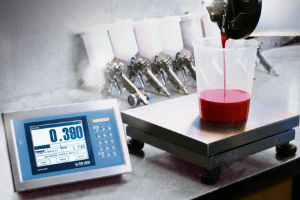
- Bench scales: compact and versatile weighing solutions suitable for small-scale operations and laboratory settings. Don’t let their smaller size fool you though. Bench scales can be incredibly precise and are perfect for quality control checks, portion control in food preparation, or weighing smaller components during manufacturing. Their portability also means they can be moved between workstations as needed, making them a flexible tool in your factory.
- Crane scales: to lift and weigh heavy loads, commonly utilised in construction and shipping industries. These devices serve a dual purpose by combining lifting capability with weighing functionality. Instead of needing to place an item on a scale, crane scales weigh objects while they’re being hoisted, saving time and reducing the risk of damage from unnecessary handling.
- Platform scales: versatile weighing platforms for a wide range of applications, available in various sizes and capacities. Also known as floor scales. You can find them in sizes ranging from small tabletop versions to massive industrial platforms that can weigh lorries. This versatility makes them a popular choice across virtually every industry.
- Pallet scales: designed to optimise warehouse operations and load management, for the weighing of palletised goods. These scales are particularly valuable in logistics operations where speed is essential. Rather than unpacking and repacking goods, pallet scales allow you to weigh entire pallets in seconds, helping to verify shipments and maintain accurate inventory records.
What industries use industrial scales?
Manufacturing and production industries such as food and beverage, automotive and textiles rely on scales for accurate measurements during their processes. In food manufacturing, scales ensure portion sizes meet specifications and help maintain consistency across batches. Automotive manufacturers use scales to verify component weights, which can affect vehicle performance and fuel efficiency. Textile operations weigh materials to calculate costs and manage inventory levels.
In the logistics and warehousing sector, industrial weighing scales are used for shipping and receiving, distribution centres and handling freight and cargo. Accurate weight measurements help determine shipping costs, ensure vehicles aren’t overloaded (which could violate regulations and create safety hazards), and verify that received goods match order specifications.
The pharmaceutical and healthcare industry utilises these scales for precise dosage measurements, quality assurance in drug manufacturing and medical research. When you’re dealing with medications, even tiny variations in weight can affect dosage and potentially patient safety. Pharma scales often need to meet tight accuracy standards and maintain detailed records for regulatory compliance.
Additionally, scales play an important role in agriculture and farming. Farmers use scales to monitor animal growth rates, portion feed accurately, and determine market-ready weights. During harvest season, scales help track yields, sort produce by size, and manage storage capacities.

Factors to consider when buying an industrial scale
First things first is the weight capacity and accuracy should match the needs of your specific industry and the application. There’s no point investing in a scale that can weigh up to ten tonnes if you’re primarily weighing items under fifty kilograms. Similarly, a scale accurate to within one kilogram won’t be suitable if you need precision down to the gram.
Environmental conditions and durability are also important to consider to make sure that the scale can withstand the working environment. Will your scale be exposed to moisture, extreme temperatures, dust, or chemicals? Some scales are built specifically for harsh conditions, featuring waterproof construction, corrosion-resistant materials, and protective housings. If you’re placing a scale outdoors or in a refrigerated environment, you’ll need one designed to handle those conditions.
And finally, what connectivity and data management features are required? Modern scales can connect to computers, tablets, and even cloud-based systems. This connectivity allows for automatic record keeping, reduces manual data entry errors, and can trigger automated processes based on weight readings. Some businesses find value in scales that can print labels or receipts directly, while others need scales that integrate with their existing ERP systems.
Maintenance and care for your weighing scale
Regular maintenance and care are key so you can continue to get optimal performance of scales. This includes calibration and verification to maintain accuracy and reliability, and regular cleaning so they remain in good working condition. Think of calibration as a health check for your scale. Over time, even the best scales can drift slightly from their accurate settings. Regular calibration, using certified weights, brings them back to perfect accuracy. Most industries have guidelines about how often calibration should occur, with some requiring daily checks and others needing only annual verification.
Cleaning might seem straightforward, but it’s worth doing properly. Dust, debris, and product residue can accumulate around load cells and other sensitive components, potentially affecting readings. A gentle cleaning routine, using appropriate cleaning agents that won’t damage the scale’s materials, keeps everything working smoothly.
And finally, troubleshooting common issues promptly can prevent downtime. Strange readings, flickering displays, or scales that won’t zero properly are all signs that something needs attention. Many issues can be resolved quickly with basic troubleshooting, but knowing when to call in a professional technician can save both time and money in the long run.
Choosing the right industrial weighing scale for your business
The right scale isn’t necessarily the most expensive or the one with the most features. It’s the scale that fits your specific application, provides the accuracy you need, withstands your working environment, and integrates well with your existing processes. Taking time to assess your requirements carefully means you will end up with equipment that serves your business well for years to come.
MWS manufactures a range of UK made Industrial Scales for use across a number of industries and applications. If you have any questions, be sure to get in touch with one of our specialists who would be happy to talk you through the different options to suit your needs.